THE RAT QUEEN
A DIFFERENT INTERPRETATION
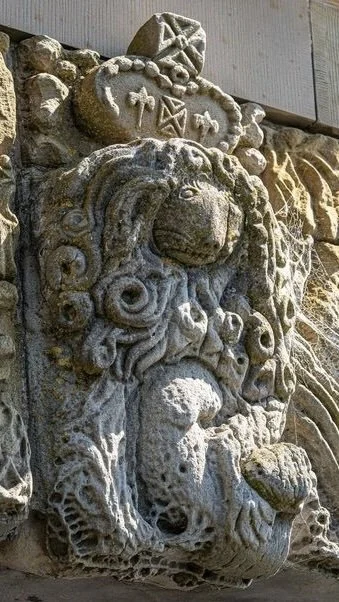
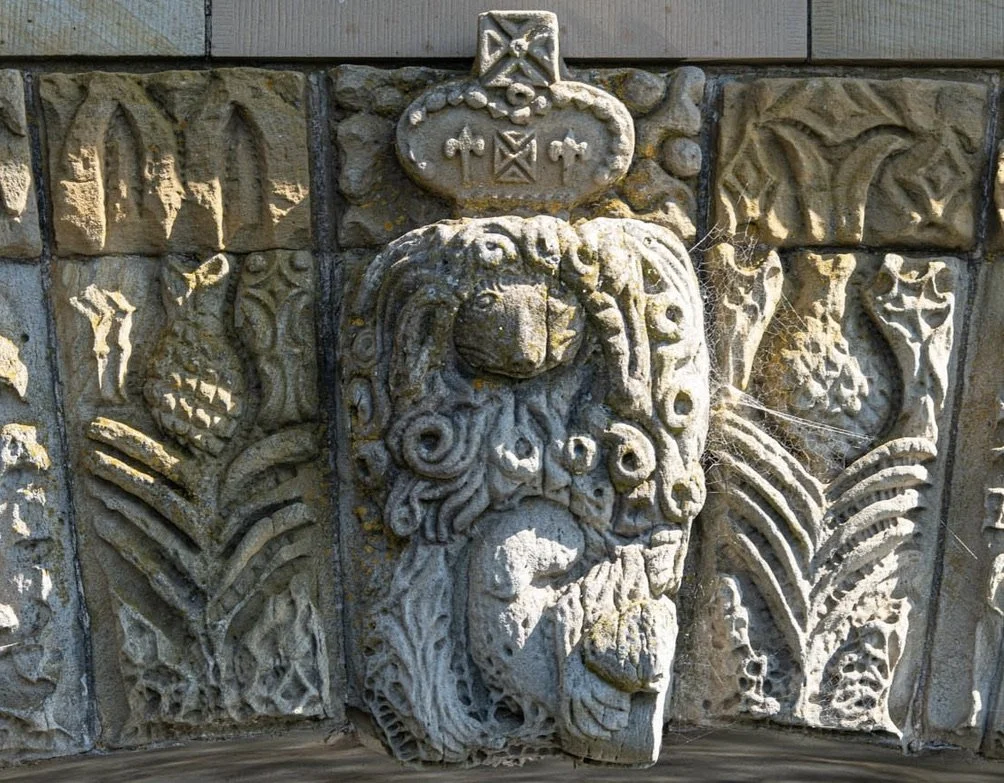
The carving I call the Rat Queen is the keystone of the north-eastern arch. The title I have bestowed refers to Caroline, the estranged wife of George IV who succeeded to the throne on the death of his father George III in January 1820. So, Caroline became the Queen of England. George had tried to divorce her by presentiing a Pains and Penalties Bill before the Parliament, but he had failed. At the coronation she was barred from entering Westminster Abbey and returned to her home. She died three weeks later declaring she had been poisoned, like a rat.
Her crown with the three ostrich feathers tell us she was the Princess of Wales. She had married her cousin, George, The Prince of Wales in 1795 though the two very soon despised each other. When Princess Charlotte was born in 1796, Caroline and her daughter left the palace to live in their own home. Her household was extravagant and her behaviour licentious. In 1814, Parliament offered her £35,000 to leave England. She accepted the offer, leaving the child in her father’s dubious care and abandoning her subjects when Britain was in crisis owing to war with Napoleon. A rat leaving a sinking ship, one might say.
She was portrayed in portraits and caricatures with a big bust and low decolletage; her hair was sumptuously coiffed and her posture was often ridiculous in satirical prints.
The carving presents her in the same way: lavishly styled hair and a bare bosom. her eye lashes are long and eyes ‘beguiling’, for a rat. She is bewhiskered and her teeth show through a grim smile. Her left arm bends to reject her rat kitten.
But on 26th March 2026, I was invited to speak with members of the Australiana Society at Ross about the bridge. The owner of the Rosco’s Restaurant in Ross where we lunched presented a different interpretation that I found very interesting. His opinion is that the sculpture represents the mythical Rat Queen of the sewers of London.
Toshers were the people of London who searched for treasure, coins and anything that would earn them money in the muck of the sewers. They worked at great risk of becoming ill or lost or drowned or suffocated by noxious gases. Also, by being seduced by the shape-shifting Rat Queen, a huge creature who could become a voluptuous enchantress, beckoning the tosher into a dark corner of the tunnel where they might enjoy a sexual encounter. If she was pleased, she would bite the neck of the beloved to keep him safe from harm by other rats; and she would grant him and his descendents good fortune in their search for jewels.
However, should she be displeased, she would confer cruel misfortune upon him and his children, even his wife.
The storyteller explained the pineapples in the light of the great good luck and prosperity that fell upon the sexually accomplished tosher. I think they are symbols of extravagance, wealth and wastefulness of Caroline’s lifestyle in comparison with the poor people of Britain.
I can imagine the convict stone carvers combining these characters in their carving of the Rat Queen: ‘Why not carve Caroline as the sewer rat. It would cover all her rattish traits.’