SATIRIST JONATHAN SWIFT
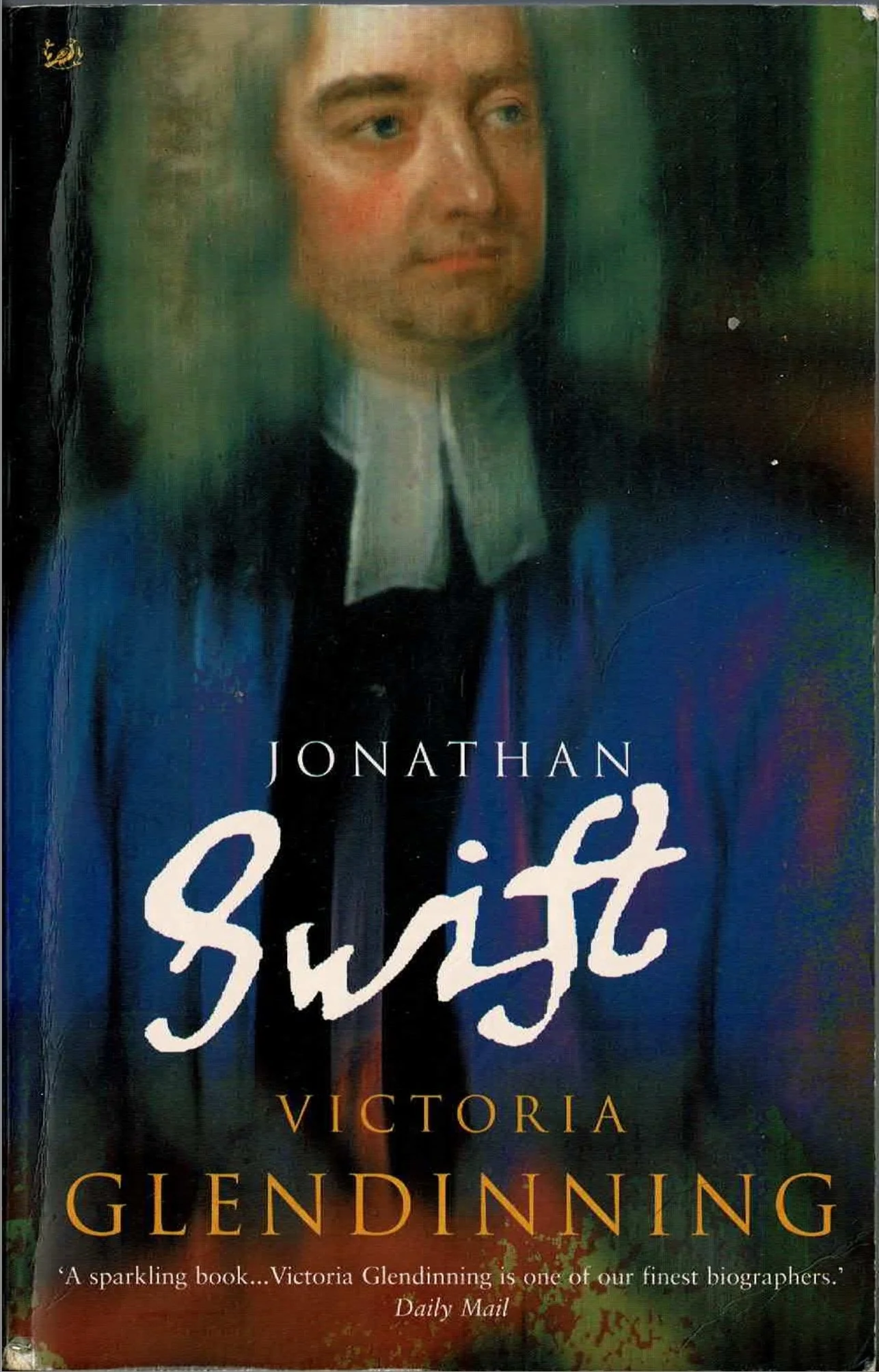
In 1998, Victoria Glendinning wrote the biography Jonathan Swift (published by Hutchinson in 1998, Pimlico 1999, Random House). I bought the paperback last weekend at the Battery Point second hand book sale that overflows the quaint community hall once a year. It has dog eared yellowing pages, a ceased spine and smells of another’s house, but whose it does not reveal.
Glendinning commented that hundreds of people had written Swift biographies before she had. The work begins with her sitting in the Manuscripts Room of Trinity College Library in Dublin; before her is a fragment of autobiography written by Swift about 1728 when he was 61 years old. He died in 1745 but had been deaf and dementing since the late 1730s.
I want to share this passage because it could be written about the satirist stone carving artists of the Ross Bridge:
…The electric energy of Swift’s manner still runs […] in the insult disguised as a compliment, the compliment disguised as an insult, the outrageous joke delivered deadpan, the hyperbole, the telling anecdote, the irony that spancels the enemy. It is a truism that those who make us laugh most are frequently prey to melancholy. Turning everything to wit or humour is a strategy for survival and a redeeming route to acceptance and popularity. p7
On wit, literary friends of his day said: wit “implied the perfect expression of an insight” … it was “deep thought in common language” … it requires “a certain uncommon reach and vivacity of thought, very fit to be employed in the search of truth”. p 75
Swift wrote: … as wit is the noblest and most useful gift of human nature, so humour is the most agreeable”.
Glendinning writes in the next paragraph: “Satire is wit with teeth and purpose”. She quotes Pope: “…satire heals with morals what it hurts with wit”.
To be a wit, one needed an inventive mind […] a real or pretended insider’s knowledge of the latest political, literary and sexual gossip, and a malicious streak. p 75
Wits have a “subject at whose expense they are witty”; they are funny but feared. p 76
I suspect the well-to-do of the penal colony of Van Diemen’s Land regarded the convicts as yahoos, the brutish humans with filthy habits invented by Swift as parodies of Europeans in Gulliver’s Travels (1826).
Yet, the sculptors of the bridge were witty, intelligent, talented satirists who had lacked the opportunities a higher education offered but grasped the chance to carve their theses in stone.