Self-doubt; self reproach, even?
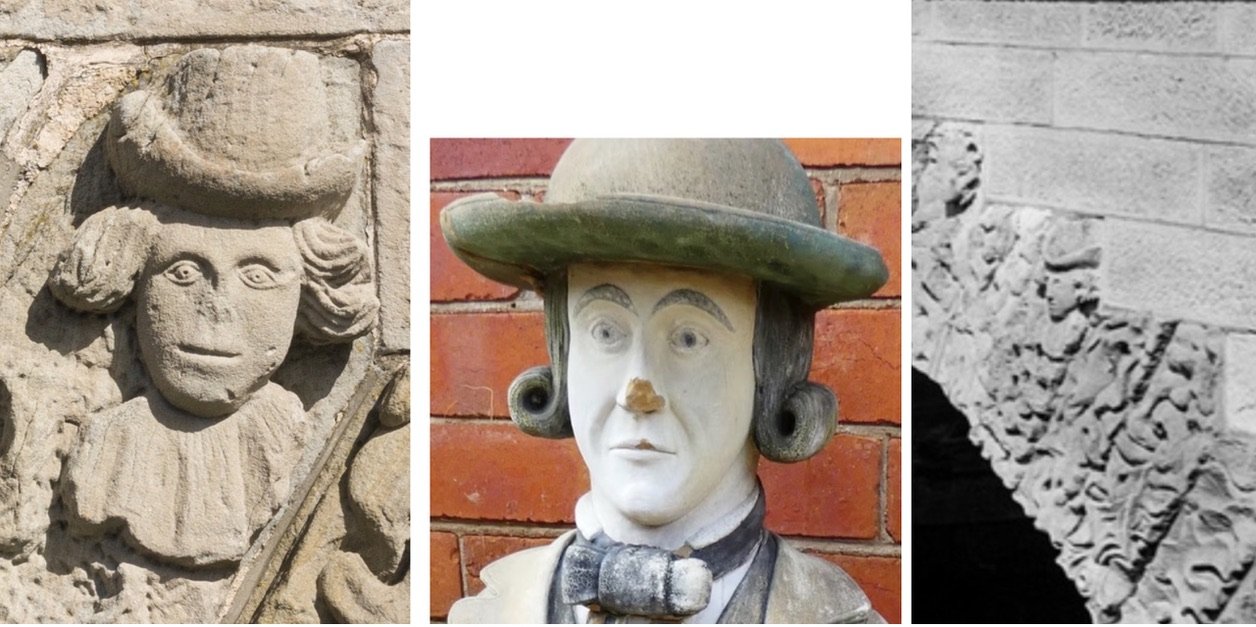
Last weekend, I had a heartening idea that fell flat, a knock-back and a revelation on the ABC that edged me towards doubt about one of my interpretations of the portraits. The doubt swelled until the whole work was engulfed. And then, the self criticism … Who out there does not understand this awful dis-spiritedness?
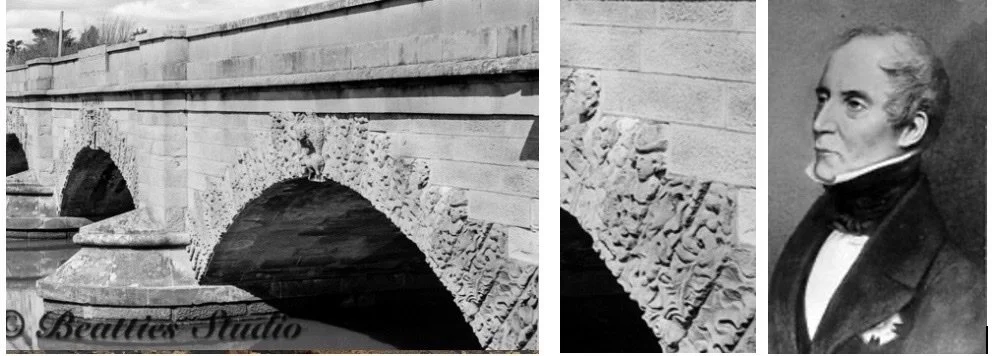
On Saturday, I went to a meeting of the First Fleeters association where a presentation on Bushrangers was given by John Stephenson, the director of the Beattie Studio. (beattiesstudio.com) I asked him whether there were images of the Ross Bridge taken early in the 20th C; he directed me to the website. Excitedly and hopefully, I explored the possible files. There are no close-ups of the carvings but I magnified the western arch of the north face because a picture of the caricature that is now nose-less was there with his nose unbroken. I had disagreed with Norman Laird’s idea that this was Lieutenant Governor Arthur because the face without nose is so vacuous. I thought it to be the guileless Charles Atkinson. However, comparison with an Arthur portrait on paper is fairly convincing otherwise. And then ………
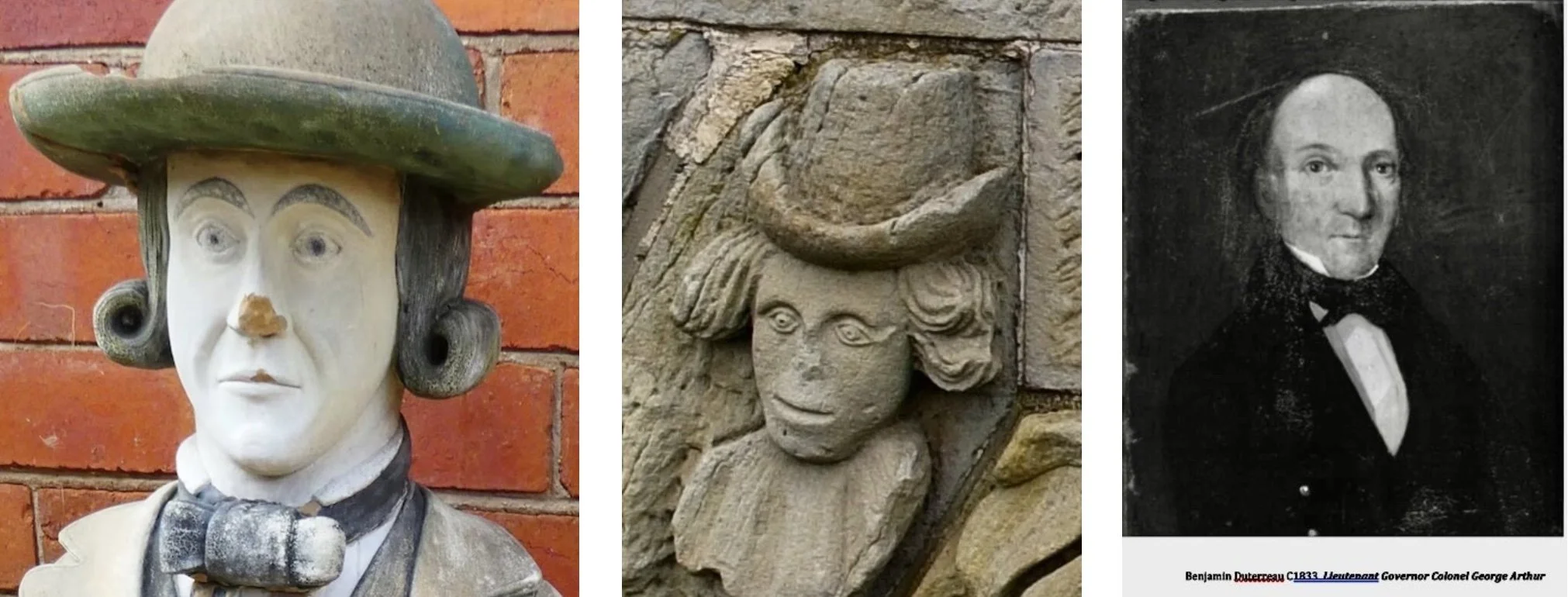
…. an ABC report revealed a colonial carving thought to be from Mona Vale, commissioned by William Kermode, carved by Daniel Herbert representing Lieutenant Governor Arthur. There is the hat with the narrow upturned brim, the pop-eyes, the thin-lipped mouth, the straight hair to ear level ending in a curl and the cravat … and a nose.
Is it reasonable to think that the clothes worn by Arthur were fashionable and Atkinson would have worn similar? Would William Kermode have commissioned Herbert to carve a caricature of Atkinson? (Less reasonable, though he did disdain him). He despised Arthur.
Who wore flat-topped hats as opposed to round topped hats? I have referred this question to Sonia Heap, expert in matters of costume.
Why would the stone carver carve an untied cravat on a governor? Does this detail suggest a carelessness about the subject of the portrait or a rudeness on the part of the sculptor? Is it satirical?
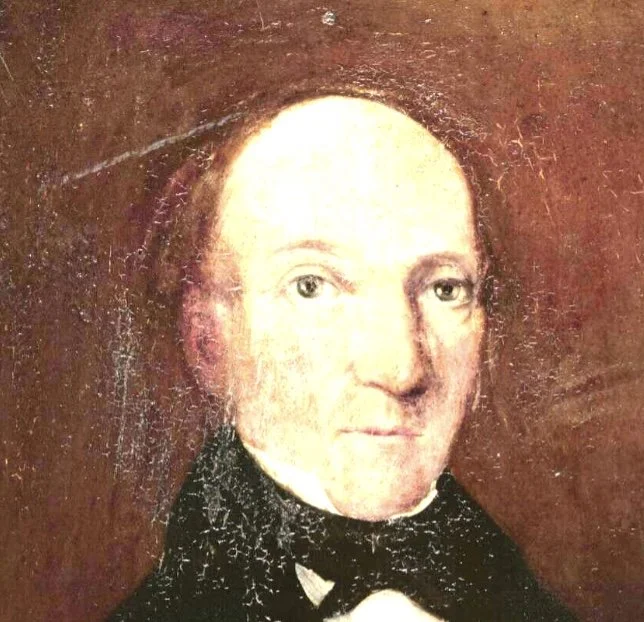
And what of the hair? In the sculptures, it is similarly portrayed. In the portrait of Arthur attrbuted to Benjamin Duterreau, (below) 1832, now in the National Library, it is difficult to see. On lightening the digital image, perhaps the brown hair is en bouffant at the back, brushed out to detract from the frontal balding, so enticing of ridicule. But scrutiny is unconvincing. I have asked the librarian to have a close look at the original but the NLA is undergoing renovations and the portrait is inaccessible.
I do fear that my idea of Charles Atkinson being the subject of ridicule in the bridge carving is wrong. However, I do not regret my research into his short sad life and I am not yet cinvinced.
As for knock-backs from publishers. No matter how complimentary of the research and subject is the letter accompanying the “regret” that the work is not for them, the rejection is dis-spiriting. So, self-publishing is the wilderness I shall explore.