ROSSLYN CHAPEL
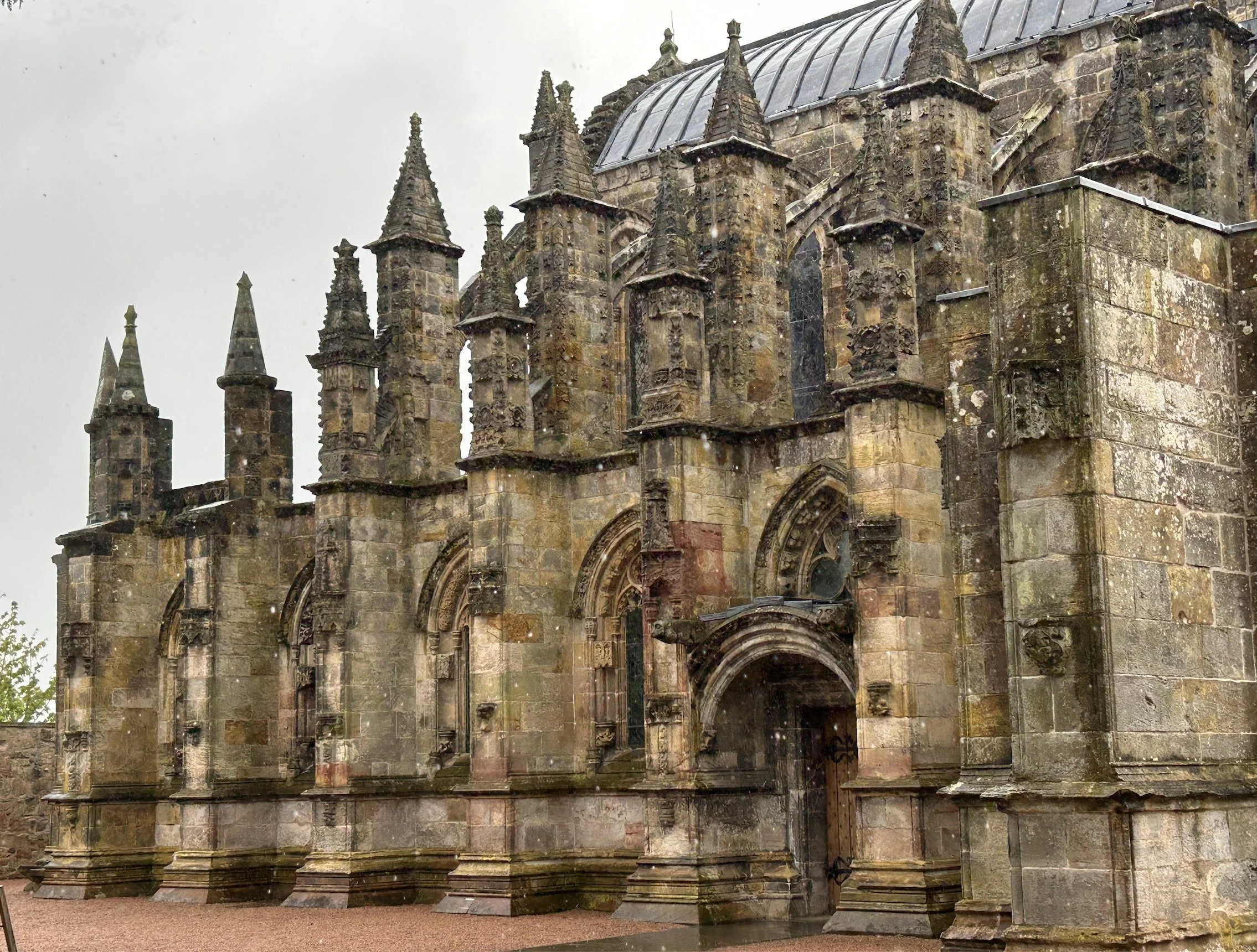
I have travelled halfway around the world to visit the Rosslyn Chapel. The stone carvings hiding behind their enigmatic symbols absorbed me for two days. As with the Ross Bridge, one could return to it and still be as curious and little less ignorant than in the beginning. Both are constructed of sandstone quarried on site; both are wearing away despite efforts to preserve them; both are unique. Both are examples of narrative architecture; their carvings are mysterious, with no records to explain them.
Rosslyn is built on a rocky promontory as its name indicates between the North and South Esk Rivers. The Ross Bridge crosses tinamarakunah/Macquarie River in Tasmania which flows into the South Esk. The rocky knoll which gave its stone to the bridge, rises above the river flats. What features in the landscape prompted Governor Lachlan Macquarie to name the village site Ross after the seat of his friend, Hector Buchanan, on the banks of Loch Lomond in Scotland, no where near the site of Rosslyn.
William Sinclair was a wealthy, well-travelled advisor to Stewart Kings who was inspired to build a church in the style of European gothic cathedrals. His ancestors had arrived in Britain with their cousin WIlliam The Conqueror in 1066; had been Crusaders; had accumulated land and power. Their Orkney ancestry, their Christianity; their benevolence to their poor serfs are reflected in the architectural decorations. He employed highly skilled stonemasons from Europe to oversee local stonemasons and labourers. The foundations were begun in 1446 and were deep enough to support a cathedral with a tower, but William died in 1484 before his dream was completed. His son built a wall across the gap and Roman Catholic services were held within.
However, the Protestant Reformation in Scotland had succeeded in banning Roman Catholic worship by 1560. In 1571 the St. Clairs were warned to convert but they held on to their Catholic beliefs and practice. In 1592 the General Assembly ordered the destruction of their altars; this ended the use of the chapel as a place of worship until Victorian times.
As was the tradition amongst stonemasons, the walls began to rise in the north-east corner. The sign marking the event is to be found under a stone ledge.
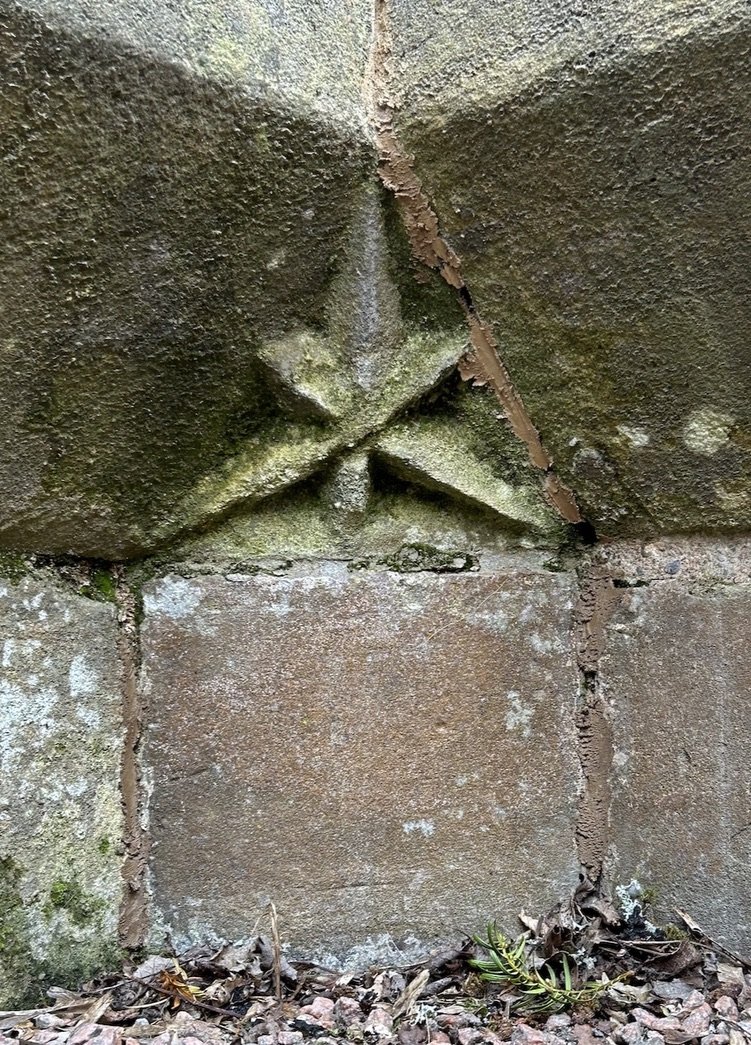
the stonemason’s sign of the foundation stone.
Men entered by the north door. They were exhorted to leave their brutish behaviour outside by grotesque carvings: one with his trousers below his knees, the other with an ape-like face restrained by a stick held behind his flexed knees with flexed elbows.
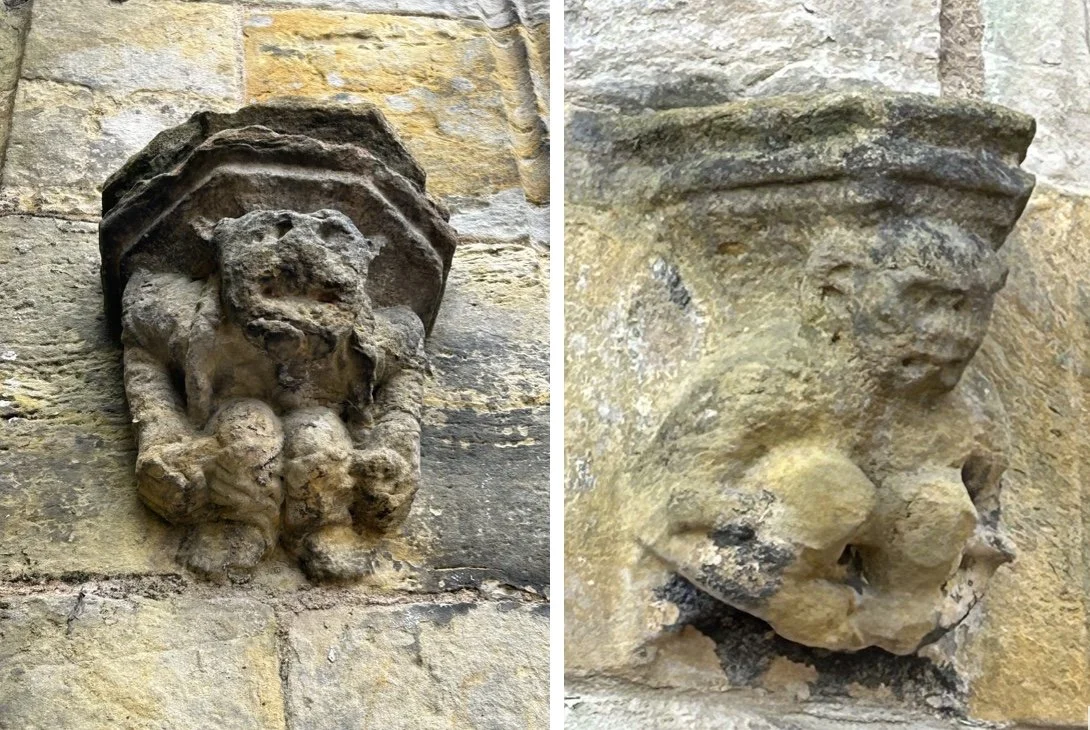
Two grotesques on the north wall exhorting men to reject their base ways before entering the House of God.
The women entered by the south door. Cromwell’s civil war came to Rosslyn in 1650; the castle was burned down and carvings were smashed. It seems the sculptures depicting women were chosen. These on the south wall probably bore a message to women to cast off their tempting ways and be demure in God’s sight.
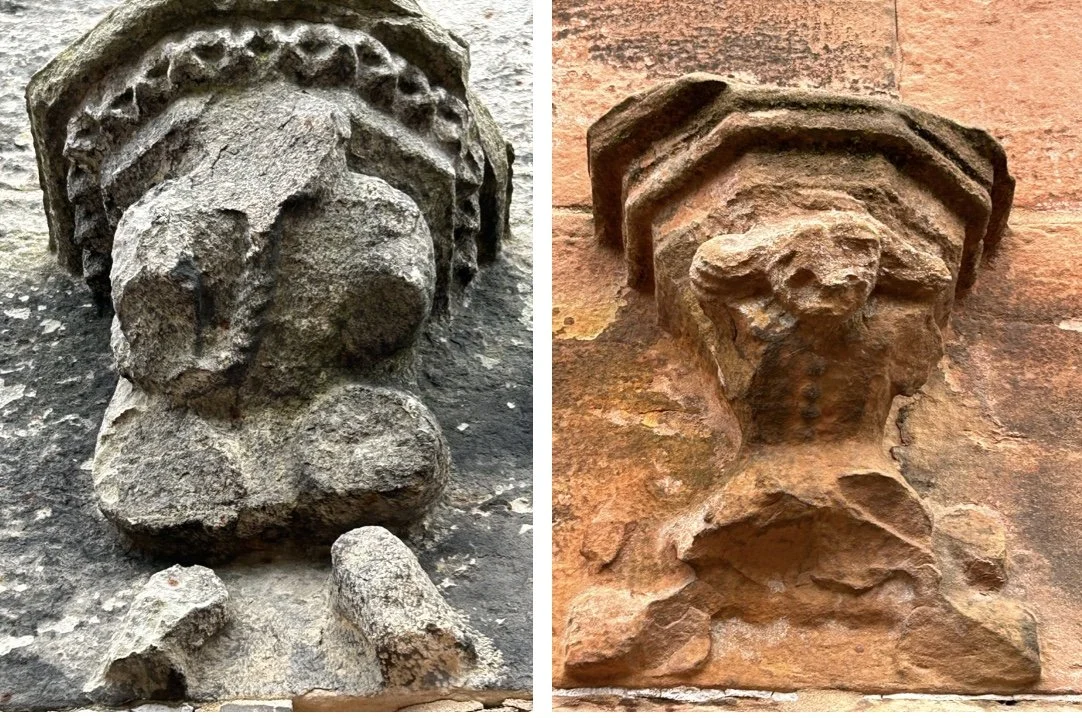
Carvings of women, probably destroyed by puritans in Cromwell’s army.
It is thought a sheela na gig on the south wall nearer the south east corner suffered the same fate.
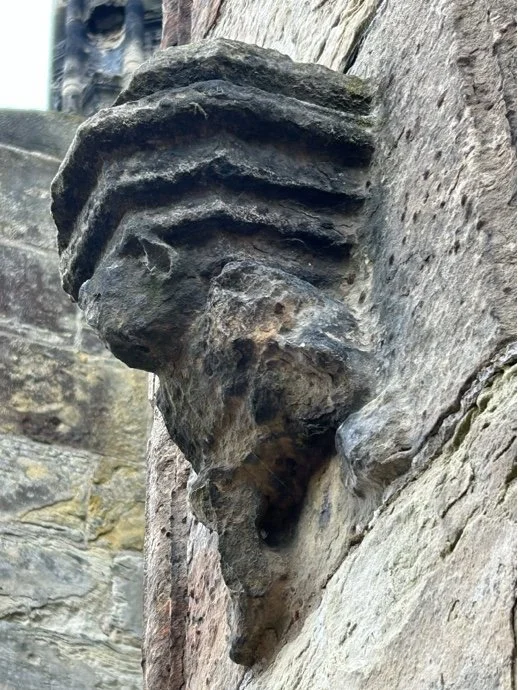
A sheela na gig near the south-east corner
See what you make of these:
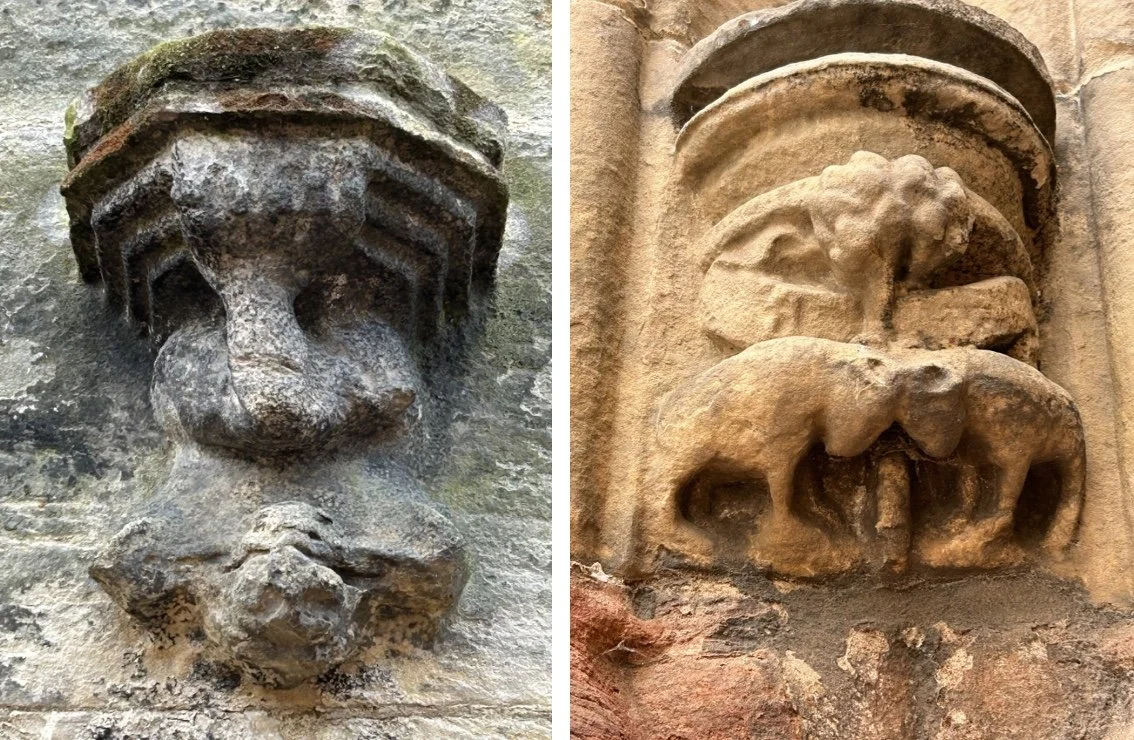
An upside down merman with his hands over his mouth Two bulls, horns locked beside a tree
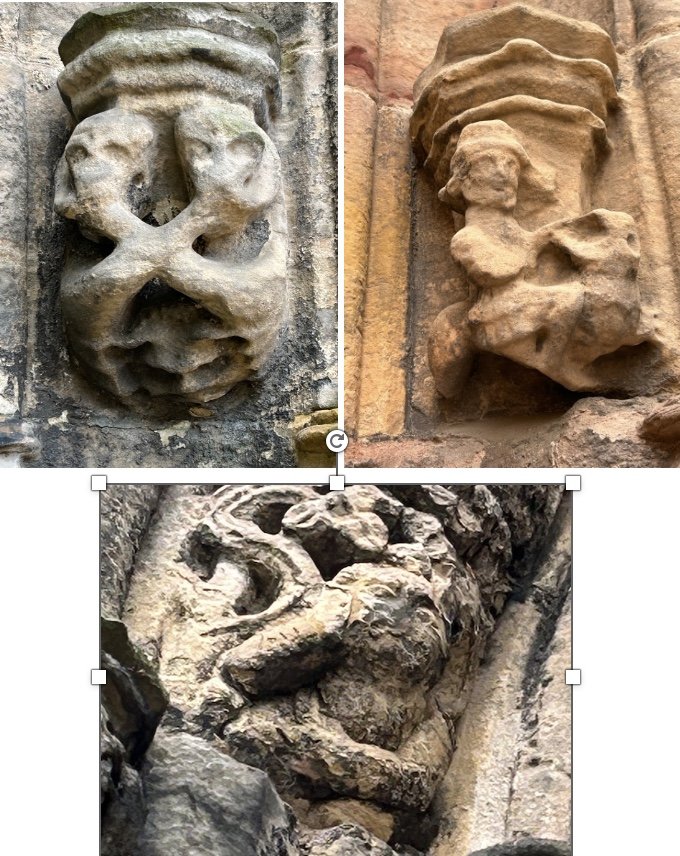
two skulls on the ends of crossed bones. A knight on a chimeric creature. A man holding a root, a tendril in his mouth, perhaps.
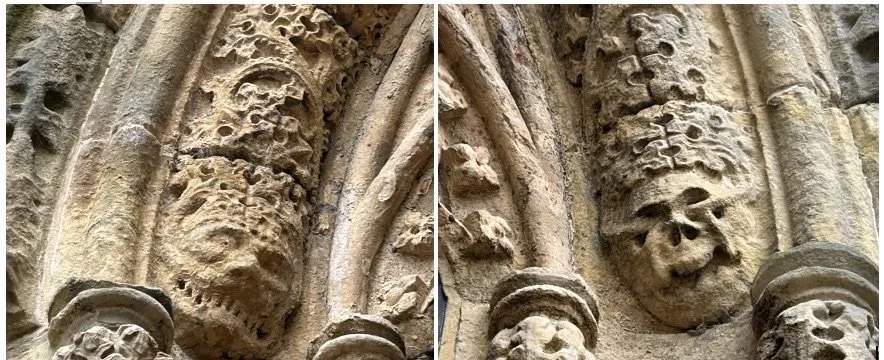
Two green men one aged, the other skeletal.
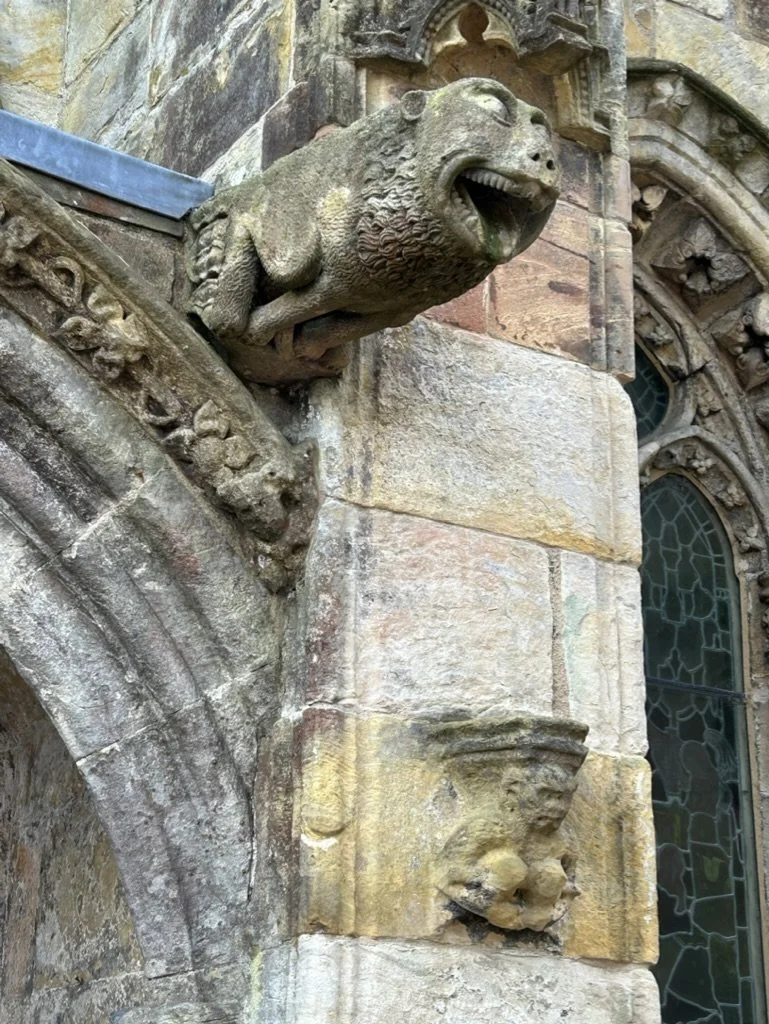
A gargoyle
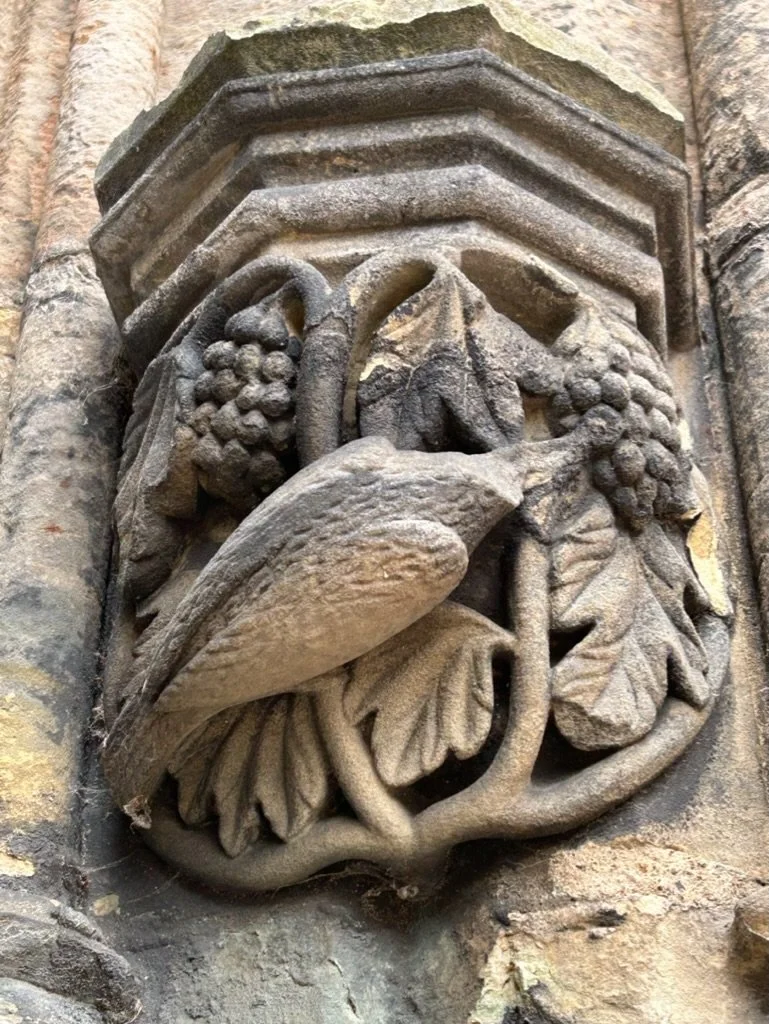
a bird eating the fruit of the vine
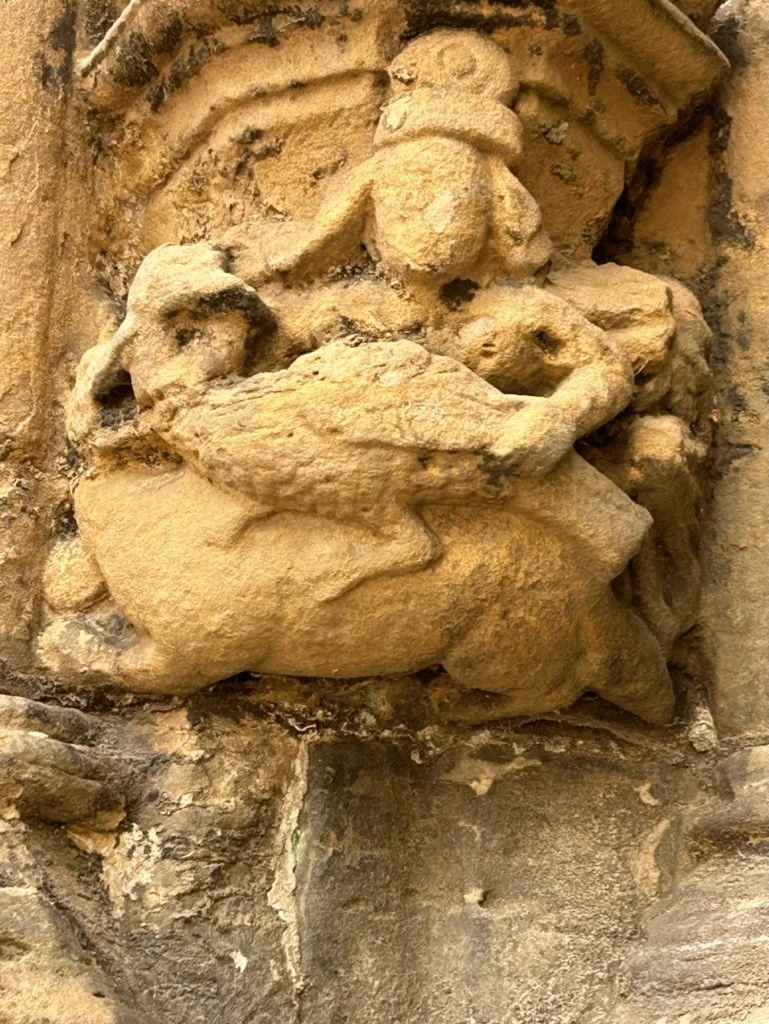
They say this is a farmer’s wife rescuing a goose from a fox.
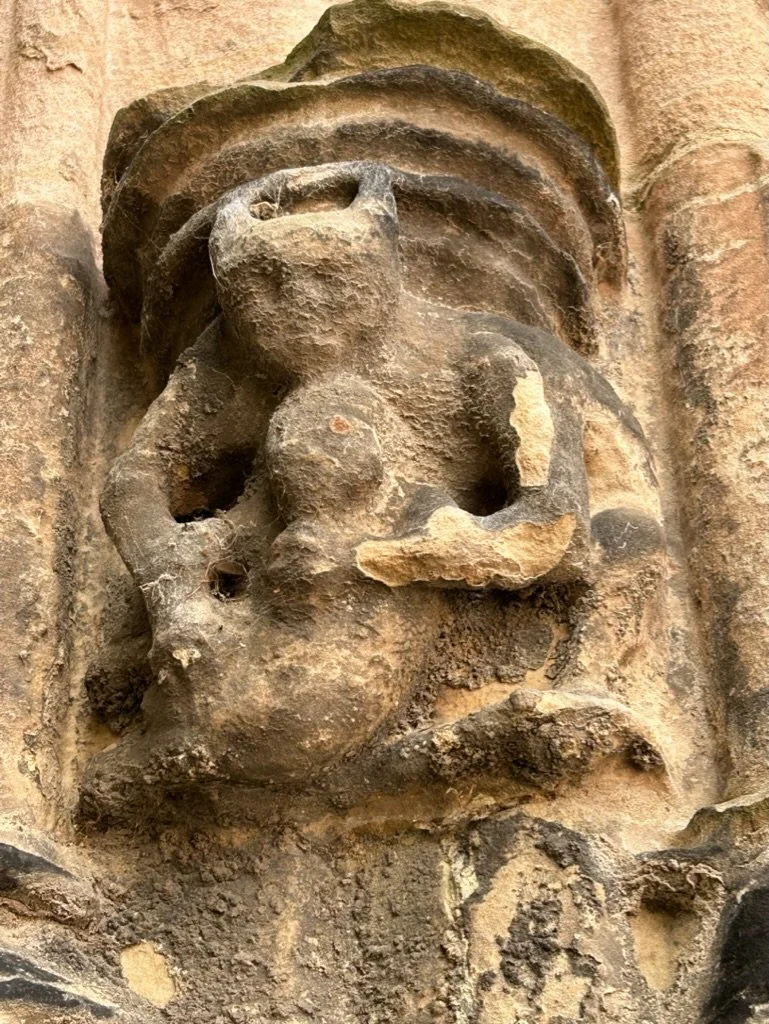
a horned demon with an infant, perhaps human, perhaps not
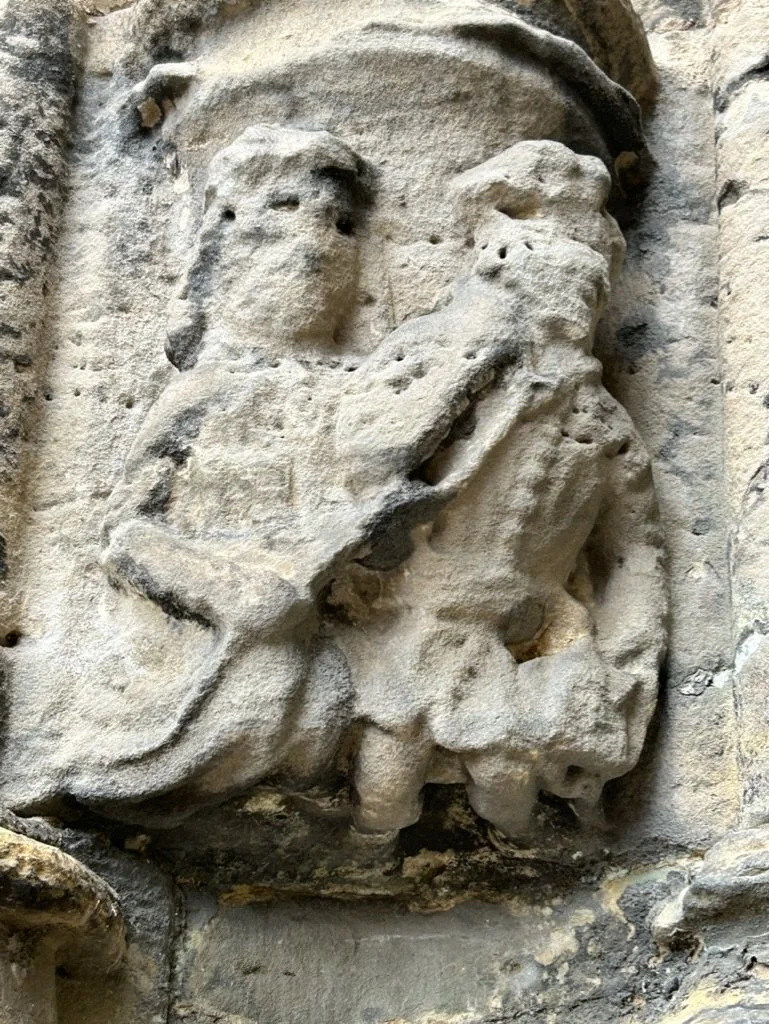
A masonic initiation about trust in which the initiate is led with a noose about his neck and a dagger at his side.
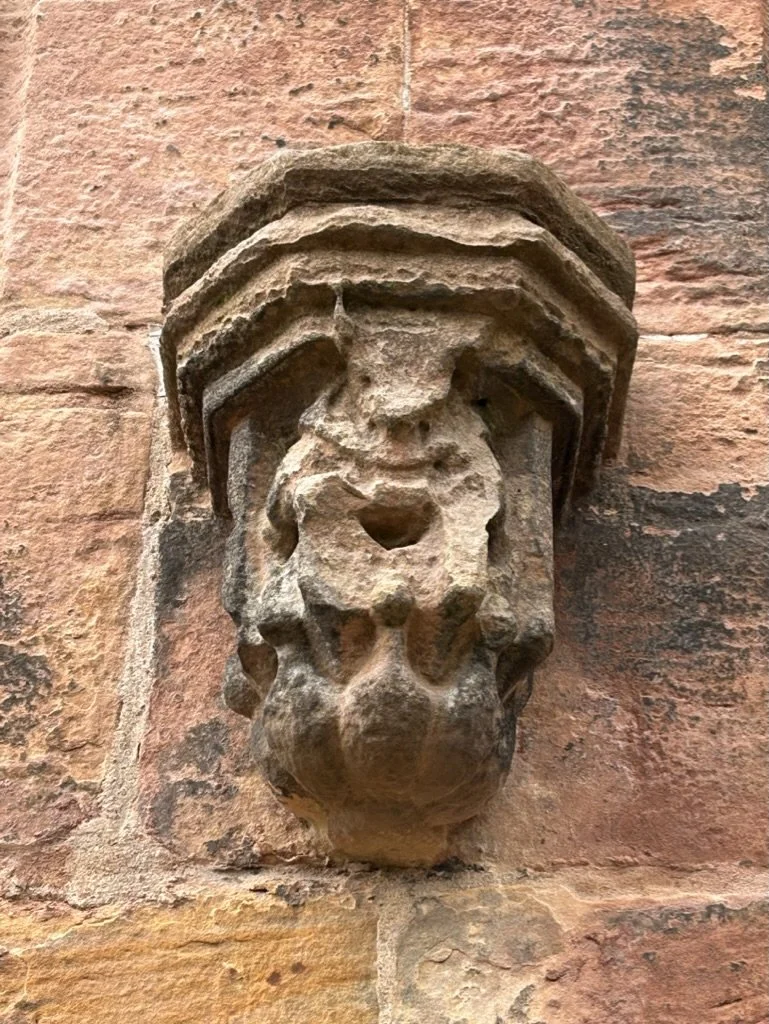
A fox dressed as a priest giving a sermon from a book to three geese.
These are some of the carvings on the outside. No photographs are permitted inside. There are thousands of them. I sketched a few but mostly I stared.