YORK
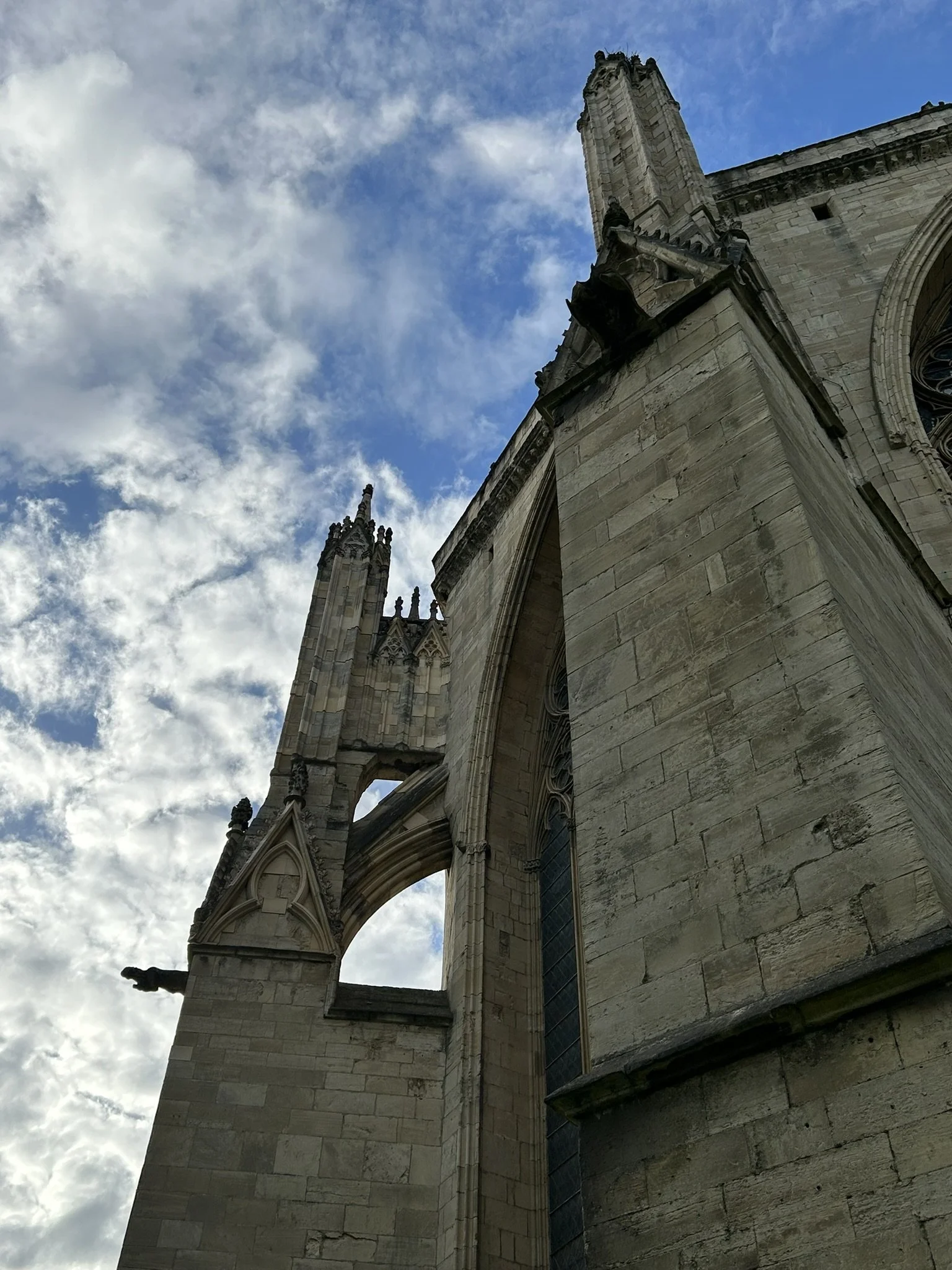
The north-east corner of York Minster early in the morning.
I went out at 6 this morning. No people were about but a dog walker, a cyclist and me. I wondered if I had missed an important news item and the end of the world was nigh. I thought it was quiet for an apocalypse. I am staying at 2 Petergate in The Fat Badger, two floors up a flight of narrow stairs where all feels flammable. I wonder who has slept in this room before, over hundreds of years.
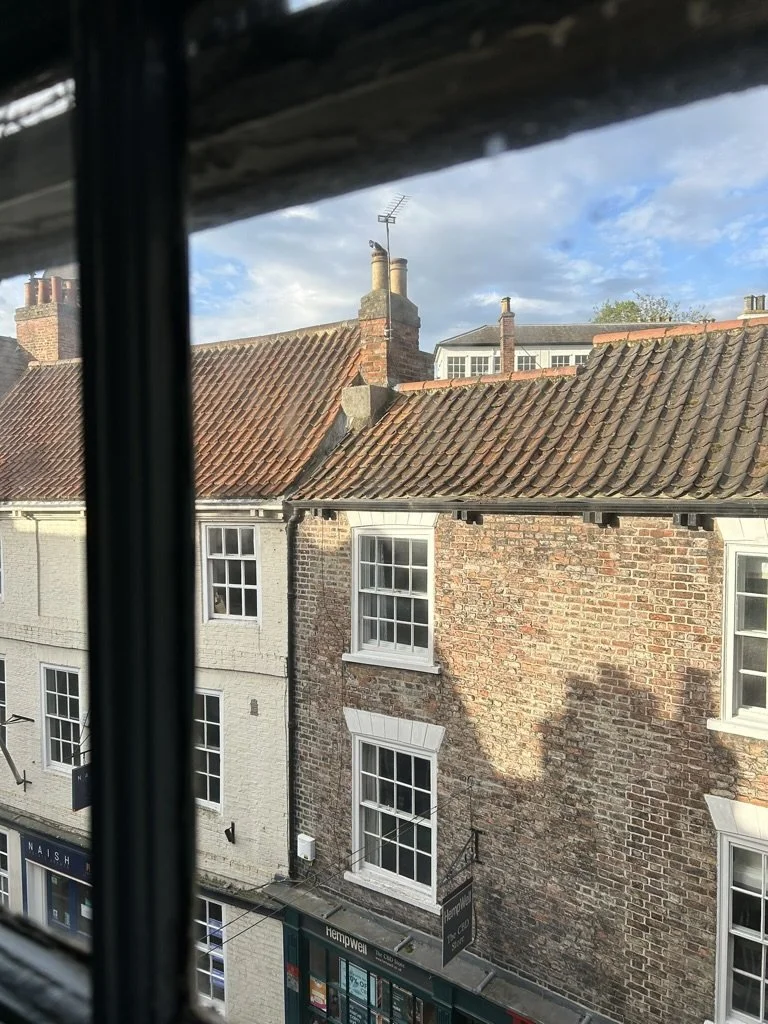
From the window of Room 4 at The Fat Badger, Petergate.
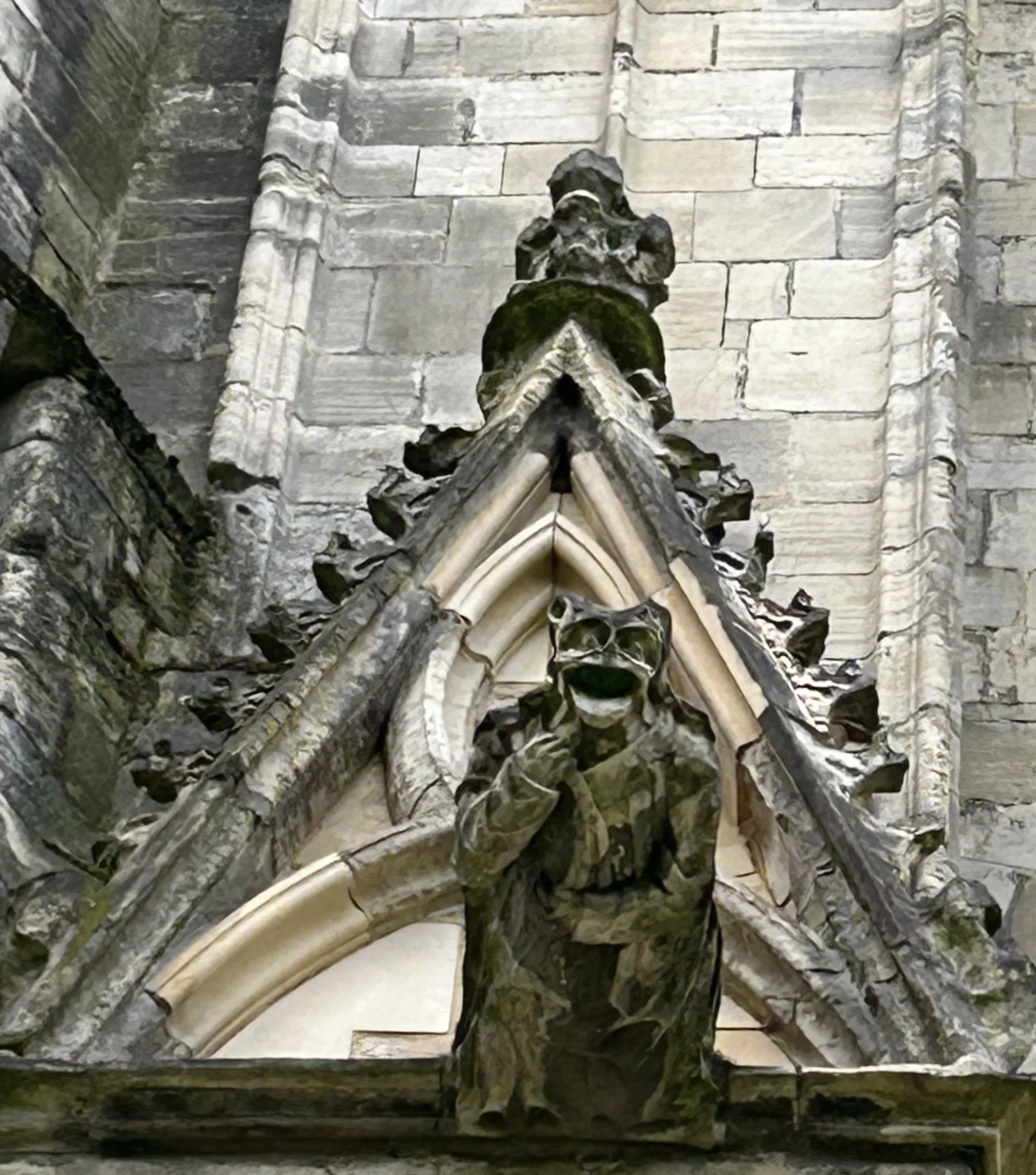
I turned right under the arch of the city wall into Gillygate but the bells of York MInster began to ring so I retraced my steps, turned left into Petergate and followed the sound. No, the sound was all around; I went to where I knew the minster was, where High Petergate becomes Low Petergate. It was marvelous. At first I stood before the two towers and let myself be transported, pretending there really were bell-ringers and not a mere recording. It didn’t matter. I walked to the north side to Dean’s Gardens and climbed a railing fence to be on the grass closer to the building.I like climbing walls and fences into grassy places. I wanted to look up at the gargoyles and grotesques like this wonderful cat with its mouth too wide and open. Does it caricature a self-opinionated canon?
I continued to the north east corner and photographed the flying buttress and pier you see at the beginning of the blog. Flying buttress: masonry structure typically consisting of an inclined bar carried on a half arch that extends (“flies”) from the upper part of a wall to a pier some distance away and carries the thrust of a roof or vault. A pinnacle (vertical ornament of pyramidal or conical shape) often crowns the pier, adding weight and enhancing stability. The flying buttress evolved in the Gothic era from earlier simpler, hidden supports. The design increased the supporting power of the buttress and allowed for the creation of the high-ceilinged churches typical of Gothic architecture. Encyclopedia Britannica
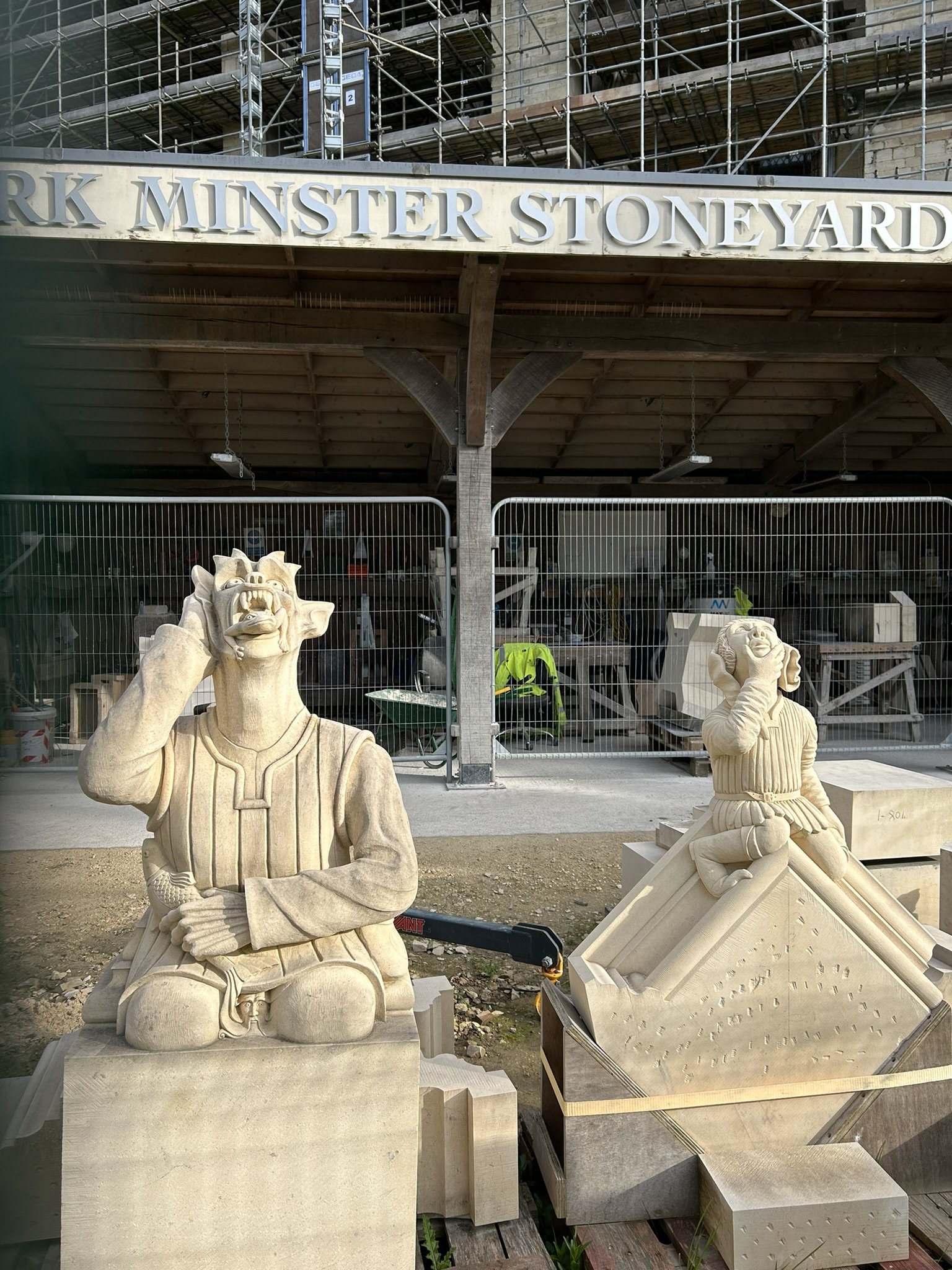
On the southern aspect was a sight to fill me with envy and excitement: the stonemason’s yard. In another time this is the work I would have done.
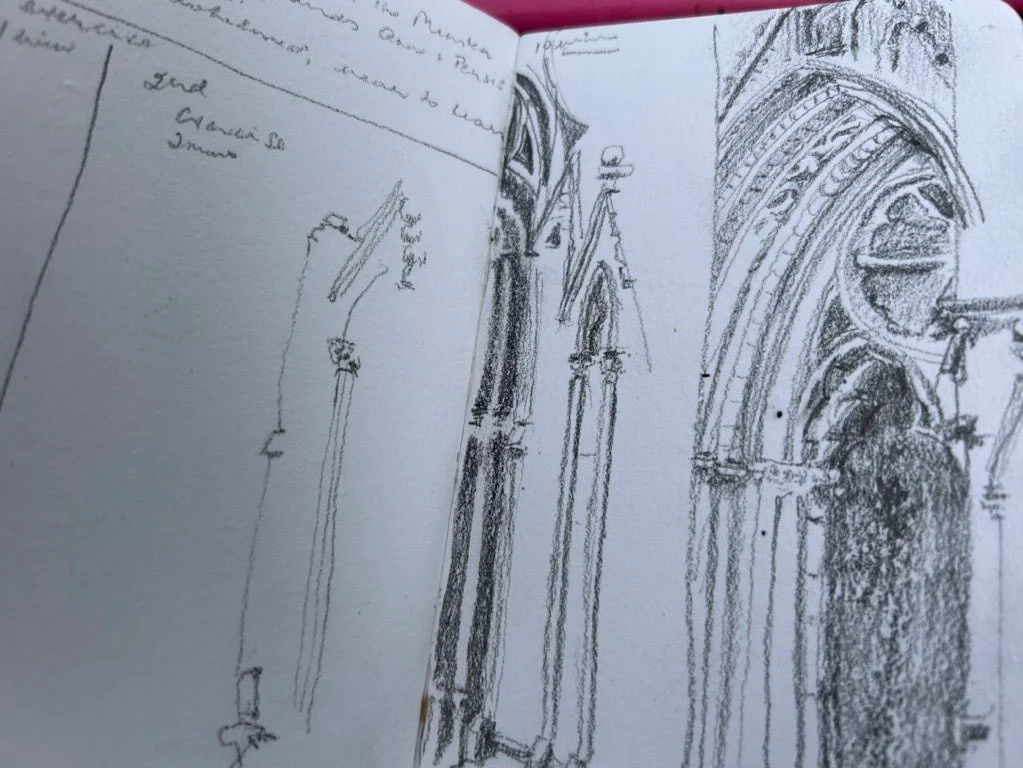
Across from the south west corner is a park with picnic tables.There I sat to be deluged in the sound of the bells. But, I did have my pencils and little book and recent lessons in journalling, so I drew, one minute exercise, two minute exercise, 10 minutes and another till I was finished, all the time listening to the bells. Heaven. Still nobody about. I sat there for an hour till the people began to emerge and block my line of sight.
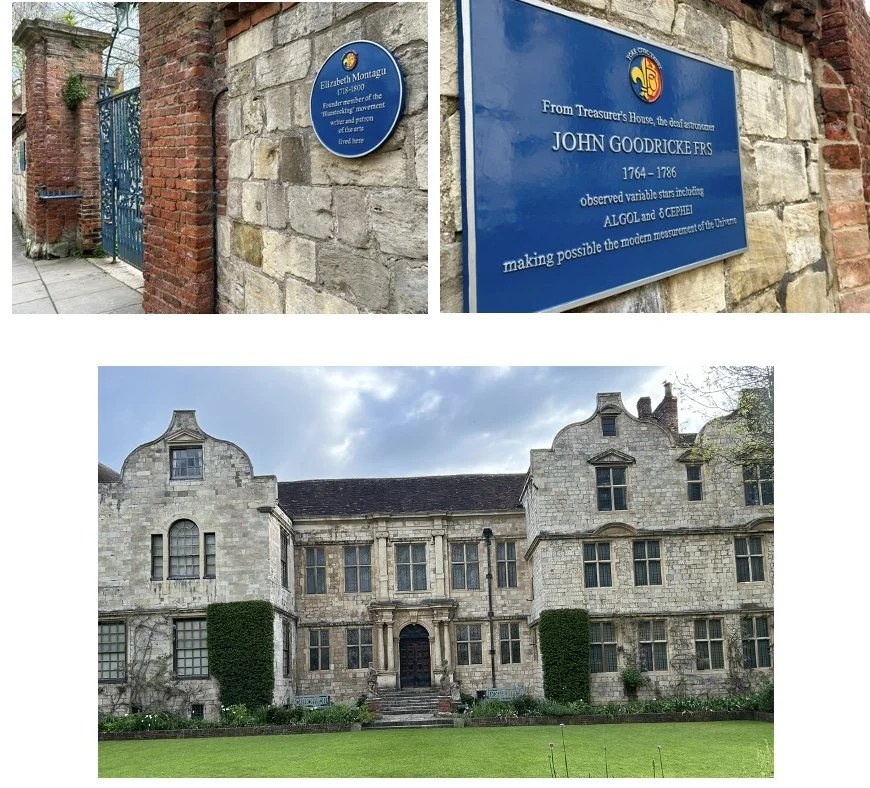
I returned to The Fat Badger for breakfast at 8 and wondered why. I had enjoyed it out there without the crowds. Across from the eastern end of the minster was the treasurer’s house. I poked the camera through the railings and thought I would save it up for later.
I walked anywhere, wondering how to extricate myself from these cobbled alleys if I became lost. I realised I was in the Shambles when a market materialised between shambolic buildings of all styles imaginable, nearly touching above my head.
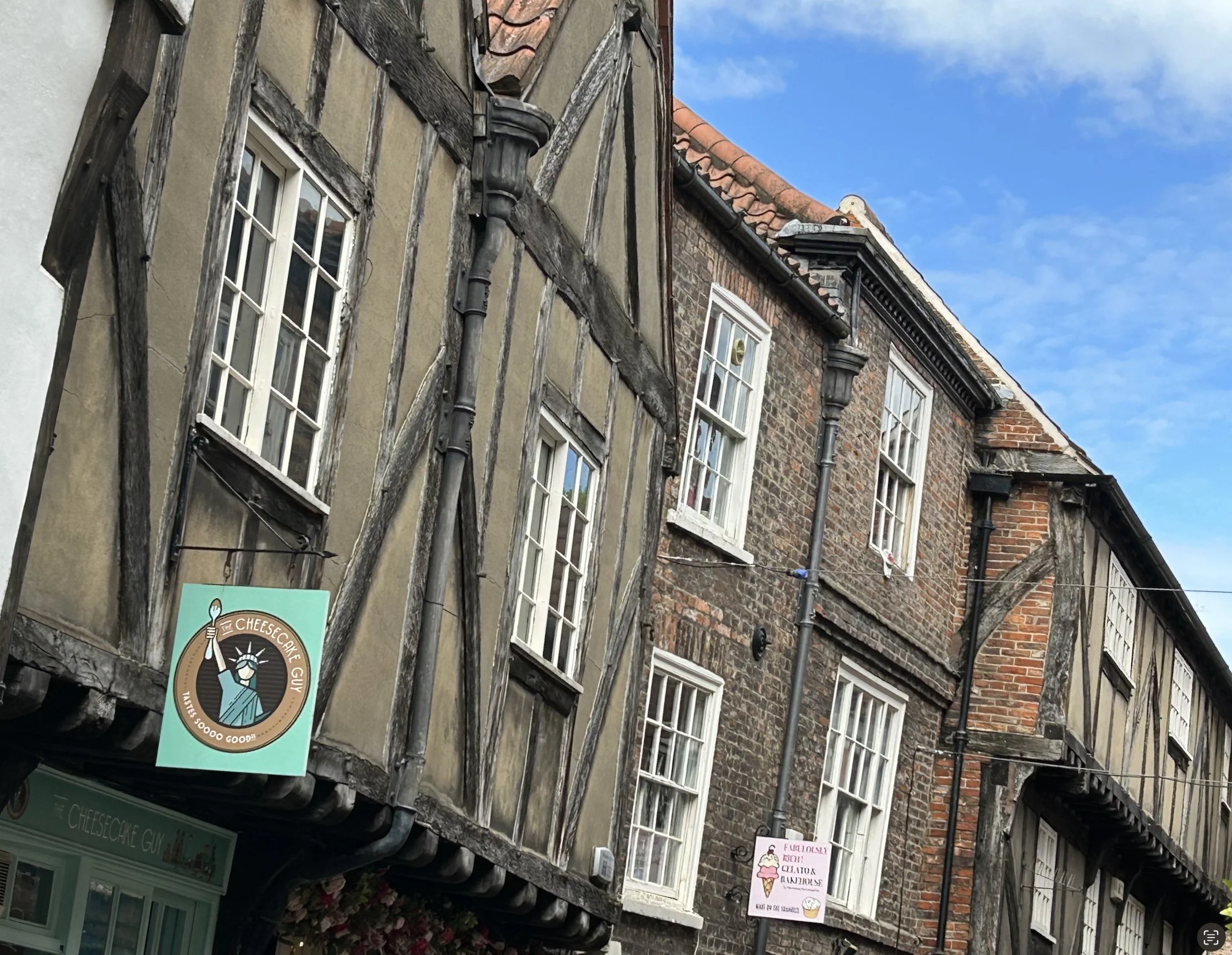
The Shambles
Shambles is one of York's most famous landmarks and one of the best-preserved medieval shopping streets in Europe. With its cobbled streets and overhanging buildings, it is believed to have been the inspiration behind Diagon Alley from the movie adaptation of the Harry Potter series. Although none of the original shop-fronts have survived from medieval times, some properties still have exterior wooden shelves, reminders of when cuts of meat were served from the open windows. The street was made narrow by design to keep the meat out of direct sunlight, but you can readily imagine the Shambles packed with people and awash with offal and discarded bones.
Then I came across whip-ma-whop-ma-gate.
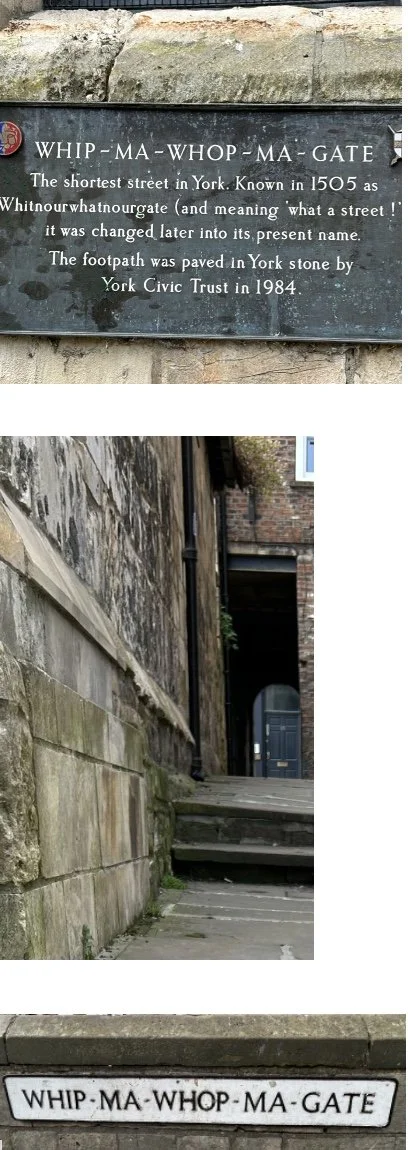
The shortest street in York
St Saviour Gate was the site of an old hospital but hundreds of years before that, a Roman cemetery. Now, it is a museum of archeological discoveries. Beautiful jet beads, facetted, mixed with glass of different colours, worn by the dead men and women of 2 - 4 AD Roman Eboracum, now known as York.
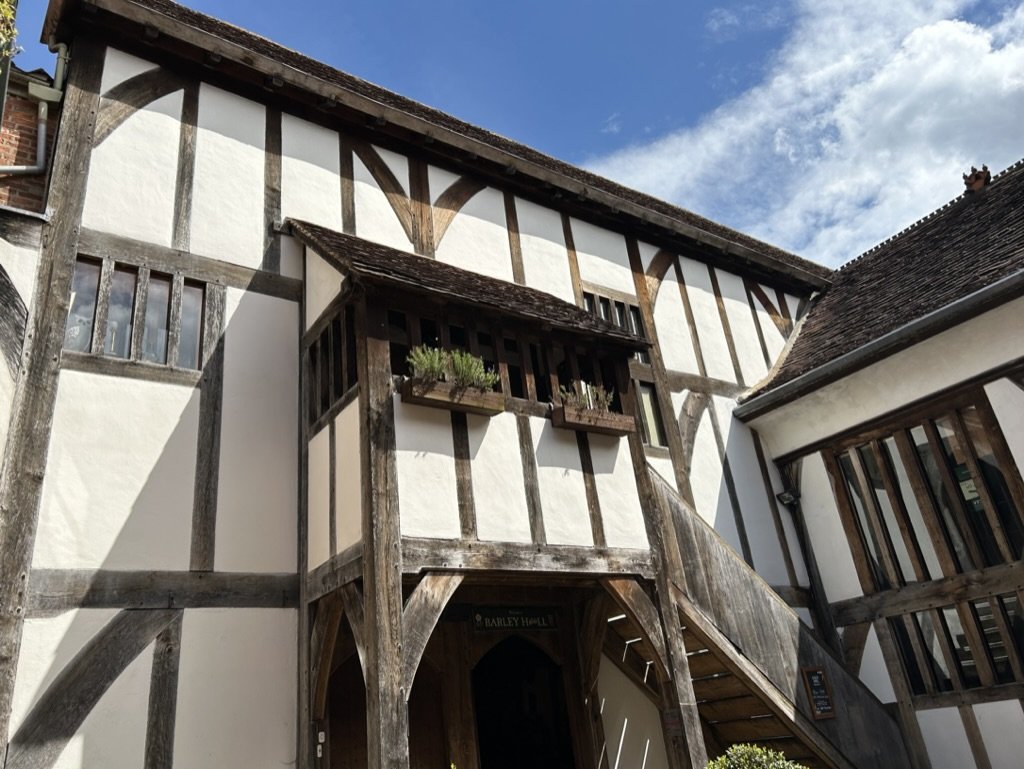
Barley Hall, the original building was built about 1360
This monastic townhouse was built in 1360 between Stonegate and Grape Lane. (Grape Lane’s original name was le Gropecuntlane. There is no explanation of what work was done there.) A West Yorkshire priory of the Augustinians needed a town house from which to conduct their business with the minster, so its prior built this hostel. When the priory declined in wealth and influence, the townhouse was leased to a rich dealer in silver, gold and jewels who became sheriff of York, William Snawsell. In 1468 he became Lord Mayor and remained an alderman for 23 years. The present building is a reconstruction of the old one which was demolished in the 1990s after thorough archeological investigation. Some of the timbers were reused. The furnishings are reconstructions of the originals based on artefacts found on site and 15th C illustrations. When one reads about meals in baronial halls and the business done by the merchant in his parlour, there are descriptions of the smoke, the central hearth, the trenchers, the head table and lowlier tables placed at right angles; the pantry and buttery; the shuttered windows and the noise of hooves and boots on cobblestones in the yard. It is all here for real and the imagining.
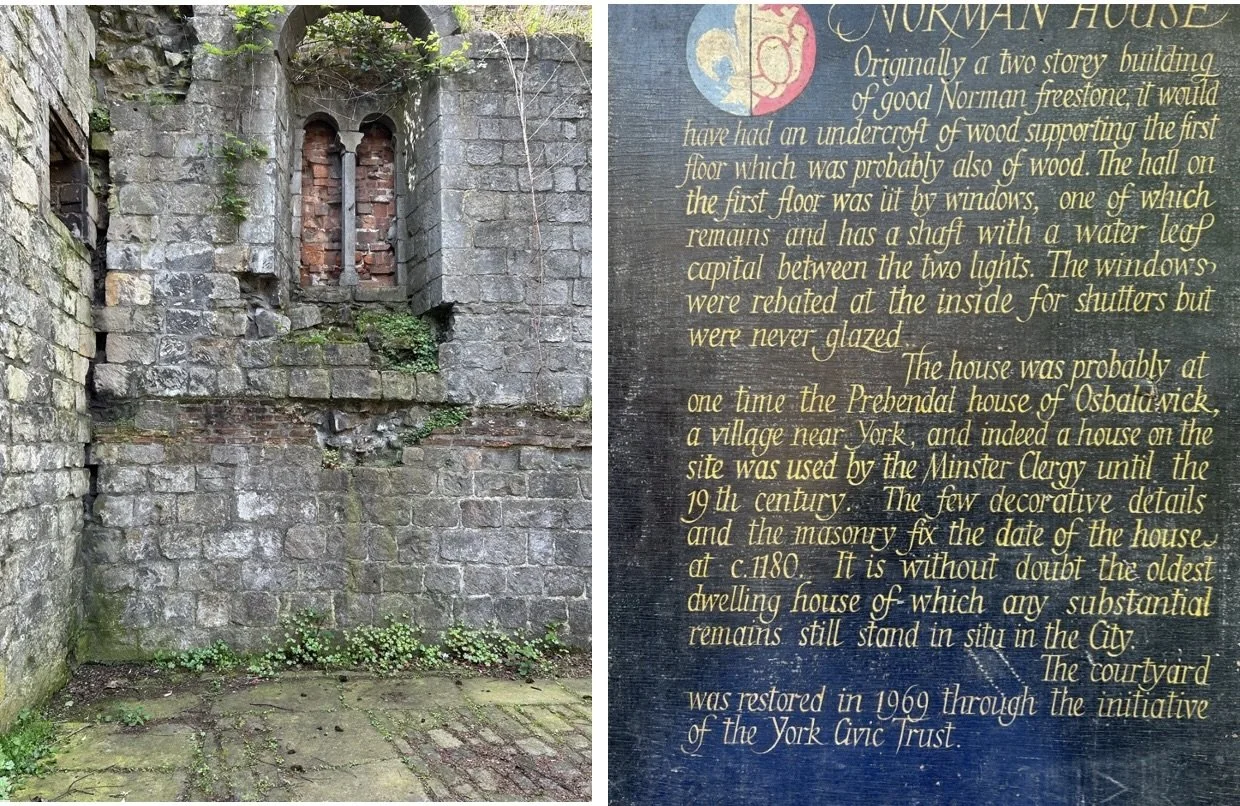
Norman House down an alley somewhere in York
The alleys are where the hidden away treasures are to be found, like this ruin of a stone Norman House, built about 1180 and used until the 19th C.
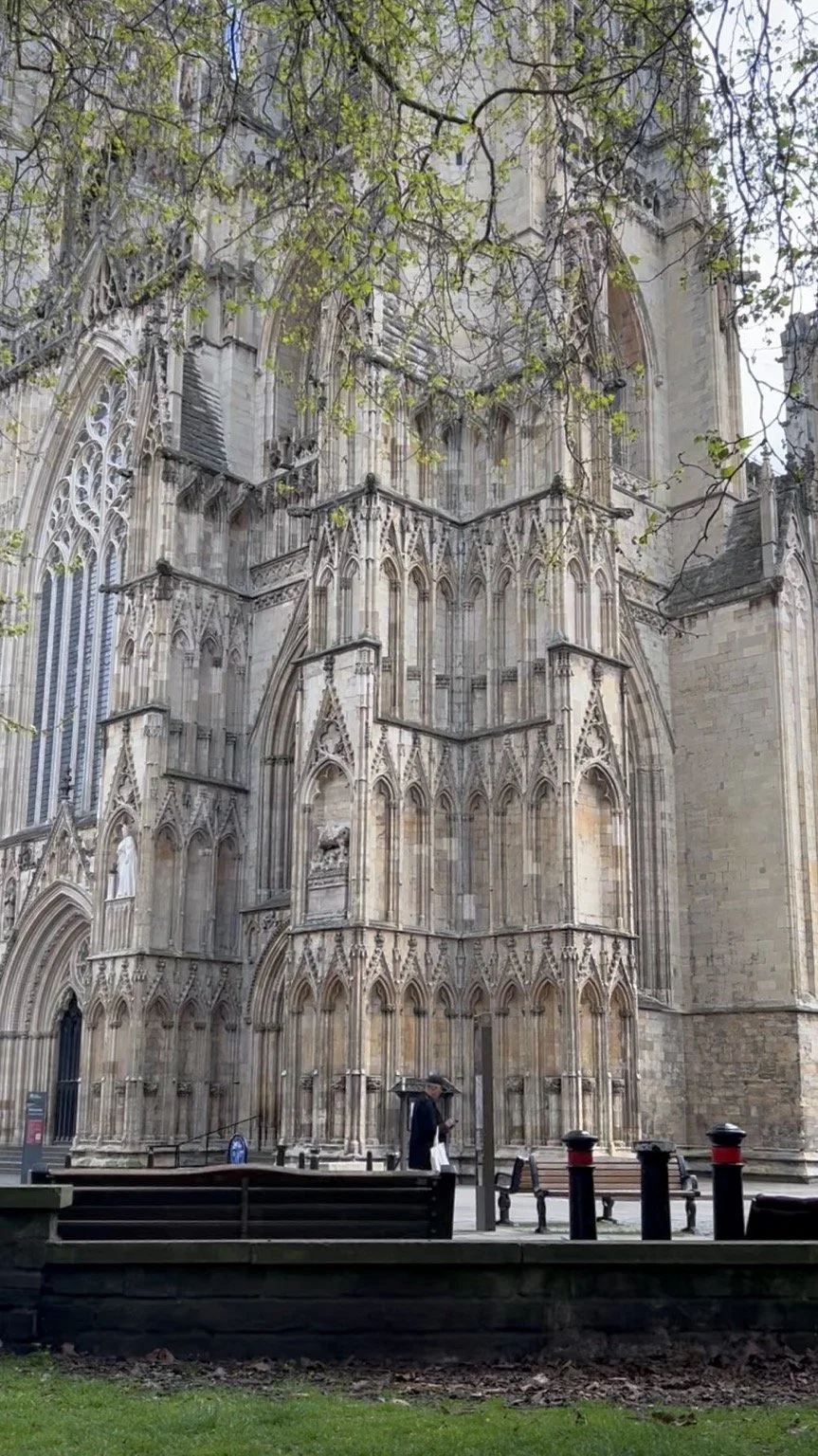
I have just come back from evensong. How sublime was the music! How magnificent the architecture! I could remember from those days at boarding school the service, the Magnificat, the sad, sighing Nunc Dimittis and the blessing which has always rolled a load off my shoulders. The Psalm 45 is about the daughter of the King of Tyre who was brought to King David in a needlework raiment by her company of virgins. I wondered how old she was, far away from the house of her fathers. The first reading was from the Song of Solomon, describing the king sweating with desire, with passion as fierce as a raging flame that floods could not quench. Is that what awaited her? I suspect I have missed the metaphorical meaning of the texts.