INSIDE THE ROSSLYN CHAPEL
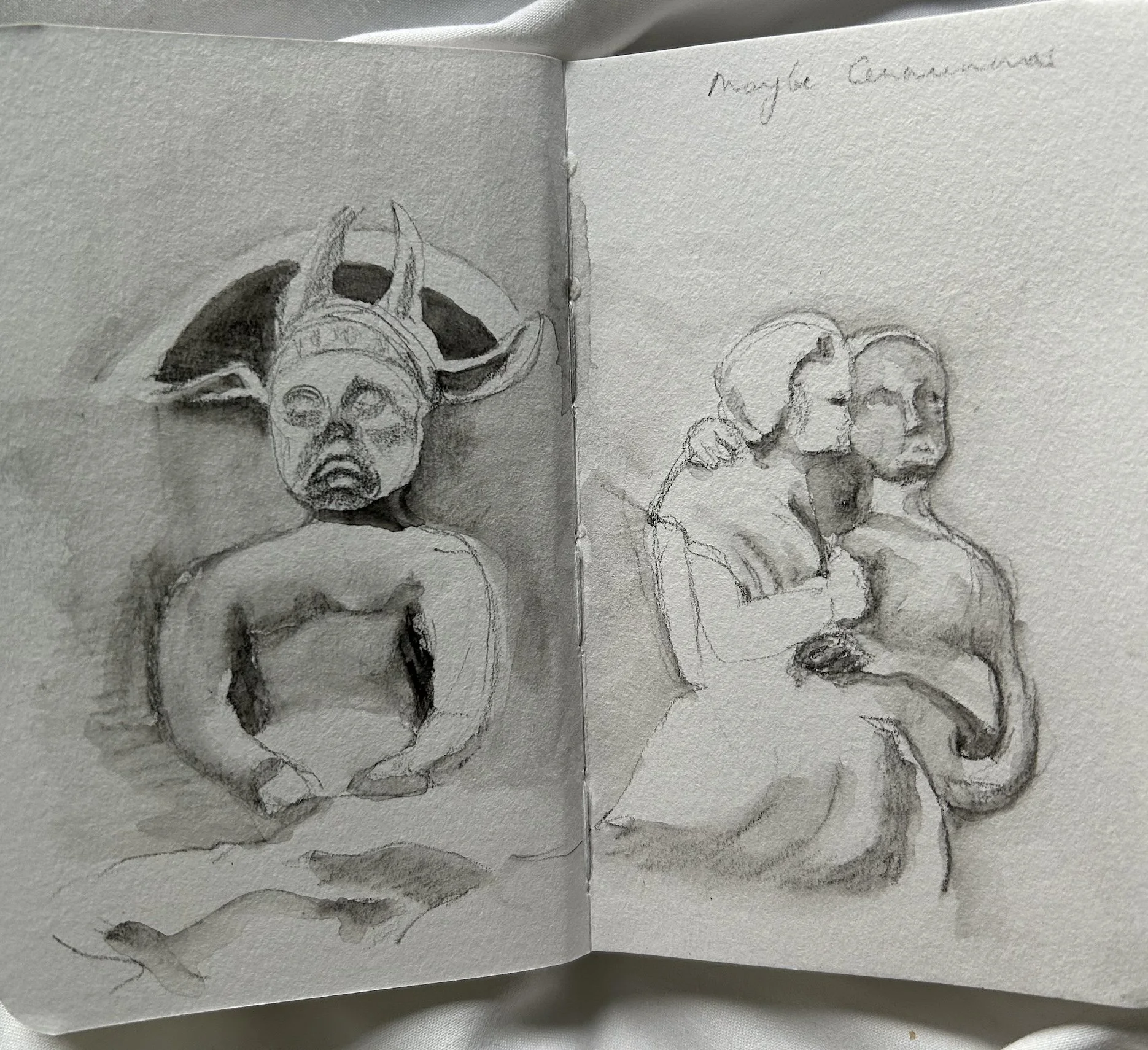
The devil and two lovers
One enters through the baptistry, a Victorian addition on the west face. It is thought Sir William St.Clair wanted a gothic tower in this position where the transepts would have met had his dreams been realised after his death. Some say that as the Chapel stood on St. Clair’s death, gaping at its west end with the ends of the nave’s walls roughly built as if to receive the rest of the construction, that it was truly meant to replicate the ruins of the Temple of Jerusalem destroyed by Nebuchadnezzar in 586 BCE. There, I have presented you with one of many mysterious unknowns and controversies that arise out of hundreds of interpretations of the events in the life of Rosslyn. Just like the Ross Bridge, there are no records, only assumptions that force us intothe byways beside the straight and narrow.
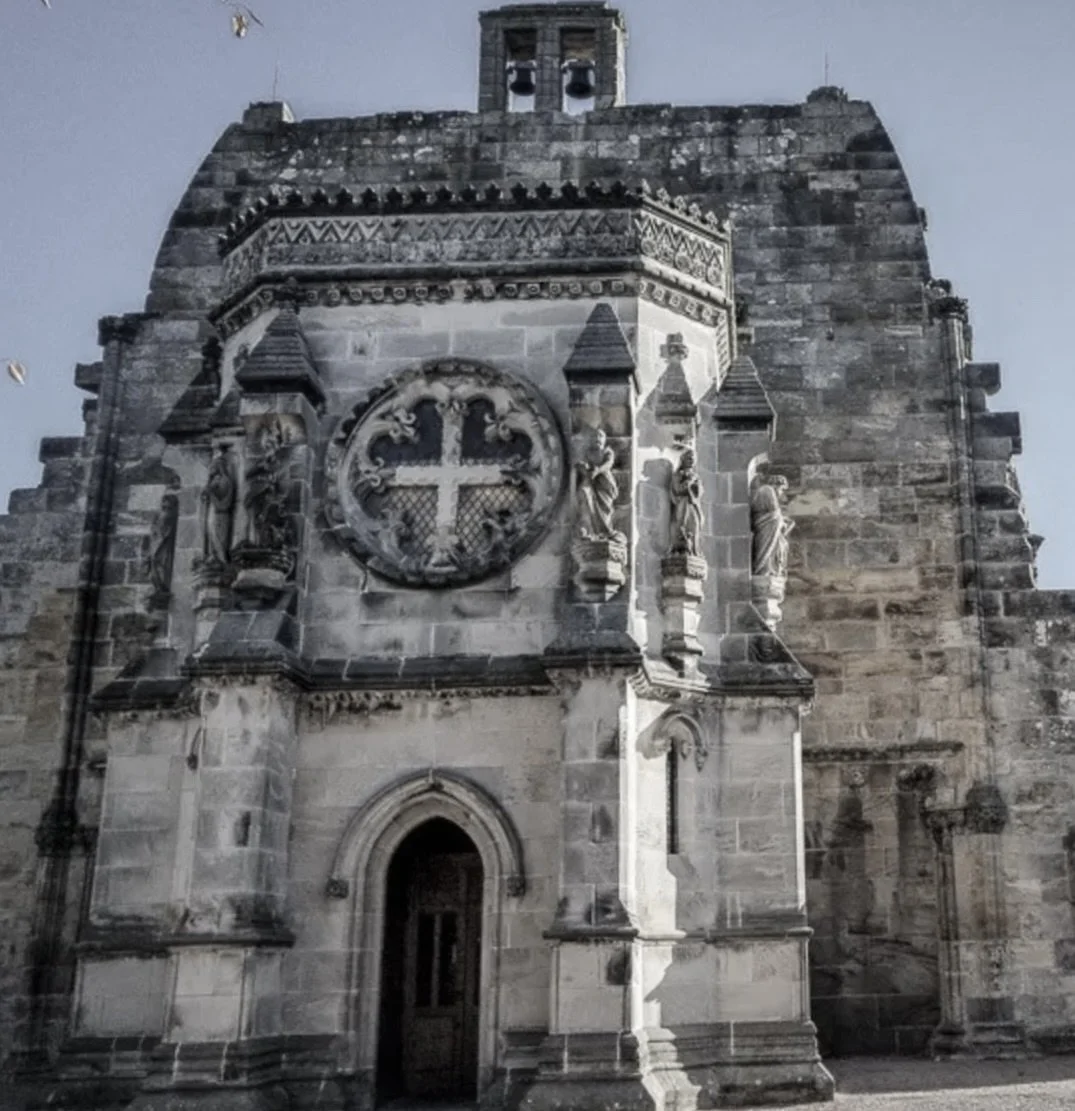
Western aspect of the chapel
The statues on this portico are Victorian. When Queen Victoria visited in 1842, taken by a friend with whom she was staying, she expressed a desire to have the chapel returned to its purpose as a place of worship. She contacted the long gone St. Clairs living in England and her wish could not be refused.
I walked in at nine o’clock, as soon as the door opened and there was nobody else for two minutes. I could gaze and imagine in silence. The day was misty grey with no play of light and shade and as I became accustomed to the dimness, I could see the eyes of humans and mythical creatures staring at each other as they had been for six hundred years. As on the bridge, their positioning was deliberate; they tell stories. It is said that St. Clair demanded that every sculpture was carved in wood first for him to approve. Imagine the work site: one must read William Golding’s The Spire and Ken Follett’s Pillars of the Earth to grasp the enormity of the task in medieval times and understand that this work took forty years.
On walking in, I faced the eastern end, the Lady Chapel. The windows are 20thC stained glass. Originally, the window spaces were shuttered and probably covered with cow hides. It must have been freezing. The only fireplace is downstairs in an even older chapel, now called the sacristy