WALKING YORK
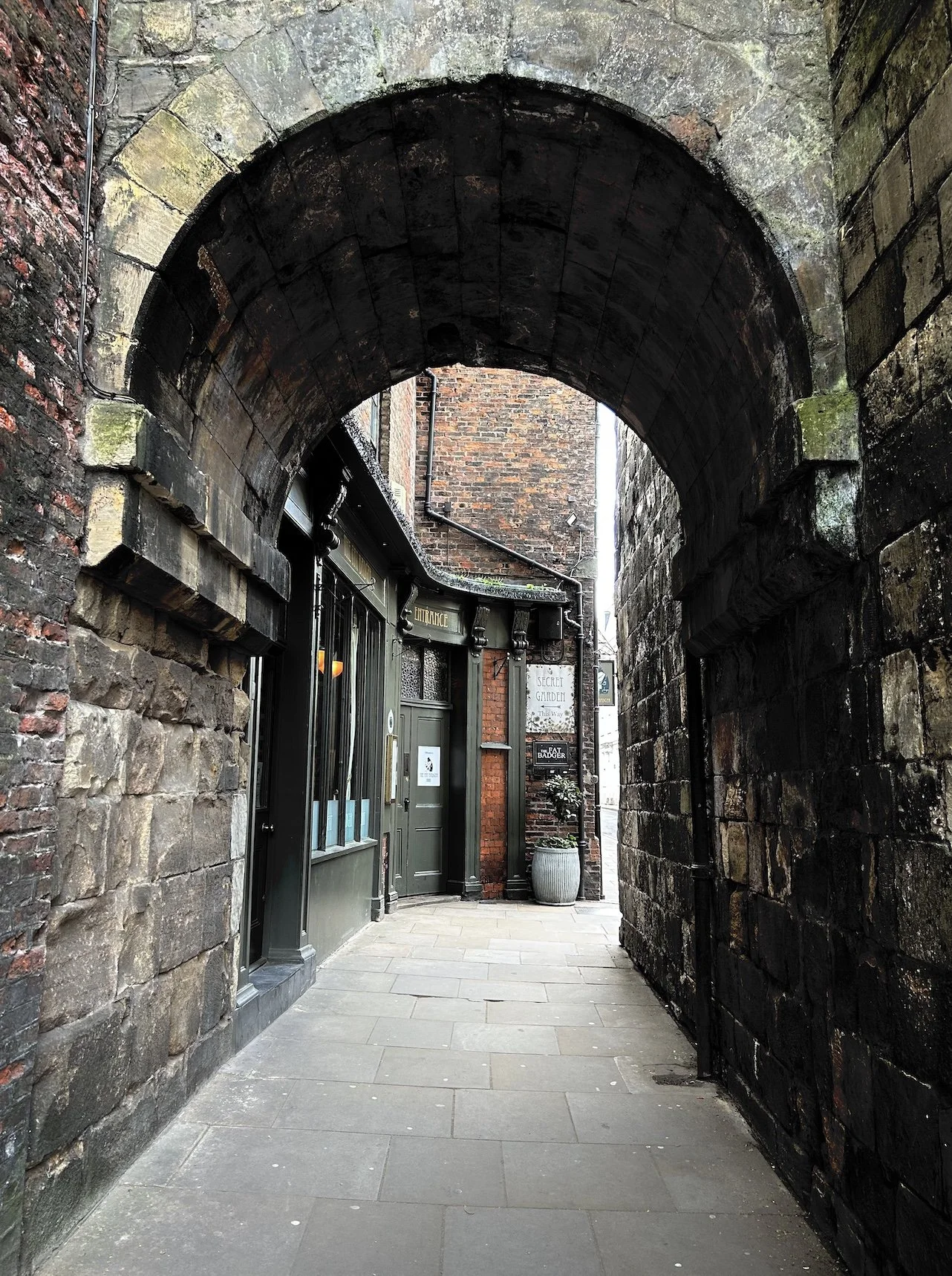
THE FAT BADGER just within the medieval walls of York
On the morning after I had been to Evensong, I woke early again and went out when nobody else was about. I wandered for an hour before returning the Fat Badger for breakfast. It is an excellent pub in which every member of staff is welcoming and cheerful. The dining room is small and the bar not much bigger so a friendliness born of close company is unavoidable. There is no grand and echoing foyer; reception is a cramped corner under the stairs which led to my little room, two flights up. Beyond the reception desk is a storeroom for kitchen things, so, people are coming and going, standing back and breathing in, waiting for others, smiling all the time.
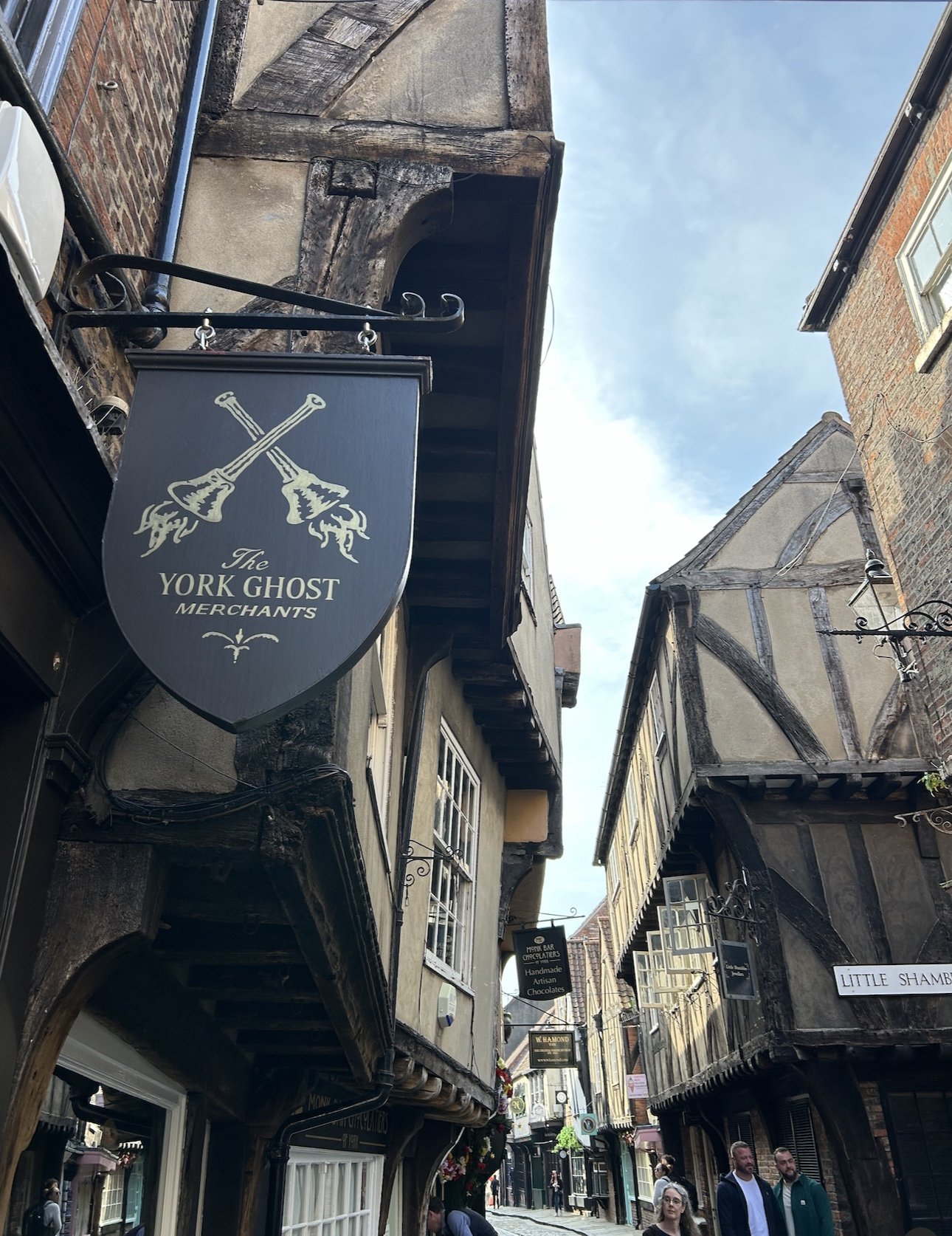
The Shambles
Shamelles are the protruding window sills particular to the attached cottages in the alley, hence the Shambles. Perhaps ‘shambolic’ derives from this because there is hardly a right angle in the architecture and the buildings almost touch above people’s heads. The lane slopes downhill and was for butchers; from those sills they sold their wares. The blood and guts and excrement, human and animal, was chucked into the street so it was best to have a shop uphill. This is Diagon Alley .
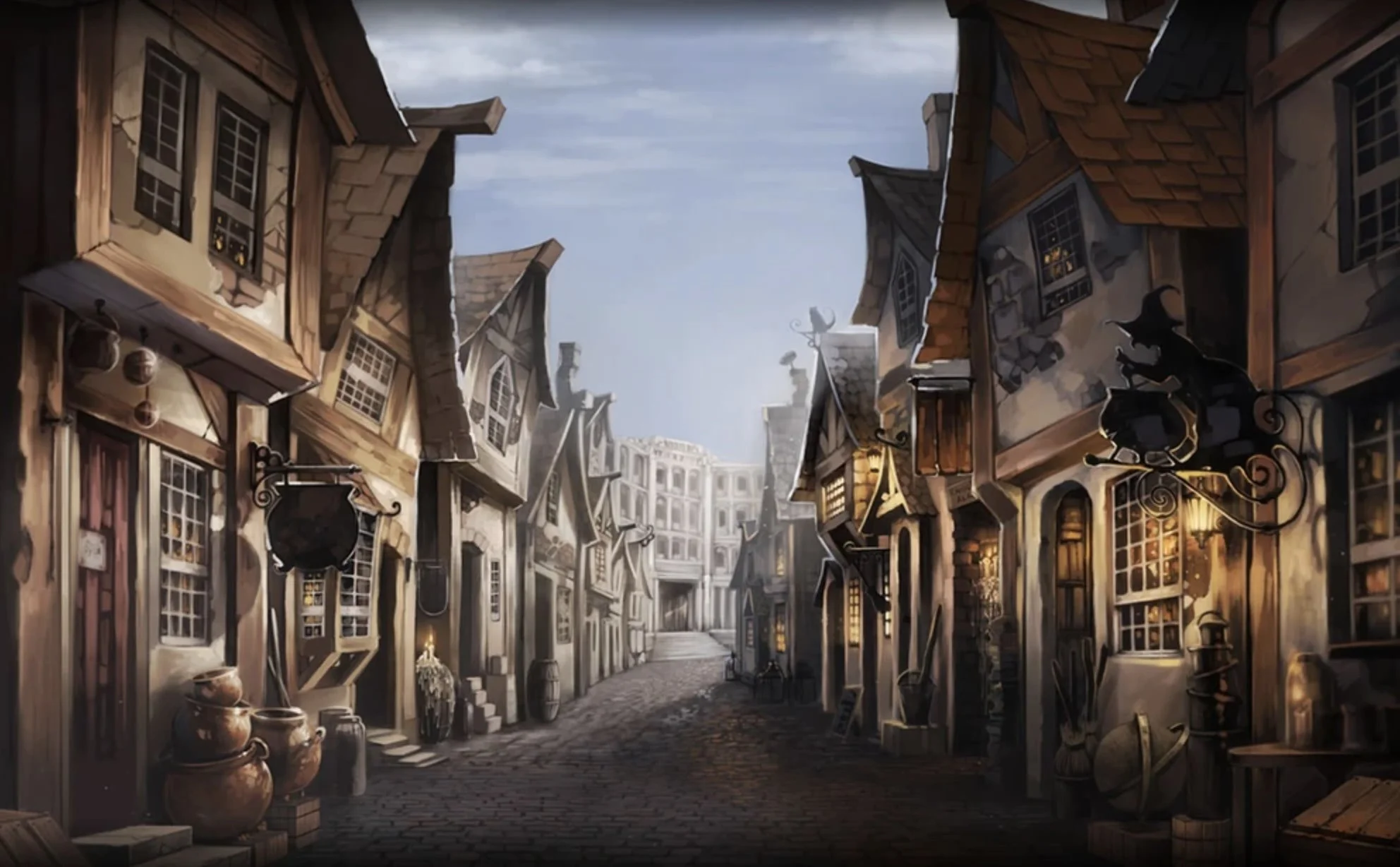
I pinched this from the harrypotterfandom website

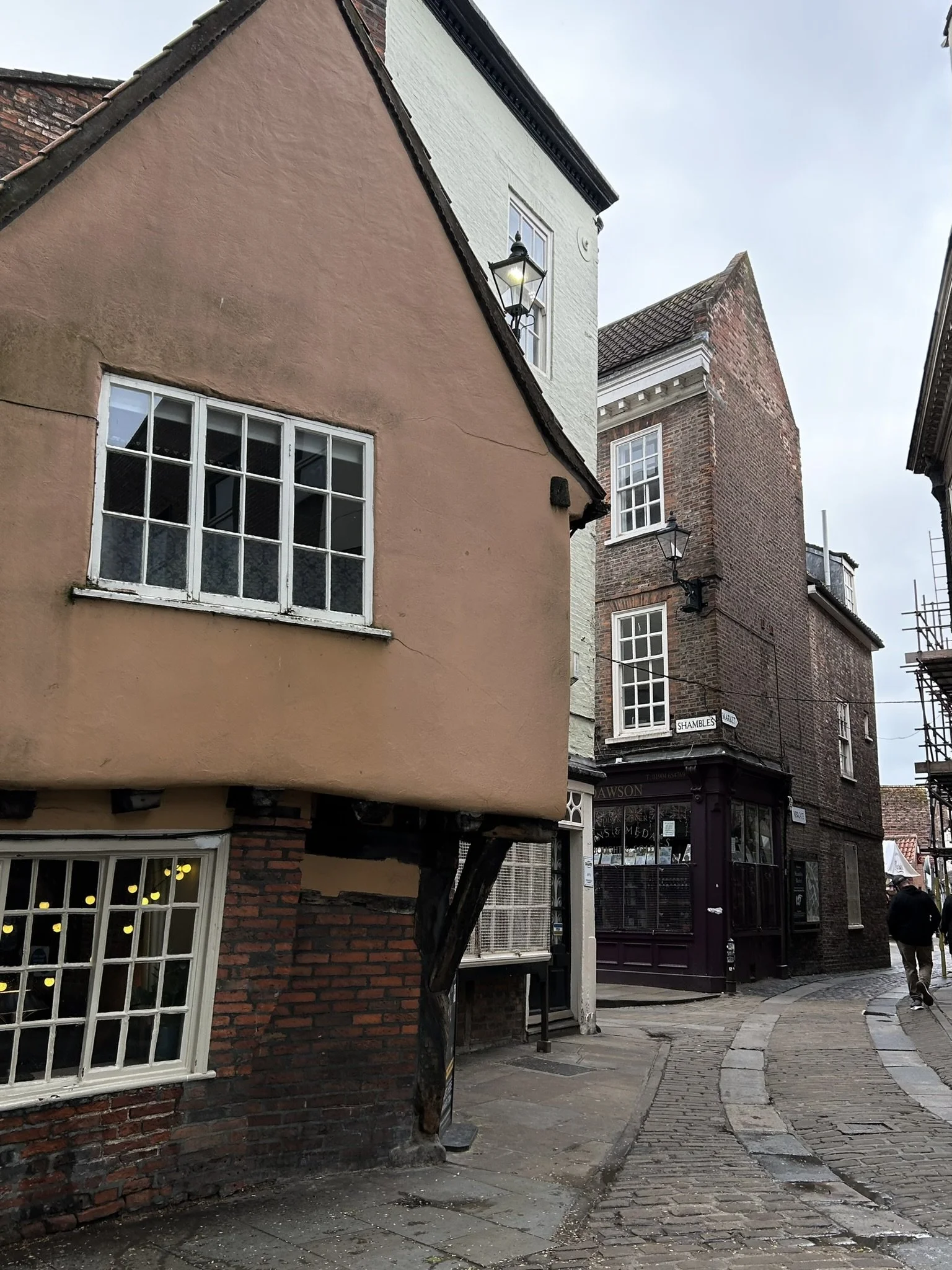
Margaret Clitherow lived in one of these, probably the double house on the left. The alley was renumbered in the 19th C.
I suppose Margaret Clitherow was used to the stench. She lived in one of these houses with her wealthy butcher husband and three children until she was executed, pregnant, for hiding Roman Catholic priests fleeing from persecution during the Protestant Reformation in the time of Elizabeth 1. She is Saint Margaret now. They killed her on the Ouse bridge and to make a real example of her, crushed her with her own door weighted down rocks and earth while she was supine, a rock placed under her spine so it would break.


St Crux
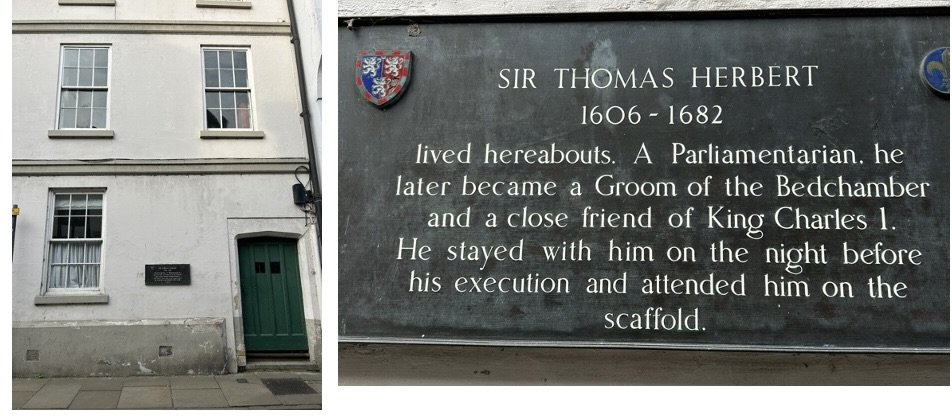
At the lower end of the alley, there was the church of St. Crux, once a beautiful and prominent church of the city built about 1420. The tower was added in the late 1600s. Sir Francis Drake wrote how handsome it was. But it was demolished in 1887, despite protests from the Society for the Protection of Ancient Buildings and this parish ahll was built from the stone. The carved face is probably Saxon; he looks as if he has been hanged except for his peaceful face. If I had gone inside, I would have found artefacts from the original church and the memorial to Sir Thomas Herbert. I had already found his plaque opposite my pub. It amused me because my transported convict great great grandfather was also Thomas Herbert; not a turncoat but he suffered for his disdain of those in authority.
It was opposite St Crux that I saw, by chance, an advertisement for a free organ concert in the All Saints, Pavement church, starting at 11.
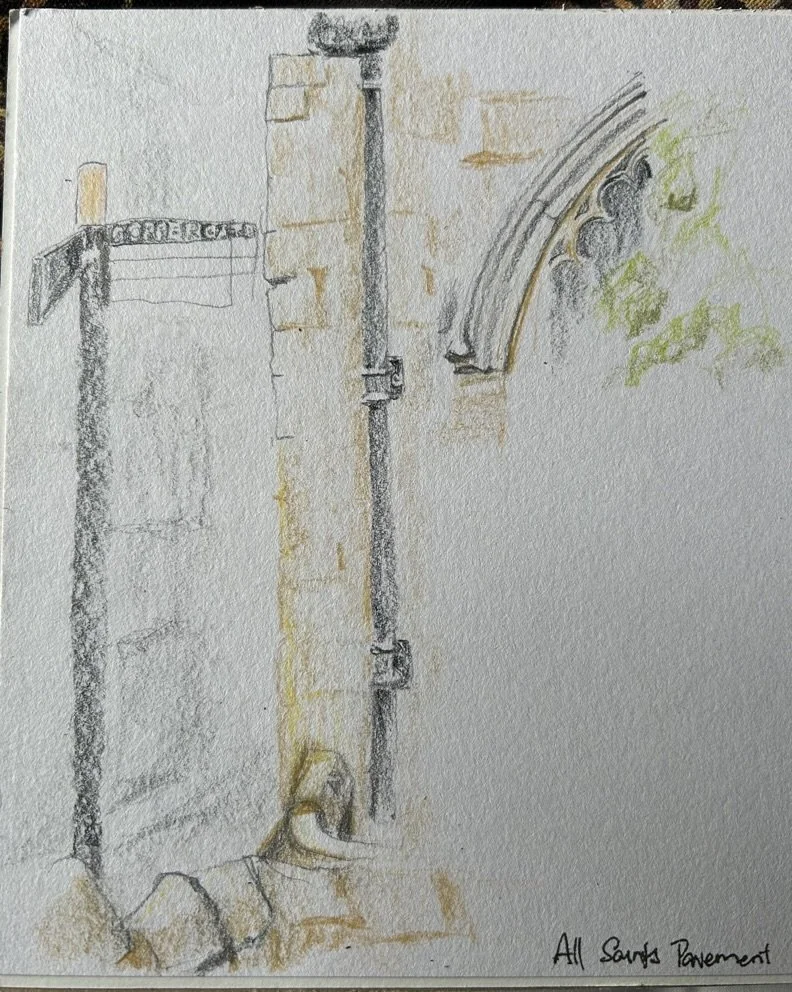
I had a moment to draw before it began. It was extraordinary. Timothy Hone was the organist, a retired director of music who had worked in cathedrals throughout England. The music he had chosen were French 18th C, some lyrical, a lullaby, a great toccata to end with. Maybe thirty were there, mostly old parishioners I guessed; some looked like students of music but I don’t think there were many tourists. It was one of those serendipitous treats that rarely happen in a lifetime.
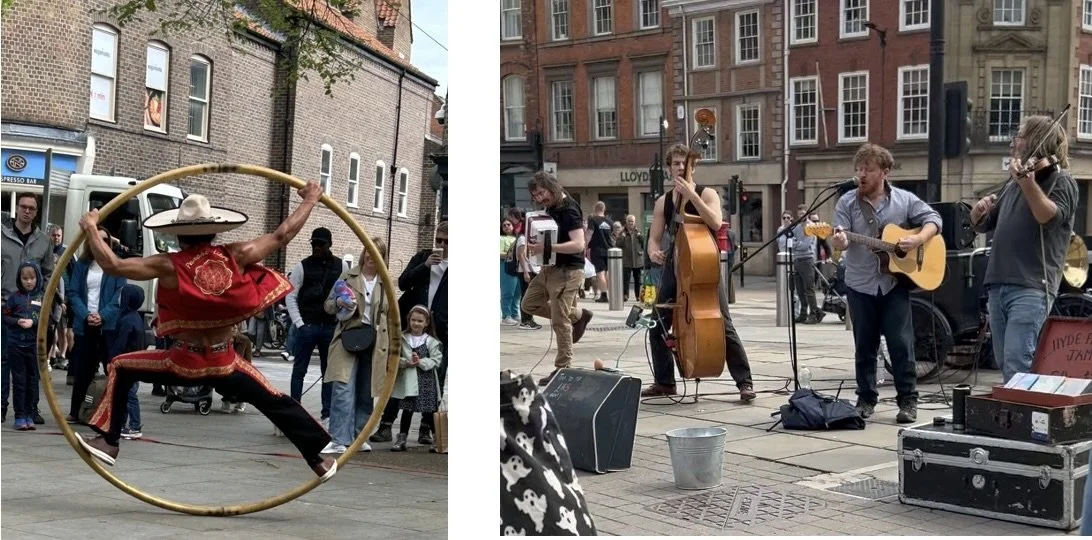
Street theatre near the Shambles: the magnificently muscled Mexican acrobat and the Hyde Family Jam, equally as energetic, superb musicians and very funny. That night I joined a group of followers of a teller of spooky stories, The Deathly Dark Ghost Tour. He was a little stymied by the daylight that was reluctant to leave but never the less, it was great fun, enthralling and hilarious, scripted and improvised, almost convincing.
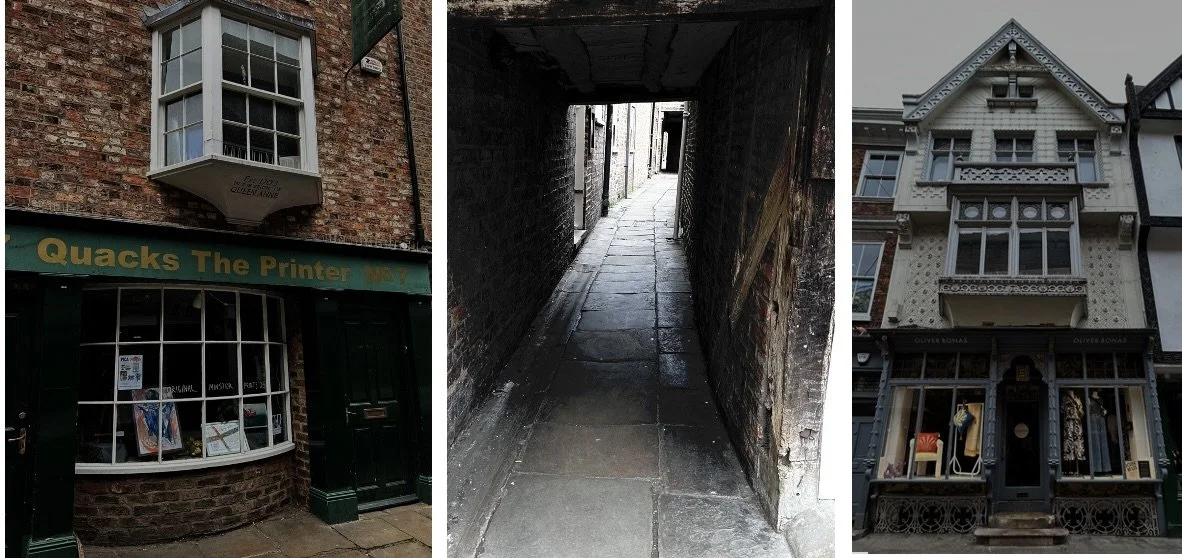
We began at the Quack printer’s shop, snuck through the low tunnel into Coffee Yard, around to the Bedern where I took no photos, the story of dead children was too awful and absorbing. The old hall dates from early medieval times.
The Orphans of Bedern
During the mid-19th century the degenerated area of Bedern, just off Goodramgate, was occupied with slums and warehouses. An orphanage workhouse was established in the area, which was known the York Industrial Ragged School. It was opened by the parish beadle George Pimm, who was employed by the church. His job, as schoolmaster, was to keep the streets of the parish clear of orphans, waifs and strays. They were rounded up and placed in institutions like the Ragged School.
Pimm was well-paid by the church for each child he housed at the school, but he was a greedy man. He rented the children out to work on farms, market stalls and as chimney sweeps.
The living conditions from within the school were filthy and cold, many children died of starvation or disease. When a child died, the church would give them a Christian burial and cross the name off the school list. Hence, George Pimm would lose an allowance for the dead child. So to ensure he lost no further subsidies, Pimm began to hide the dead children within the grounds and walls of the school.
Over the eight years that the school was open, Pimm hid at least 13 children in and around the school.
George Pimm began to suffer from paranoia and reported a strange atmosphere around the school. He claimed he could hear noises - wailing, tapping and scratching, and turned to alcohol for comfort.
Soon he started to tell others of the noises he had heard at the school, but, of course, no-one believed him. They blamed the drink. Before long his ramblings reached the church and they decided to investigate. They were horrified by the state of the school and closed it down.
Bedern Arch
George Pimm was believed to be mad and taken to the lunatic asylum, where he stayed for the rest of his life, which wasn't long. After four months of incarceration, he hung himself. In a suicide note he complained of the wailings and screams of the dead children that tortured him in his cell.
Visitors to the Bedern area have spoken of feeling their clothing or bags being tugged as they walk through the Bedern Arch. Some people have heard childrens' laughter, whilst others have heard screams of terror.
We were taken by the old shop that sold bibles after the printing press was introduced to England (1476), where Florence, a little girl is the ghost, past the great east window of the minster where John Martin tried to escape from a fire he had deliberately lit, and down the Shambles. Believable? May be not the ghosts but it was that actor-story teller who explained the meaning of Shambles, of the shamelles.