WALKING YORK WITH A GUIDE
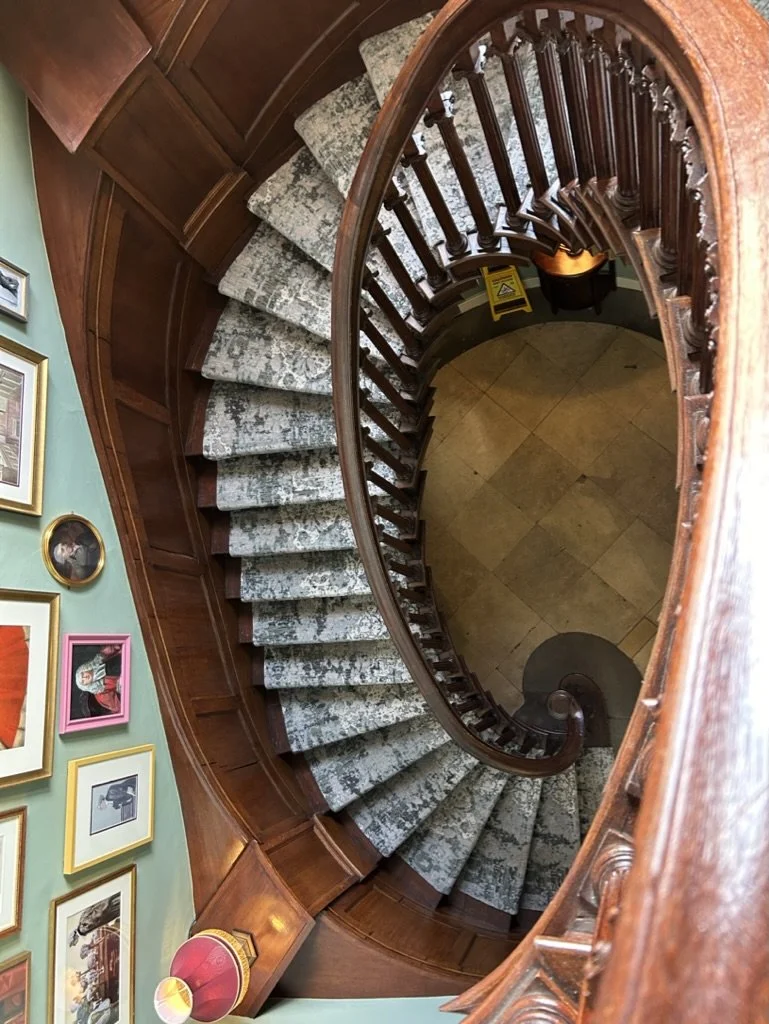
The Judges’ Lodge
A guide will find you places you had not known or thought of, as the Georgian building which housed this elegant staircase in which the judges stayed who sentenced the convicts to exile for the term of their natural lives. I had explained the reason for my coming to York when I had booked from home, which was to experience the lives of the convict stonemasons after they had been incarcerated in the York prison dungeons. She had responded.
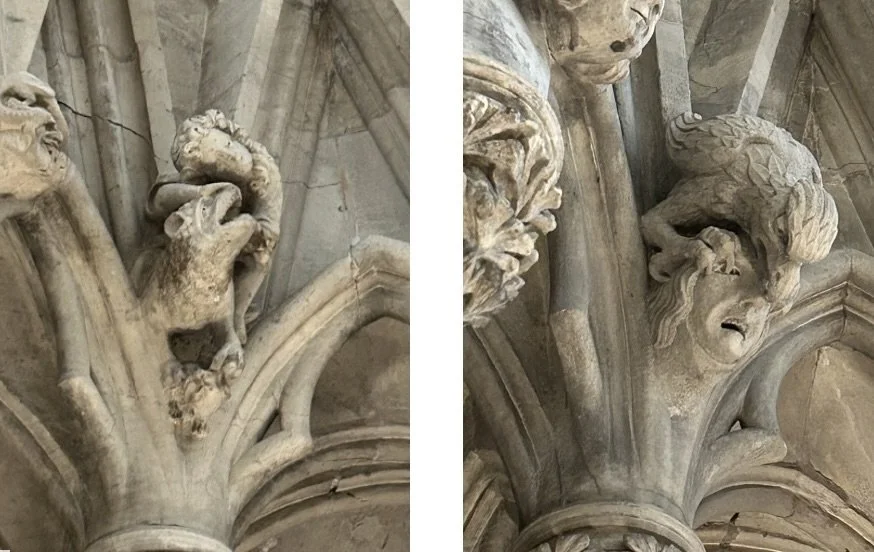
First we went to the MInster; she navigated it like a church cat. Grotesques in the Chapter House I am sure the convicts would never had seen but reflect carvings in cathedrals all over Europe. The guide tactfully and repeatedly moved me on by saying a lifetime in York would not fulfil one’s curiosity.
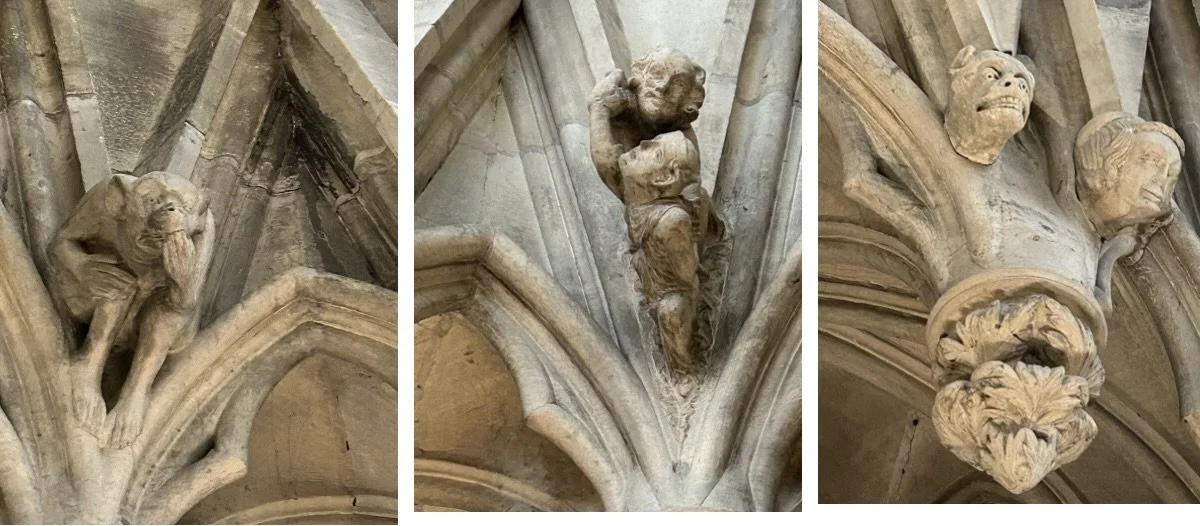
Souls in torment, Jacob wrestling with an angel perhaps, portraits and caricatures …
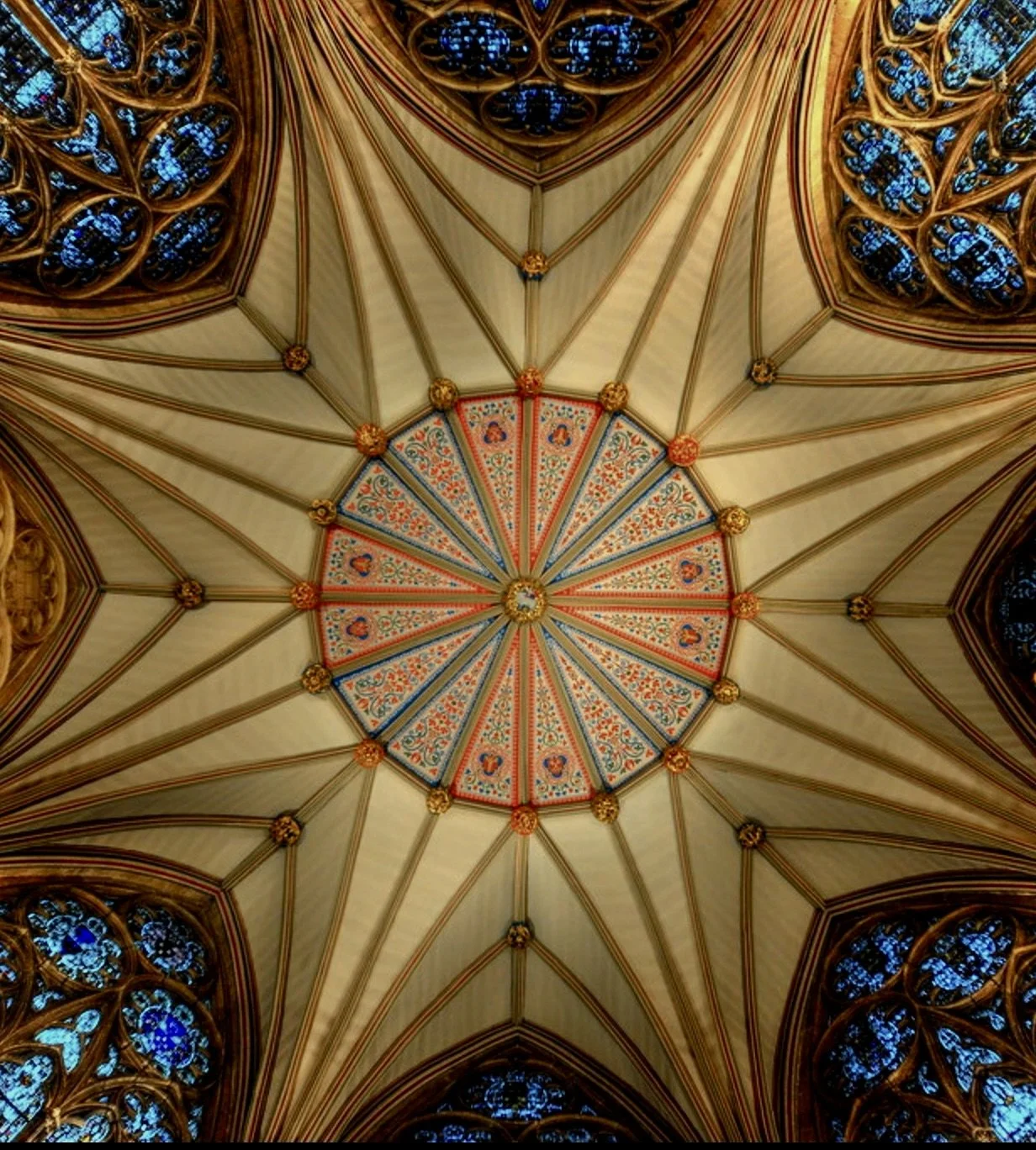
The vast and glorious octagonal room was built in 1260. The vaulted ceiling is not supported by a central column … When I was in the Sistene Chapel in the Vatican, I knew the Italian God would forgive me if I lay down on the floor to behold Michelangelo’s ceiling, but I was more restrained in York and took this picture from the minster’s website. This is the room where the business of a church is done. A minster is a church built during Anglo-Saxon times in Britain, related to teaching, used by missionaries or connected to a monastery. Cathedrals are the seats of bishops used for worship, primarily.
The construction is beyond my comprehension. The stained glass windows from the medieval times are intricate and glowing, telling stories of creation, the apocalypse, Christian leaders and martyrs, new testament stories. They were removed, piece by piece, during the last world war and protected from destruction. One’s imagination is challenged wherever one looks. There are no misericords under the choir seats - I asked a young minister. It was his first day; in a past life he had been a monk.
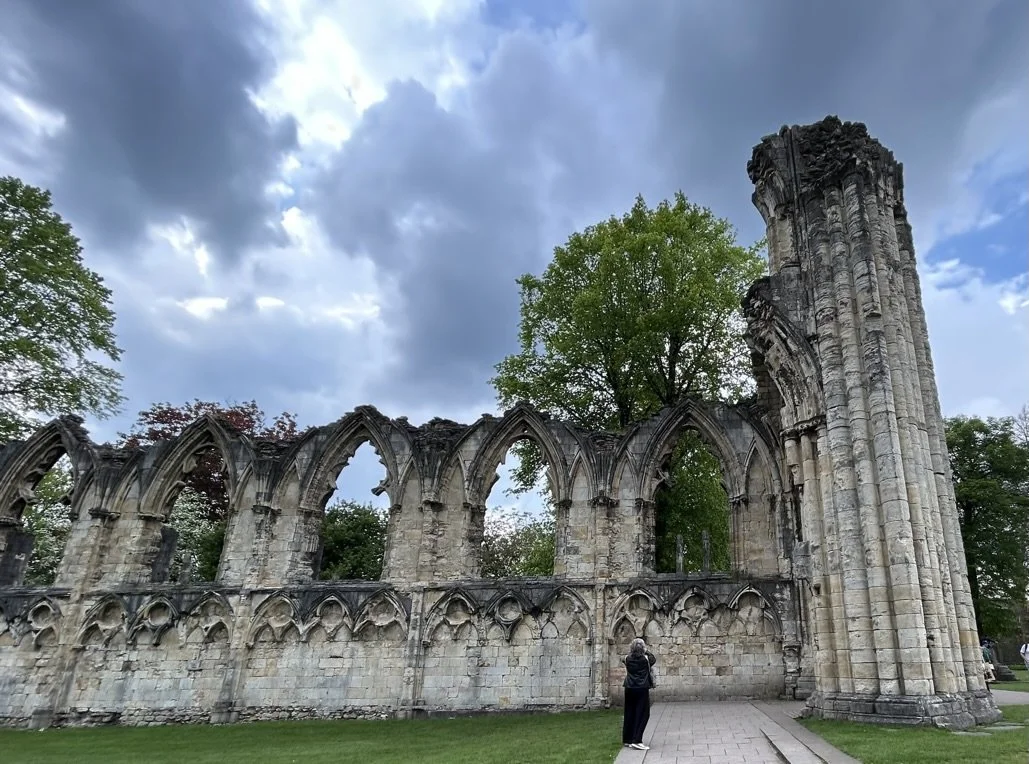
St Mary’s Abbey
St Mary’s Abbey was one of the buildings erected by William 1 in 1068 as he placed his stamp on the north. It became a ruin during the Protestant reformation of Henry VIII. Once so magnificent, all that remains is the museum gardens.
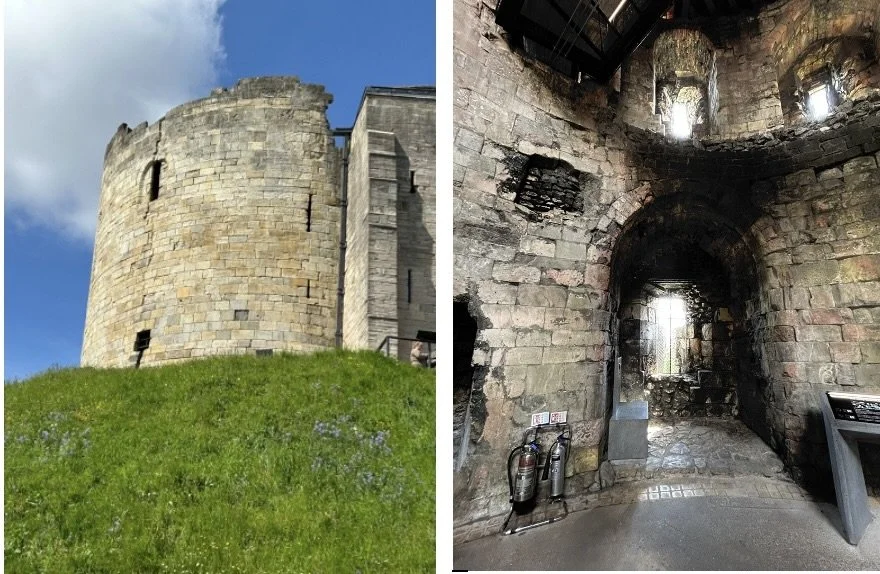
Clifford Tower
I try to imagine the sights Dan Herbert and his mates saw when they were brought to York during the night of their last crime under the Yorkshire moors. in 1268, William the Conqueror built a series of castles as he subdued the northern people. The first tower was wooden and burnt down in 1190. York’s community of Jews had sought refuge in it during a period of persecution; it was burnt down when they were inside, perhaps by the mob or perhaps as an act of mass suicide. History is equivocal. It was rebuilt very shortly afterwards. Further repairs and rebuilding, some in stone, took place in the castle during the early 13th century. Then in the middle years of that century, as war with Scotland loomed, King Henry III decided to build a completely new stone tower on the mound. It is described as a castle keep so it was an education to be inside such a place and imagine the soldiers, lay people and servants and administrators filling the space, scuttling up and down the narrow winding stairs, keeping watch through the parapet, keeping the prisoners in its dungeons, keeping the fire alight in huge fireplace, bringing food … One reads of people besieged in keeps.

William had ordered the landworks, raising the mound from earth, at the same time creating a moat, called the King’s Pool. I suppose that is where the excrement was chucked. The minster is not far away; could the bells be heard as I heard them?
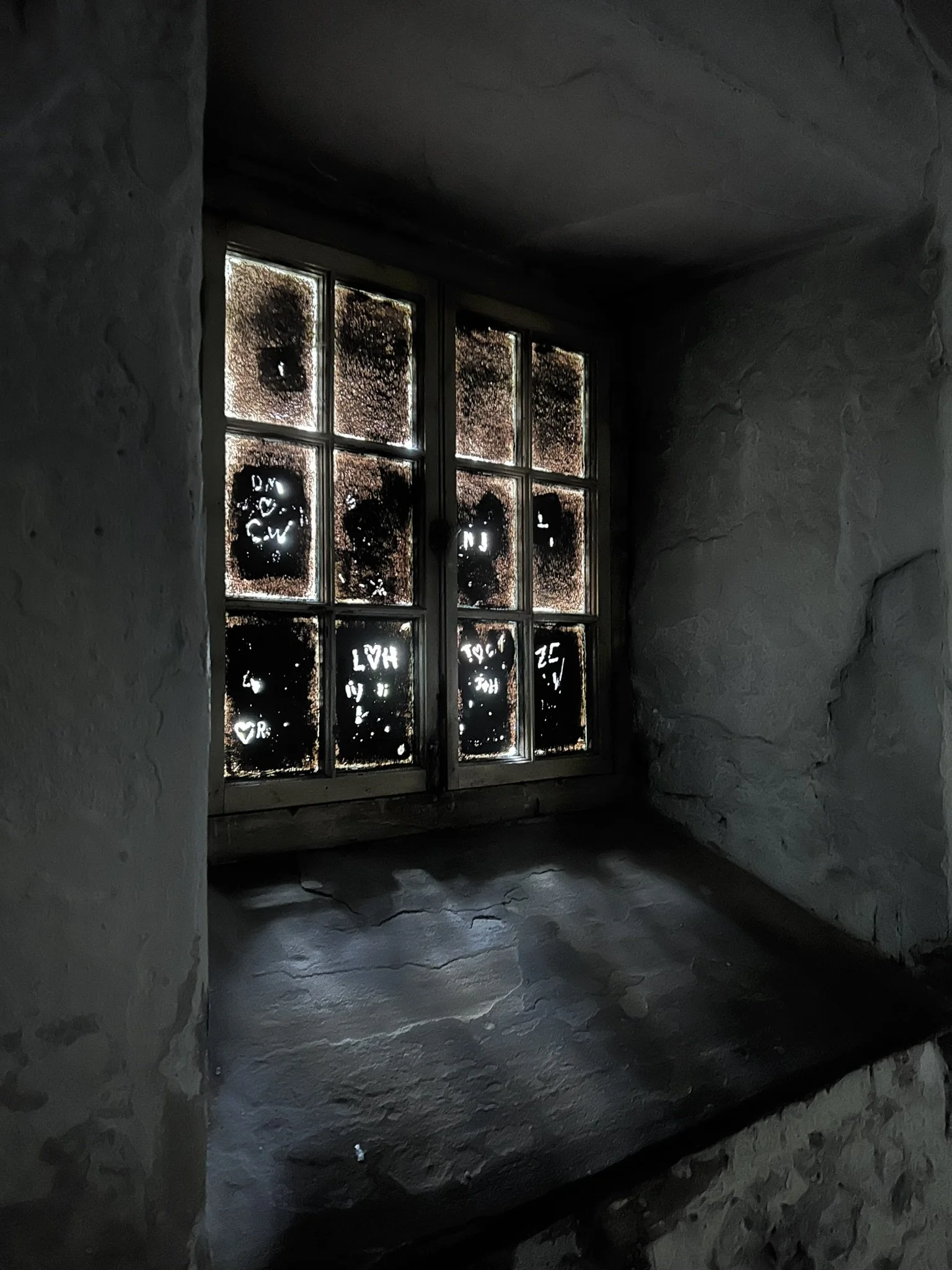
dungeons in the York Prison
Not by the prisoners, perhaps. In 1700 the main buildings, except the round tower, were swept away to make way for a grand new County Prison for the whole of Yorkshire. It opened in 1705; here Herbert was dumped 122 years later.
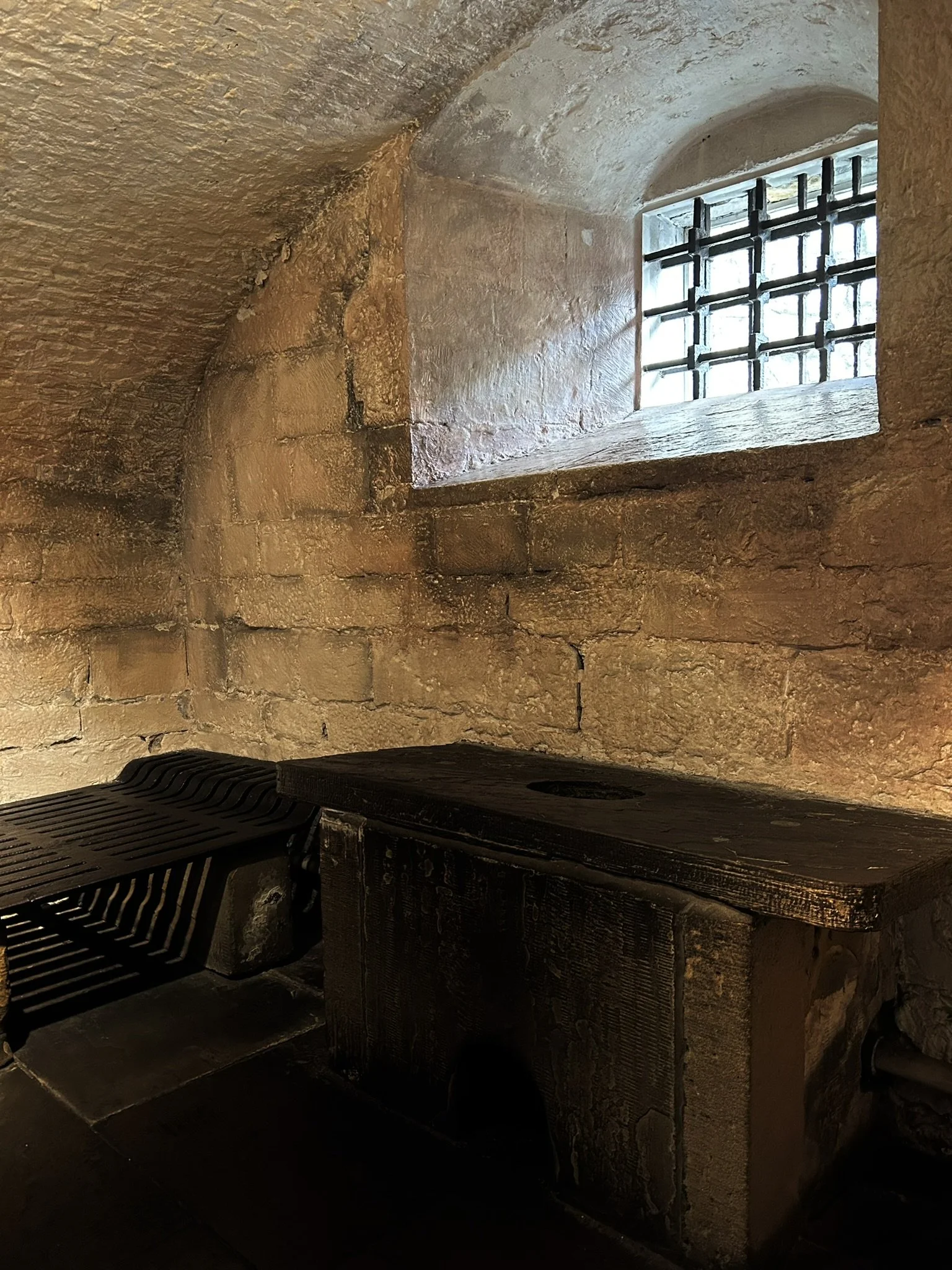
The cell for prisoners condemned to death where they spent their last night
This was one of Britain’s first multi-purpose prisons. Criminals awaiting trial or punishment were kept on the ground floor with debtors in better quarters upstairs. Men and women were held separately. It is awful.
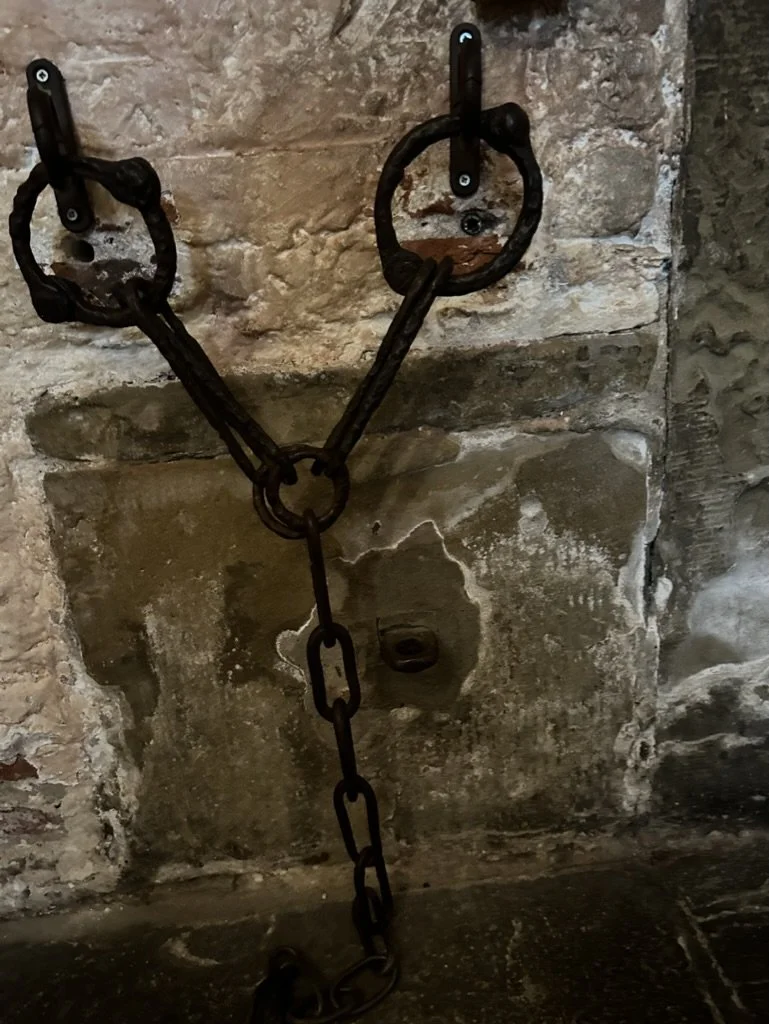
About the time Herbert and Colbeck were in here, 1827 & 1828 respectively, Elizabeth Fry and her brother Joseph Gurney had been influential in prison reform. She was born in 1780 into a prominent Quaker family, the Gurneys. Her mother died when Elizabeth was twelve years old. As one of the oldest girls in the family, Elizabeth was partly responsible for the care and education of the younger children, including her brother Joseph. They worked together to improve the condition of prisoners. The passing of the Gaols Act in 1823 had a limited effect on prison conditions. It was largely ineffective, as it contained no mechanism to ensure its provisions were followed. The one change widely and successfully adopted was the separation of male from female inmates which had been her major work. She also promoted the idea of rehabilitation instead of harsh punishment, so Herbert and Colbeck probably were not chained but able to work for a few pennies. Because the gaol was being refurbished during their time, they may have had some work as stonemasons.
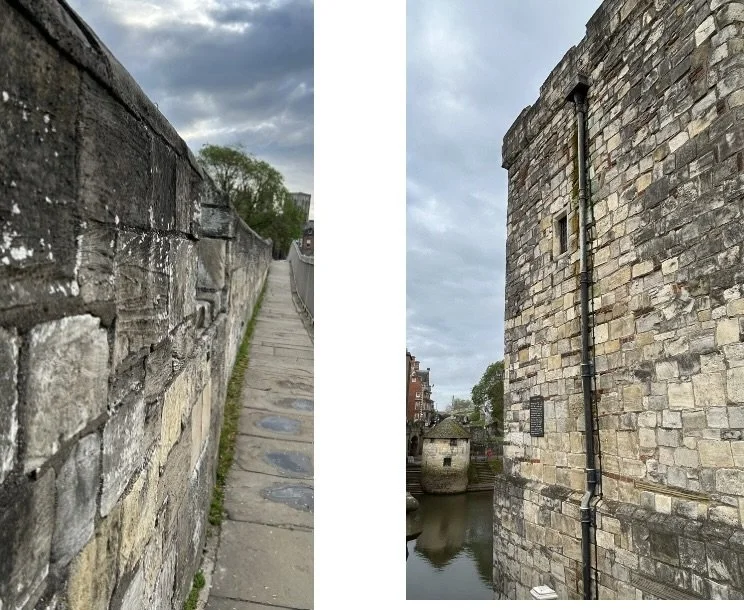
Walking the city walls offers a summary. Comprehending the determination and labour expended in such a construction is beyond our world. The detail in the slits for arrows and the gaps for throwing rocks onto the enemies; the fact that enemies approached so frequently; the chains across the rivers between towers to stop enemies as well as toll-avoiders who tried to sneak in at night … looking down into back gardens of this peaceful time, ordinary ones and beautiful ones behind the residences of the Archbishop and lesser clerics of the minster.
A walled city in comparison with Hobart Town, sprawling up the rivulet from 1804; what did the convicts think when they disembarked and were marched to their lowly lodgings?