MANCHESTER
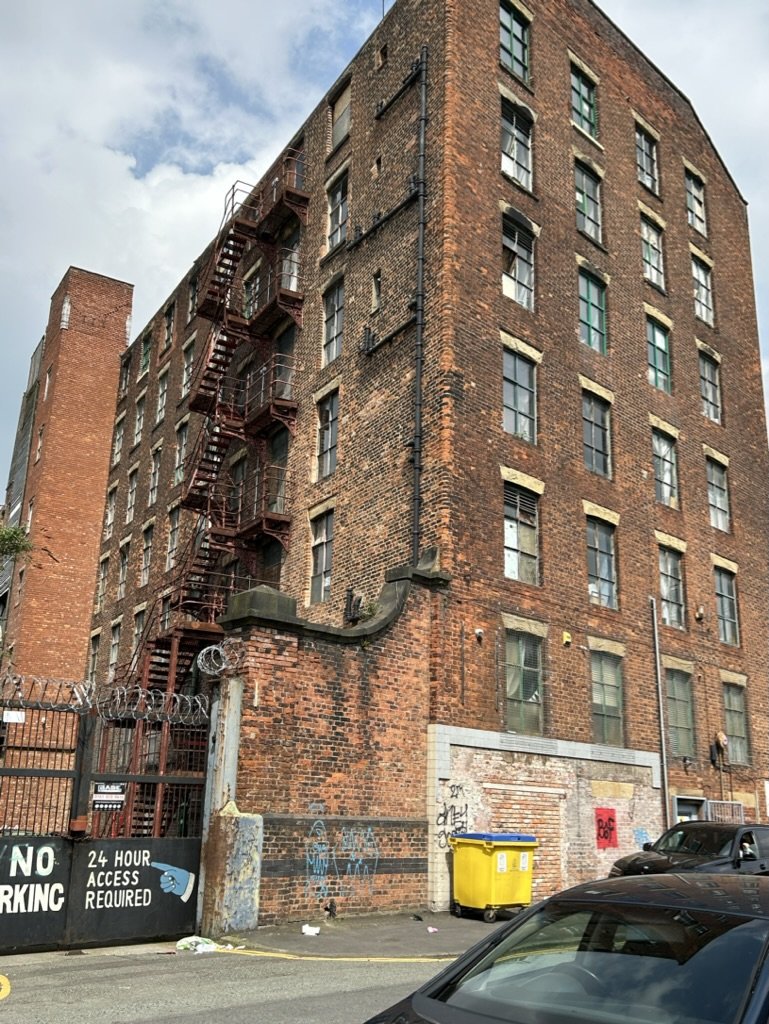
HOPE MILL POLLARD ST ANCOATS, MANCHESTER
I am here to follow the lives and crimes of Dan Herbert and James Colbeck, the convict stonemasons who built the Ross Bridge and I am beginning to think Colbeck must have lived here after he returned from London before he committed his burglary.
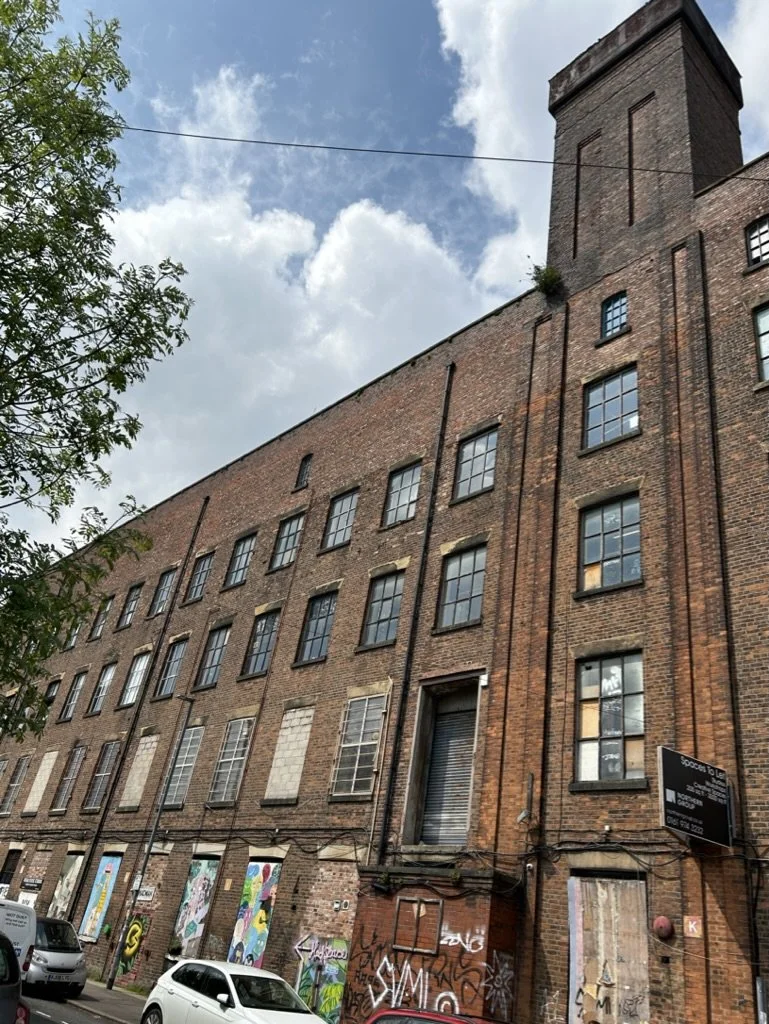
Pollard St. opposite the site of No. 38
According to a contemporary guide to Manchester, Hampson’s Buildings were at 38 Pollard St. Ancoats. Dan Herbert’s mother lived in the Hampson’s Buildings with her second husband, Thomas Bulmer, whom she married in 1817 when Dan was 15. I think Thomas had been recently released from three years in gaol for a misdemeanour he committed related to his insolvency. I think, too, he and Mary were influenced by the sermons of Rev John Clowes who was a Swedenborgian who refused to dissociate from the Church of England but continued to sermonise on the provoking, enlightened but perhaps whacky ideas of that Christian visionary. Clowes presided over the marriage of Mary and Thomas. A Bible Christian Chapel had been built by a disaffected acolyte of Clowes’, William Cowherd, his philosophy based on the writings of Swedenborg. He had separated from the established church; his sect adhered to the interpretation of the bible with reason and science, temperance and vegetarianism and from there and then, the popular diet evolved. So, I imagine Dan, the youngest of Mary’s children, rebelled against his step-father, probably strict though keen to educate his rebellious step-son and who was the usurper of his mother’s affections.
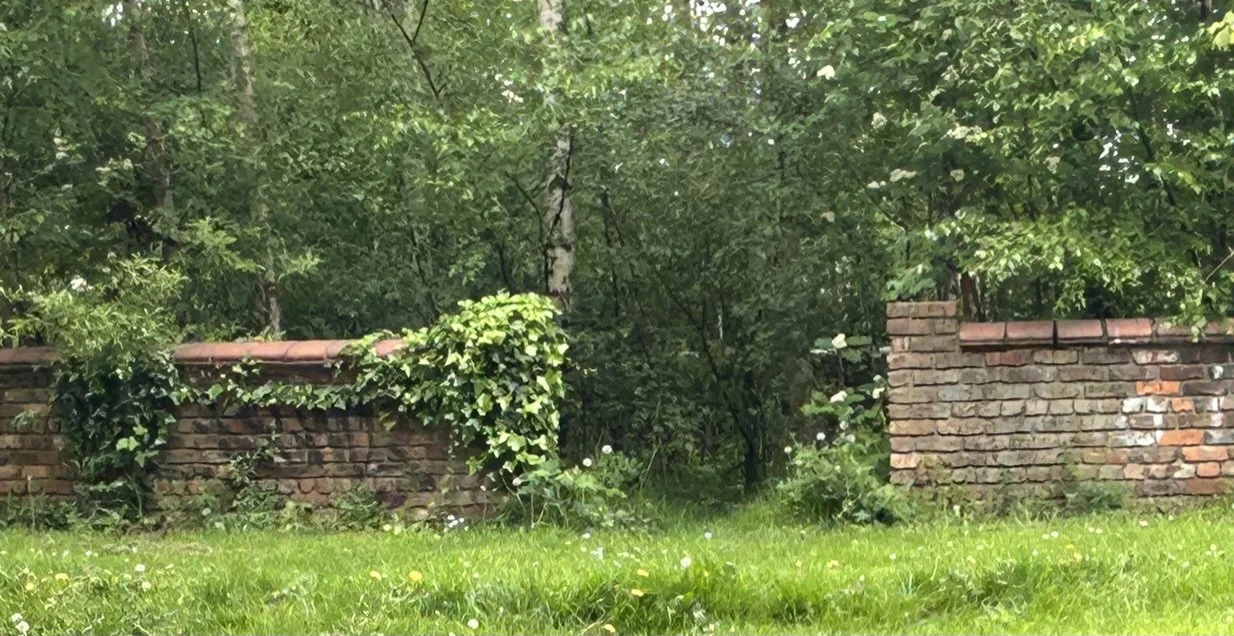
Memorial to James Scholefield’s Round Church in Every St. Ancoats
Just a block away from Pollard Street, I searched for and found this gentle memory of an unacknowledged extraordinary man, Reverend James Scholefield. I recognised the site because the wall is round. He had been a student in Cowherd’s academy, remaining a Bible Christian, schismatic, separate from other protestant churches, who built his own round chapel in Every St. Ancoats in 1823. In the basement was a school for boys and girls; there was an apothecary’s clinic from which he practised medicine though he had no formal training. There was a private burial ground of three acres in which poor people of any or no belief could be buried. Records tell that Mary and Thomas Bulmer were buried in the Bible Christian ground; perhaps it was here, so close to their home. There are a few headstones but the Bulmers would have been poor and their graves are probably unmarked. One wonders about Dan’s sister Sarah, ten years older than he, and his other his brother and sister; had they survived adolescence or the cholera outbreak of 1832? Were they antipathetic to their step-father or their mother’s religious views? Did they enter apprenticeships as Dan must have done to become a stonemason, as noted in the VDL records?
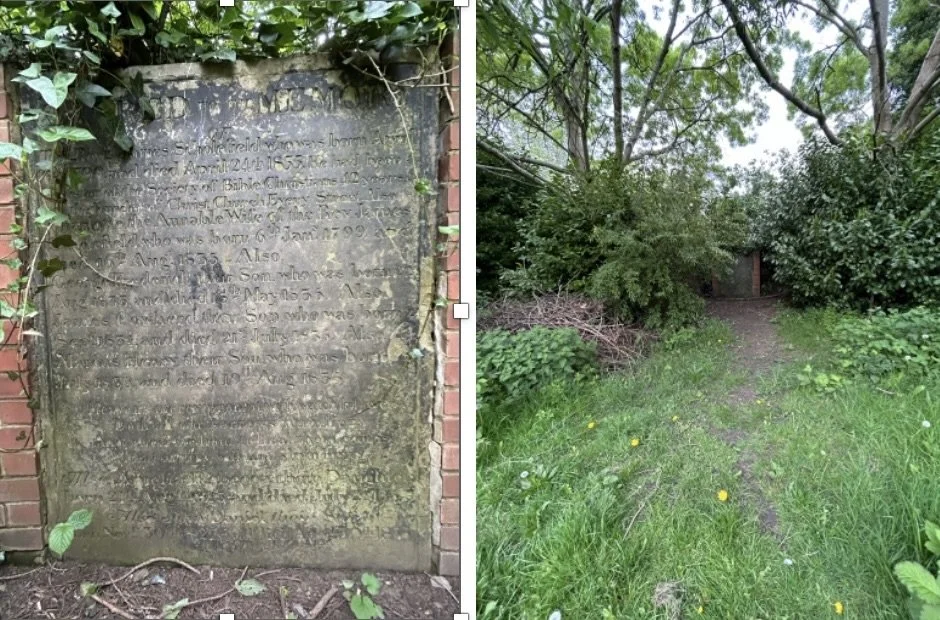
Tucked away in the corner of the ground is the memorial stone to the Scholefield family.
Scholefield was a political radical, working for the poverty stricken on many fronts. He fought against the society of his day in which rich men “by their wicked and oppressive systems, make you Beggars and then hate and despise you for being Beggars”. I wonder whether Dan listened to him speak at the New Cross where the Crown and Kettle stood. He once told an audience there that he was always ready to “plunge into the thickest of the fight”.("In the Thickest of the Fight": The Reverend James Scholefield (1790-1855) and the Bible Christians of Manchester and Salford Paul A. Pickering and Alex Tyrrell). Was Dan radicalised as a young man? Scholefield arrived in Ancoats when Dan was 21 and would not have approved of his wayward ways. But in 1823, Dan was in a hulk on the Thames. He returned in 1826 to immediately commit the highway robberies that caused his exile.

If he had lived with his mother and step-father after the hulk, he would have walked out the door to face the Ancoats mill, maybe stopped at the Bank of England pub on the corner, doffed his cap to the lock keeper in his cottage, crossed two canals to the Murray mills ….
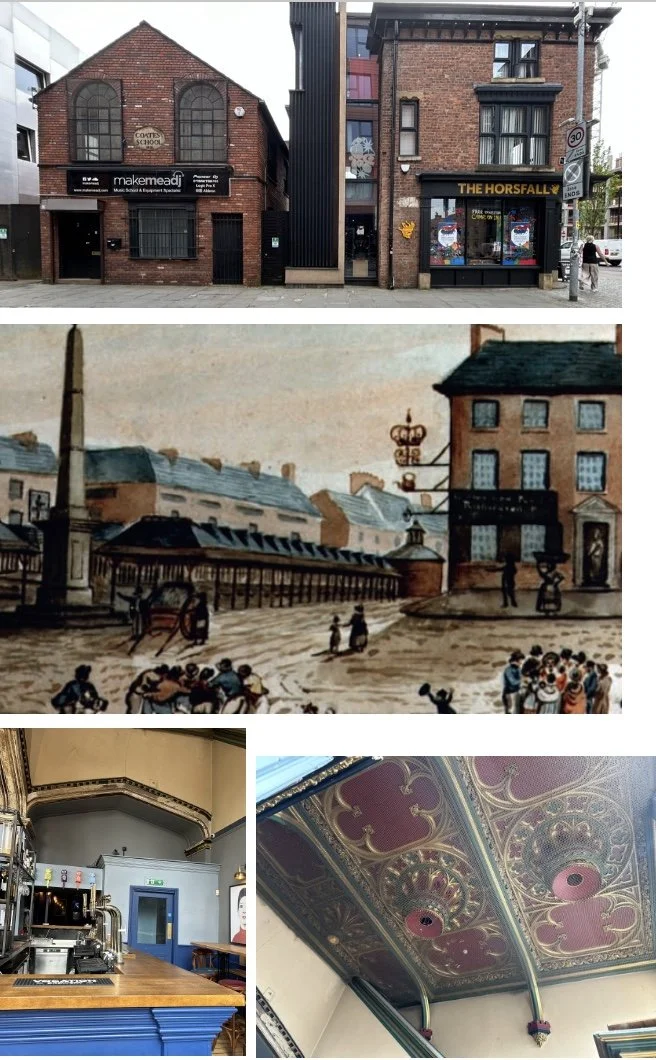
….then up Ancoats Lane, past Jersey St to the corner with the Oldham Road where the Crown and Kettle awaited him at the New Cross. So did his mates in crime. Dan Herbert was no romantic; he was a thug and a robber with no altruistic purpose. Perhaps he really wanted to be transported; just maybe these were ‘survival crimes’. He would have been dirt poor and a disappointment to his mother and siblings after 4 years in a hulk and 2 years in Leeds dungeons before that.
In the pub, I met Gary, an edentulous Ancoats man who was a font of knowledge. Knowing nothing about Manchester beer, I asked the barmaid for one the same colour as his, indicating Gary’s ale which was half finished beside his stout. So we began to chat. One learns wonderful tidbits from chance meetings. THe Crown and Kettle, he said, was the fourth oldest pub in Ancoats, built as a court house in 1734. It became a library and it was then that the ceiling was so ‘fancified’. He took me behind the bar to show me. When it was a court house, a tunnel was built to Strangeways prison. He showed me the trapdoor through which they dropped into the tunnel and exile. I shall go back there today on my way the Shudehill and a bus to Leeds because I left my little blue journal on the bar, I think.
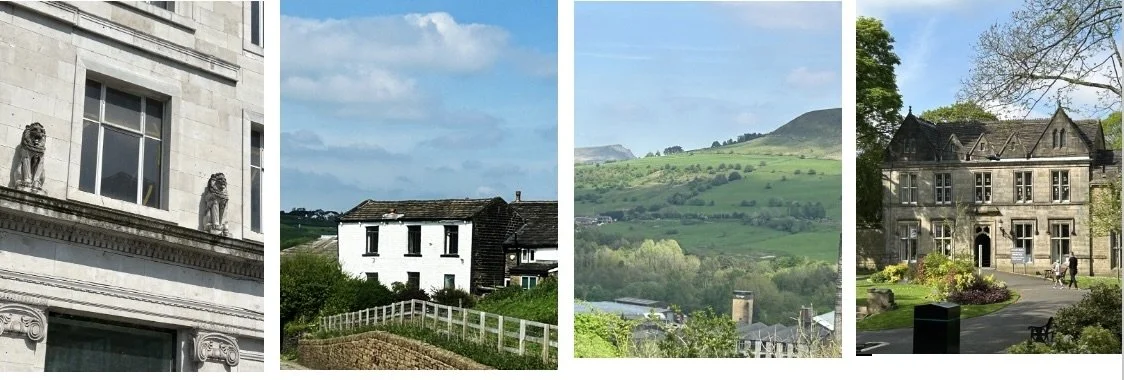
On the trail of Dan Herbert and James Colbeck to the villages below the Yorkshire moors. Warwick St. where I left on the bus; a farmhouse once an inn, perhaps like the ones the men spent their ill-gotten gains; the first sight of the high country; the library at Uppermill.
At 2 o’clock on Thursday, 7th of September, 12 days after his release from the hulk at Sheerness, Dan met his three mates at this pub and set out towards the moors, fifteen miles away, intending to rob a traveller. It was dark when they arrived at Standedge, a sparse and lonely place. They walked around for three quarters of an hour before the hapless John Mortimer rode along from the north-east, the village of Delph. Dan seized the bridle and pulled him off but his right foot got stuck in the stirrup. One of the men stupidly slapped the horse and it took off, dragging the poor man about 8 yards. They grabbed him and the horse galloped away. They robbed him of eight shillings and his pocketbooks and left him lying on the ground while they ran over the moor to Uppermill.
I left the bus at Uppermill and found the library where the librarian was interested in my story and helpful, saying her husband often tramped the moors; would I like to join him one day?
The robbers went on to Staley Bridge where a light was shining in a pub window. Dan paid for a gill of gin and two papers of tobacco. In the pocketbook they found three £1 notes so they visited another pub and filled up on two quarts of beer and sixpenny worth of bread and cheese. (These things we know from the magistrate’s report)
Before they reached Manchester they threw the pocketbook into the Ashton canal.
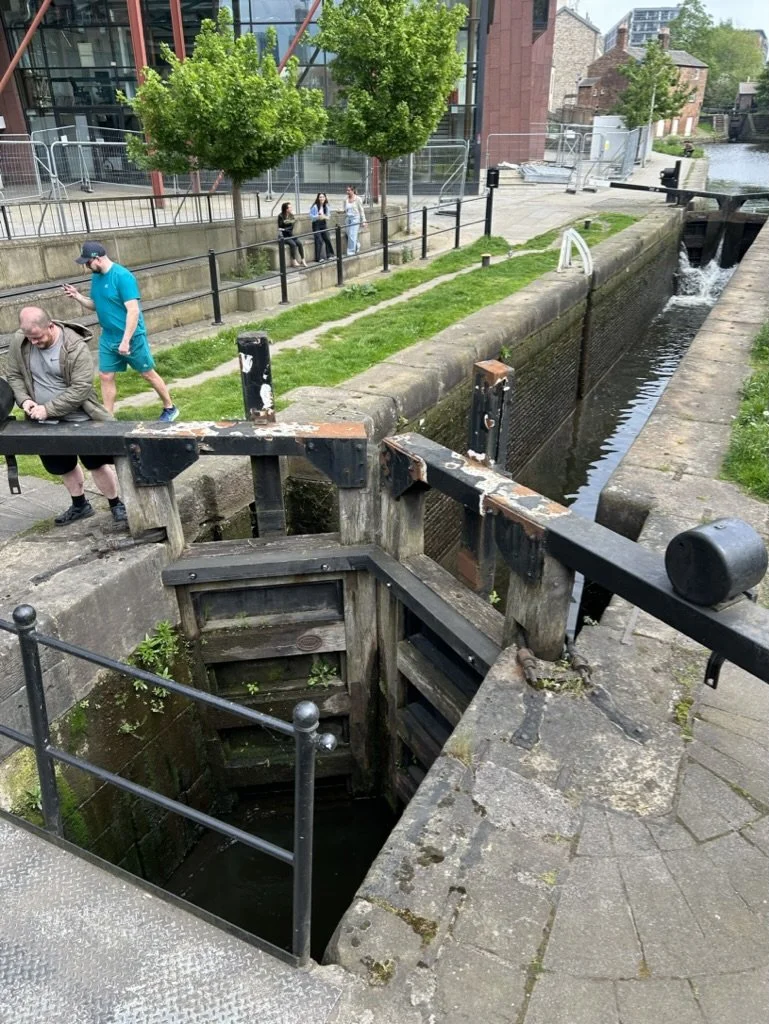
The Ashton Canal passing through Ancoats
On October 3rd, the same gang of four met and set off again, northwards through Oldham on the road that goes by the Crown & Kettle. They arrived at Standedge at 6.30 pm. They walked about for two hours because the road was ‘much thronged with people passing in twos and threes together’. (One of the men eventually turned king’s evidence and told the magistrate of their dastardly deeds.) Thomas Buckley was walking towards Saddleworth, the parish which contained the villages. They met him between the Three Crowns Inn at Scouthead and the Austerlands Bar (I think that means gate). The bus whizzed past that very pub in Thorpe Lane on its way to Austerlands before I had the wit to photograph it. So I was right there, on the spot where they accosted the wayfarer, Buckley. ‘Bannan seized him by the breast and coat collar and took from his right side breeches pocket keys and 7 pence in copper. Herbert got eight little books and four sermons’. (serve him right). Lynch got half a crown in silver. They returned the keys and went back through Oldham, as did I.
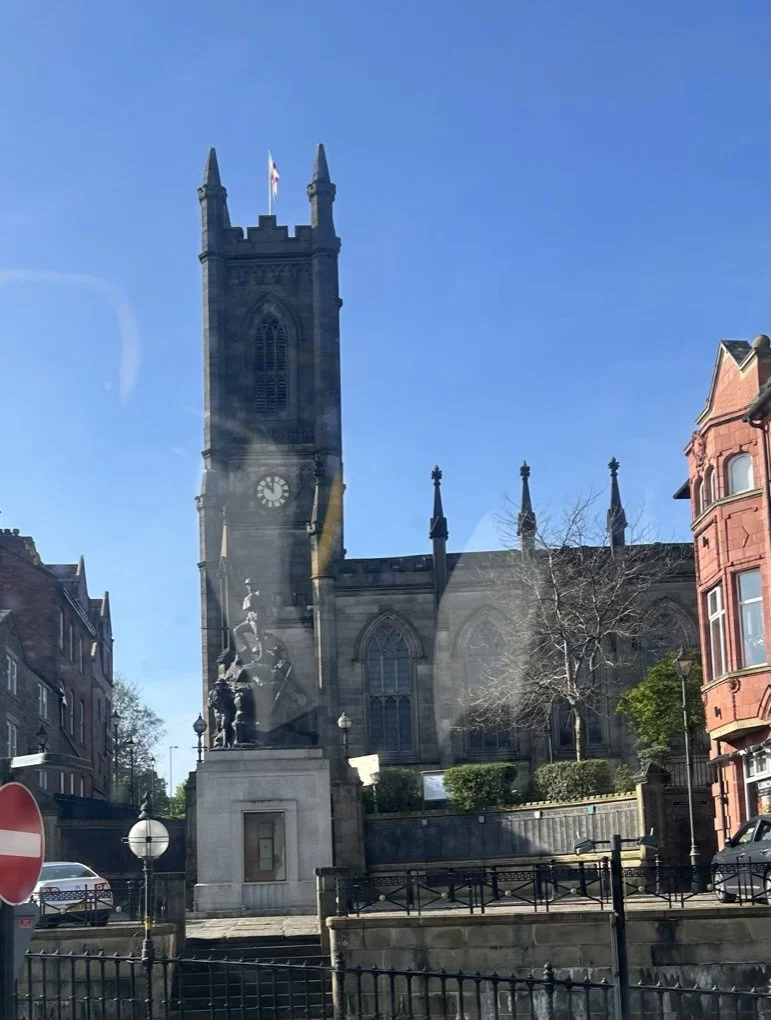
Oldham
I changed buses here; they stopped at a pub half a mile past the town. There they found in the pocketbook they had also taken, a £10 Bank of England note. They left about midnight and went to Lynch’s lodgings in Lever St, somewhere near where I am sitting now, writing this story.

On Monday 23rd October, they met again at the Crown and Kettle and set off for Standedge. The librarian had told me it is a bare, lonely high place famous for murders and other crimes. As I drove past it in the bus, it felt spooky, like a Wilkie Collins setting for a novel. William Wilkie Collins (8 January 1824 – 23 September 1889) was an English novelist and playwright known especially for The Woman in White (1859), a mystery novel and early sensation novel and for The Moonstone (1868), which established many of the ground rules of the modern detective novel and is also perhaps the earliest example of the police procedural genre. He is worth reading! Anyway, the robbers had tuppence between them and spent it on bread and cheese in a shop on Newton Lane, parallel to Newton St. where I am staying, now known as the Oldham Road.

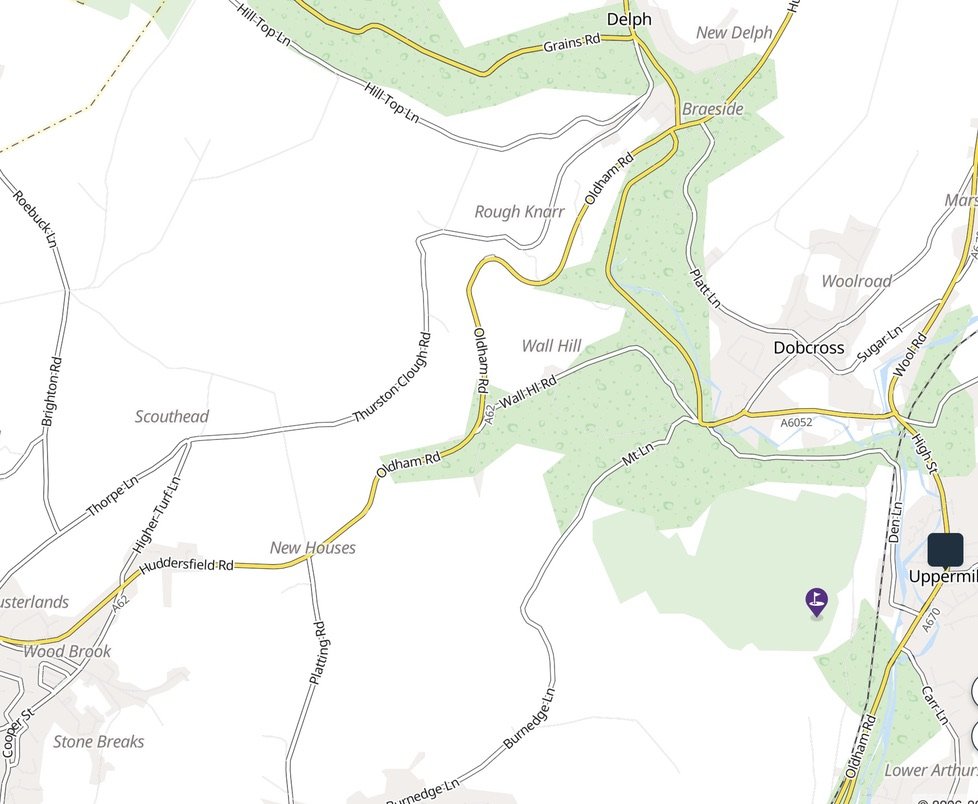
They walked through Oldham, Austerlands and New Delph arriving at the edge of the moor at a quarter to six. They sheltered from rain in a hollow from which stones or heath had been removed. A little after seven, two men came along, clothiers who had been to the Huddersfield market. You can find the Huddersfield Rd on the map. Two men to each victim; Bannan and Lynch relieved their fellow man, William Kenworthy, of two sovereigns and a purse and ran off down the road to Uppermill and called at the first pub on the right. If only I had recalled that delightful detail; I, too, would have had a noggin of rum as they did, with a paper of tobacco. Lynch gave the serving lad a sovereign and received 19/4d change so they had another half noggin. They must have been cold and wet. Mr Kenworthy had knocked on John Bentley’s door nearby and asked him to chase the men. When they left Uppermill, three men on horseback came up. “Hullo my lads, why don’t you come on?” Lynch tried to run away through a nursery. Meanwhile, Dan and Camble were robbing John Wood. However, that night all four were delivered to the dungeons at York castle ….
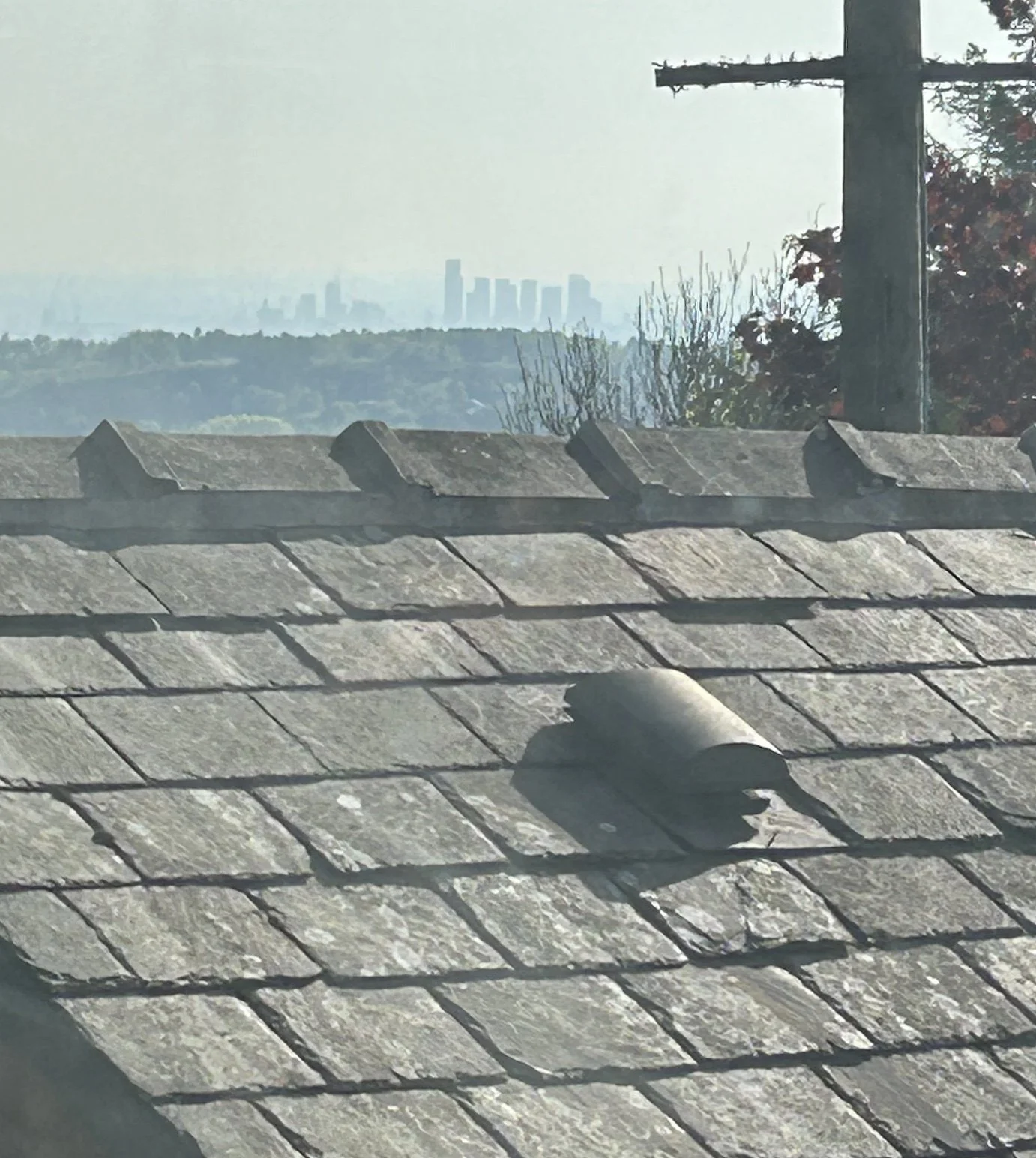
…. and I rode back to Manchester, front seat in the top of the double decker bus. Dan did not see his home town ever again. He died in Ross in 1868 where his great masterpiece crosses the river, hardly acknowledged.