THIS GRAND CONVERSATION IS UNDER THE ROSE.
The Ross Bridge could be regarded as a conversation under the rose.
In his Classical Dictionary of the Vulgar Tongue, Francis Grose writes that the expression under the rose is synonymous with upon the sly: transacting business privately. In some of the pubs in London, pictures of roses on the walls indicated that conversations in those rooms were to be considered confidential.
Sub rosa is Latin for under the rose; it is said Roman banqueting halls were decorated with roses when secrets were being discussed. The expression derives from Egyptian mythology surrounding Horus, the child of Isis, whose purpose was misunderstood by the Greeks when they interpreted his childish gesture of holding his finger to his lips as a sign of silence; hence he became their God of Silence, Harpocrates. The story goes that Aphrodite gave a rose to her son, Eros, which he gave it to Harpocrates as a token of his plea that his mother’s indiscretions were kept a secret.
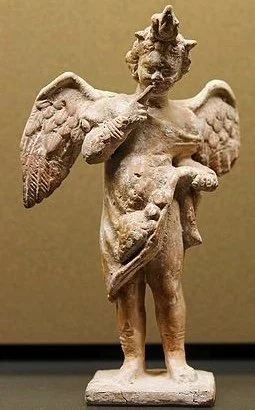
Harpocratic Eros . Louvre wikmedia commons
There is an English song written in the 1800s in the aftermath of the Napoleonic wars, bemoaning the poverty that has struck down the mechanics, farmers, actors and poor people generally while the nobility and gentry ride about in splendour.
The Grand Conversation under the Rose.
(The lively music is downloadable from the internet so all can sing-a long.) https://www.contemplator.com /england /napoleon
Grand Conversation of Napoleon - Contemplator
As Mars and Minerva was viewing of some implements,
Belona stept forward and asked the news,
Or was they yet repairing those war-like instruments
That is now growing rusty for want to be used.
The money is withdrawn and our trade is diminishing,
For Mechanics are wandering without shoes or hose;
Come stir up the wars and our trade will be flourishing.
This grand conversation was under the rose.
See how they transact in the states of America,
Their renown’d independence sits on the throne.
They’re never misled by the schemes of a ministry
That would exact marrow from the centre of a Bone.
Had he enlarg’d that hero who set the world trembling,
Whose name was a terror to the imperial foe,
Although the day was lost, it was bought by dissembling -
This grand conversation was under the rose.
He was a fine statesman likewise a noble general,
His equals in France was never seen before,
His talents were as bright as the diamond or emerald,
Which thousands may verify that lay in their gore.
It was thought he was guided by the hand of Providence
Until his gallant army did wildly expose,
And when fortune did slight him it proved a bitter consequence.
This grand conversation is under the rose.
Here’s the farmer and comedian wish that great Buonaparte
Would come on stage and act a new play,
Of the fruits of our industry we’re robb’d by ministeral act
And all is not sufficient their debt for to pay.
But the acts of Napoleon did make the money fly about
Until combined in policy they did him depose.
Who rejected him now mourns and wish much for his return - .
This grand conversation was under the rose.
But Britannia of late has erected a grand residence,
Embellished with a hall and emblem of peace,
And his majesty is crowned with the greatest of opulence
But her sportsmen are idle and have no game to chase.
Her anchor lays in harbour and her hearty tars they want their grog,
The broom at the masthead shows the daring foe
That she’ll sweep the main ocean when again she bravely heaves the log -
This grand conversation was under the rose.
There’s Newcastle, North and South Shields and also Sunderland
For twenty years or more they have struggled with the storm,
But things are come to such a pass and trade so much worse than it was,
Our ships are rendered useless and our sailors are forlorn.
And unhappily our farmers and mechanics through the nation
Now starve for want of bread - O! what scenes of deadly woes!
Go where you will there’s discontent prevails in every station.
This grand conversation is under the rose.
The nobility and gentry, they ride about in splendour
Unheedful of the wretchedness attended on the poor,
Whom ‘gainst hunger and despair have compelled to surrender
And sip the cup of sorrow and beg from door to door.
May Heaven soon reform these times of persecution
When man on fellow man his mercy he bestows,
And may the hand of Providence enlarge this distribution -
This grand conversation was under the rose.

Here’s the comedian … and round eared dog - possibly a French Bulldog

Perhaps this bearded man is a farmer with his poodle, a symbol of republicans.
It has puzzled me that these two French dogs were paired with the man in the Shakespearean ruff and the bearded man in the cap typically worn by men in northern England. Already, I had thought that they referred to republicans … could it be that this bridge illustrates a subversive song:
Here’s the farmer and comedian now wish that great Buonaparte would come on the stage and act a new play; Of the fruits of our industry we’re robb’d by ministeral act. and all is not sufficient their debts for to pay.
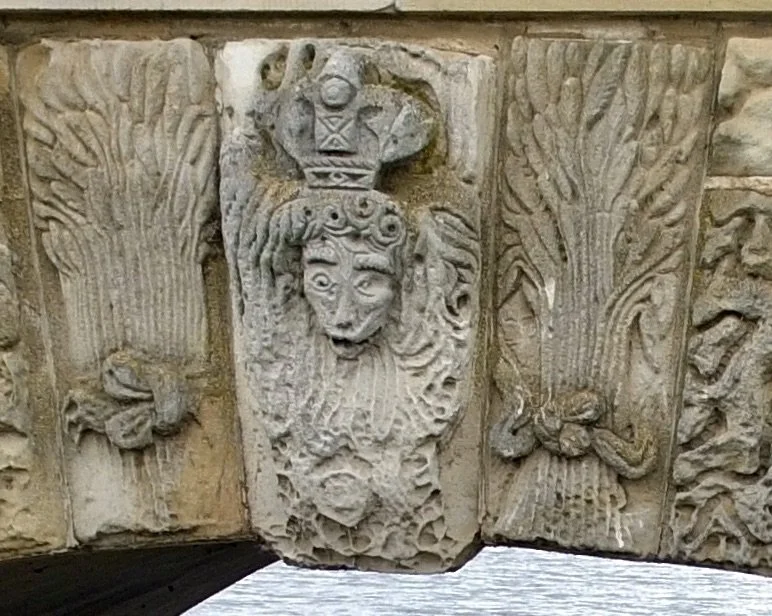
… And unhappily our farmers and mechanics through the nation
Now starve for want of bread - O! what scenes of deadly woes!
Go where you will there’s discontent prevails in every station -
This grand conversation was under the rose.
These sheaves of corn refer to the corn laws; the anthropomorphic lion-king is George III.
Towards the end of the wars, the MPs representing the landed gentry enacted the Corn Laws to counter the effect of competition with imported European grain when Napoleon with his blockade of trade was defeated. They kept the grain prices high to benefit the domestic producers by imposing high tariffs on cheap imported cereal. Even when poverty was affecting the common people, it became too expensive to import grain. In the song, their plight is expressed: And unhappily our farmers and mechanics through the nation Now starve for want of bread . The land-owners - the nobility and gentry of the song who ride about in splendour unheedlful of the wretchedness attended on the poor who against hunger and despair are compelled to surrender and sip the cup of sorrow and beg from door to door - became richer while British growth after the wars was hamstrung; there was no disposable money for manufacturers to invest so unemployment rose. and with it, widespread poverty.
It was not until the Irish Famine in 1845 - 46 forced Peel’s government to withdraw the laws owing to the urgent need for food supplies. .

The portrait of Dan Herbert
My copy of the broadsheet on which the song is printed was originally printed in Liverpool in Lancashire.
Dan Herbert was a fiddler as well as an organist. The more I think about the bridge, the more I think he was an angry, well-educated man, able to draw upon classical myths, religious texts as well as experiences of his day, brought up among the devout trades-people of Lancashire whose deep, rich culture was the humus for the seeds of his work on this antipodean masterpiece. Men will sing wherever they gather and no doubt the Ross Bridge party sang this one lustily.