DANIEL HERBERT, CONVICT, STONEMASON,
FABLED ARTIST OF THE ROSS BRIDGE
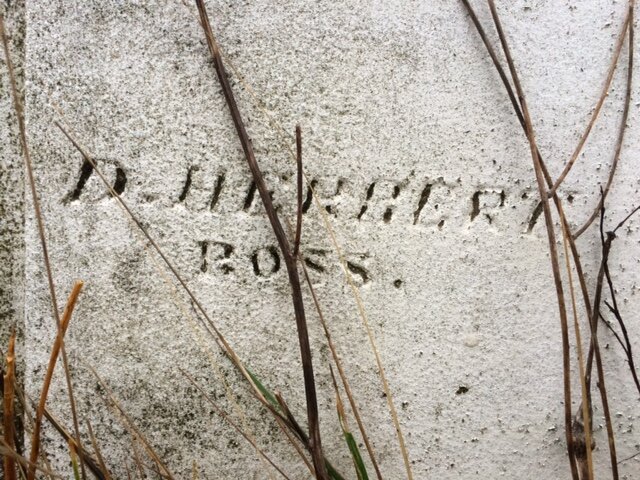
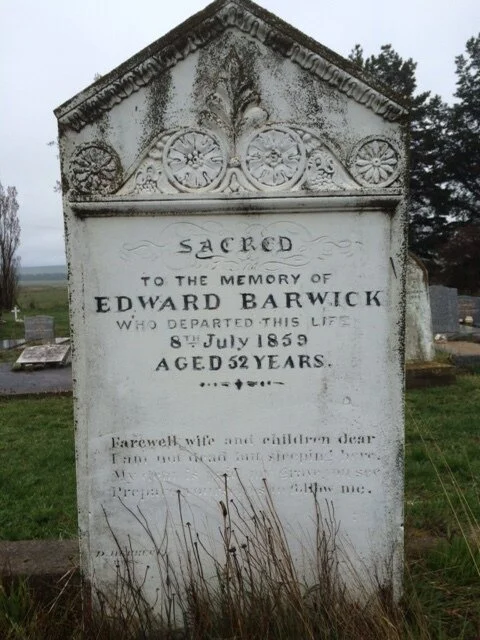
Daniel Herbert remained in Ross until his death on February 28th, 1868, at “67” years of age. He had been baptised on February 17th, 1802 in Taunton, Somerset , having been born on the 1st. The family was of the Town of Manchester.

He had carved a sundial pedestal and a mantelpiece for William Davidson in Hobart Town while he was a convict in about 1833. The figures are quaint, naïve, but accomplished; the artichokes and flowers are voluptuous, even sexual. The edge of the mantelpiece is classical.

Headstone with signature



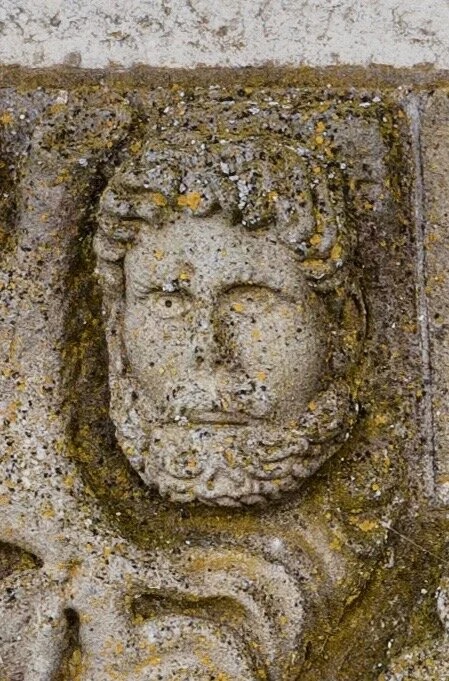
There are many sexual allusions amongst the bridge carvings and some of the caricatures have rounder faces with eyes free of the raised, lenticular outline so prominent in the St. Luke’s Church portraits, which I think are by Colbeck. Probably, the more complex and symbolic carvings are by, or instigated by, Herbert, as well as the better caricatures.
7th voussoir, east arch, north face, L
Norah Corbett with symbolic female genitalia
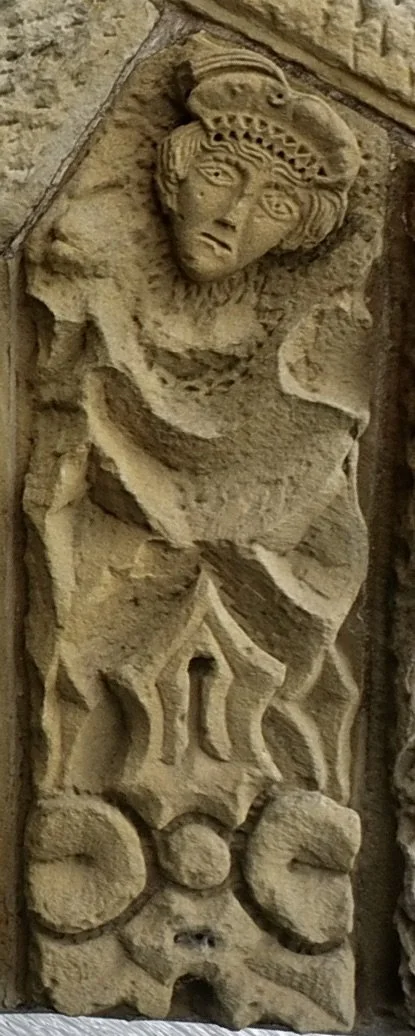
Her face is like the ST Luke’s Church caricatures.
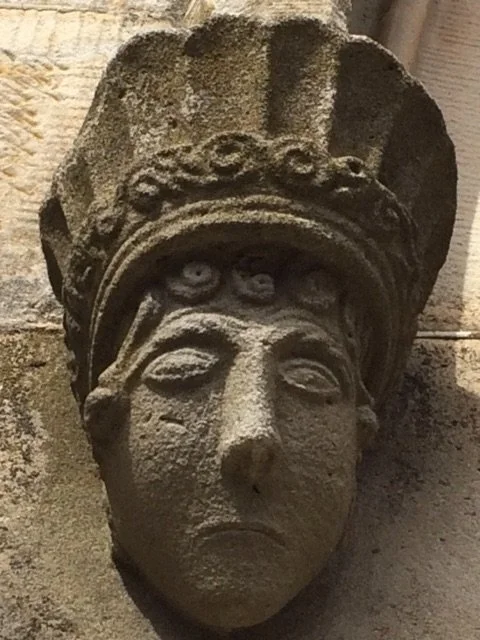
St Luke’s Church Bothwell, not the work of Dan Herbert.

St Lukes Church Bothwell; I think carved by James Colbeck

9th voussoir, east arch, north face L
Jorgen Jorgenson - note the eyes, without the almond shaped prominent outline
This is likely to be the work of Dan Herbert.
James and Daniel were in Hobart Town between January and May, 1835, James having been in Ross since 1831 but dismissed for his role in the clandestine building that went on between the convicts of the bridge party and the settlers, magistrates included.
A convict mason, Joe Bowden, was the self-interested squealer in the aftermath of an affray that had occurred in a Ross pub on Christmas Day, 1834, which had removed twenty-three men from the gang to Port Arthur, other road gangs or Hobart Town.
I wonder whether the two masons, who were considered the best among the convicts, thought about the ornamentation of the bridge during those months.

An example of complex, sexually suggestive carving, probably by Dan Herbert:
the cross-sections of two lily-like flowers, symbolic of female genitalia, with a sepal representing a tongue between them.