GANYMEDE
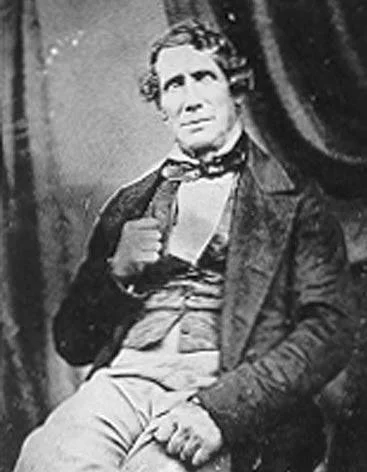
Dan Herbert was a handsome man.
He was literate and intelligent as well.
There are enough references to homosexuality among the carvings to suggest Dan experienced sodomy in some way, whether by consent or rape or as a witness it cannot be said. Homosexuality among men and women convicts was deemed a despicable immorality, out of control in the colony’s penal institutions to the despair of the administration.
The hare in mythology and literature is the symbol of lasciviousness and promiscuity, homosexuality, bi-sexuality and slipping between genders; of freedom from society’s sexual strictures. In Shakespeare’s As You Like It, beautiful Rosalind as Ganymede pretends to be a man. Confusingly, she falls in love with Orlando, the entanglement being the more homoerotic because the role was acted by a boy. In the guise of Ganymede, she says:
“She calls me proud and that she could not love me were man as rare as phoenix. ‘Od’s my will, her love is not the hare that I do hunt.”
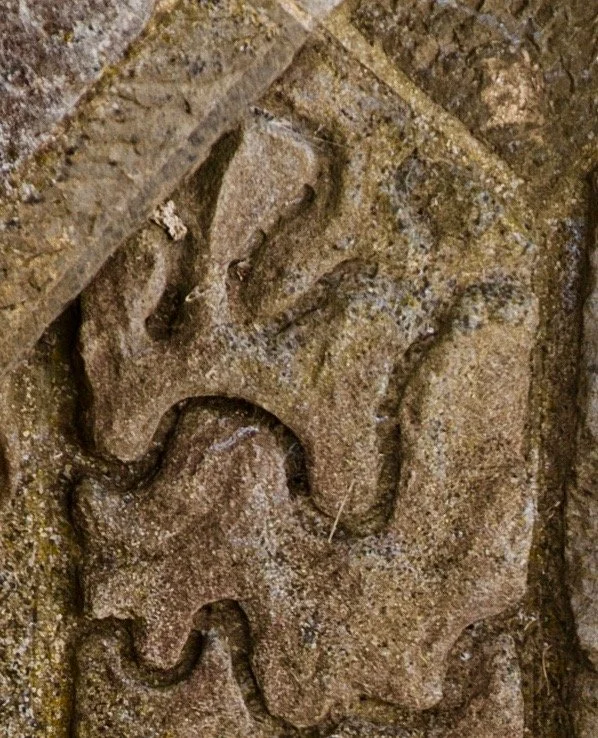
South face west arch
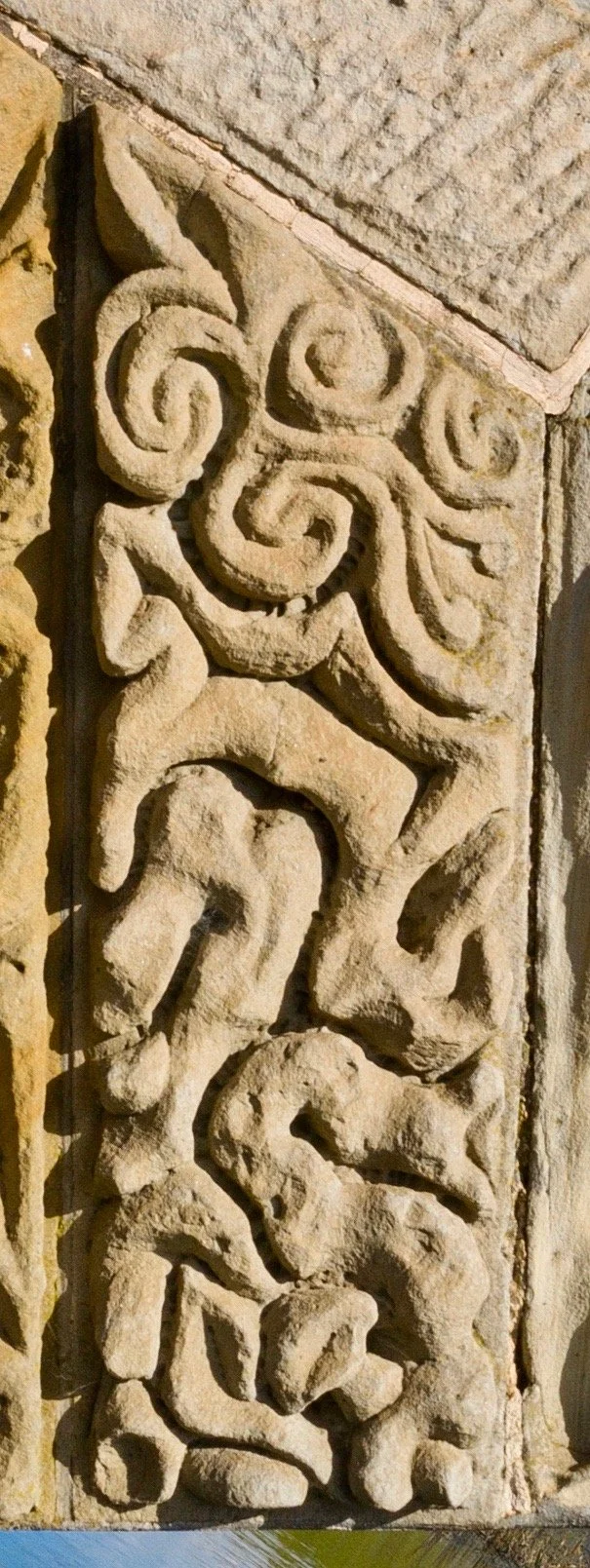
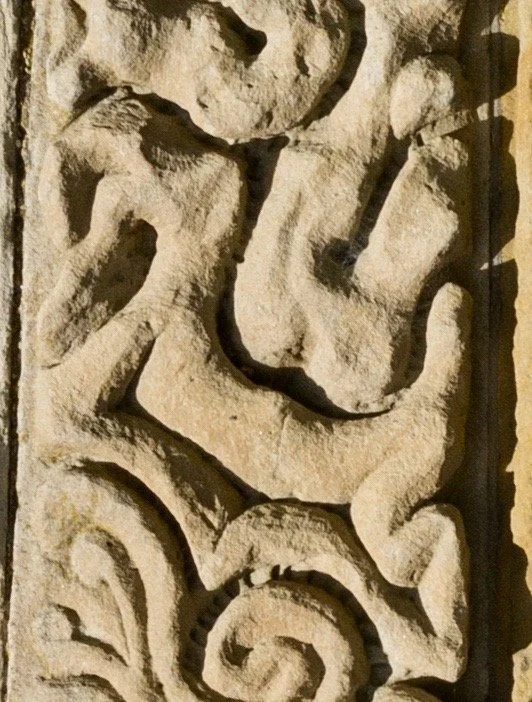
North face west arch
Ganymede was a fair-headed prince of Troy who was so beautiful that Zeus, in his passion and youthful majesty, would not be denied. In the form of an eagle (though some say a whirlwind), the god snatched the boy from the earth, flying him to Mount Olympus where he was esteemed by all the immortals, a wonder to behold as he poured the red nectar from a golden bowl. Thus, he became the cup bearer of the Gods, succeeding Hebe so she would be free to marry Heracles.
Ganymede’s father, Tros, was heart-broken. Zeus described to him the wonderful life Ganymede would live; that he would become an immortal and, to atone for the abduction, he presented Tros with a team of immortal steeds. Thus, Ganymede entered literature as the god of homosexuality and by Shakespeare was linked with a hare.
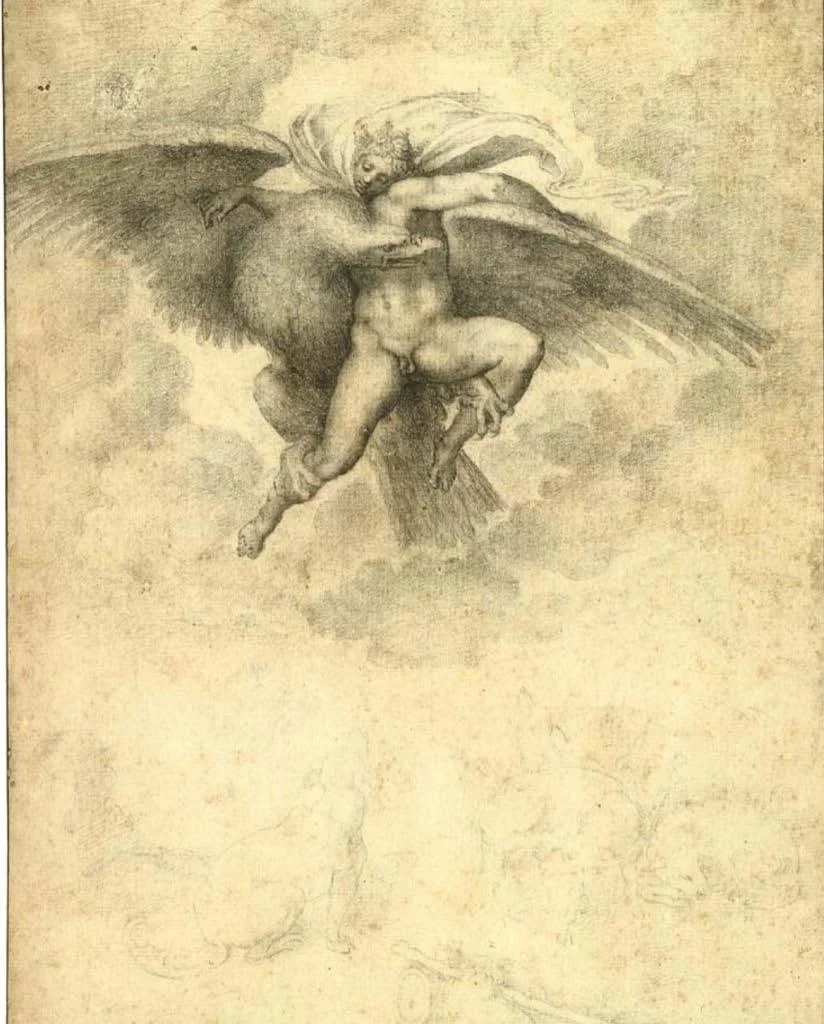
Michelangelo, The Rape of Ganymede, 1550s
South face, west arch 9th voussoir, L
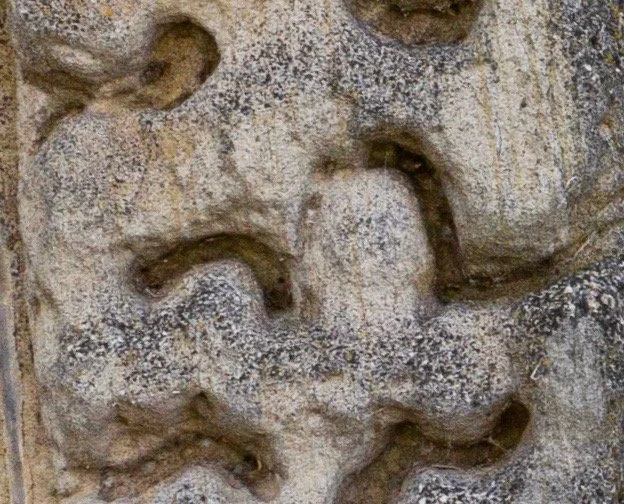
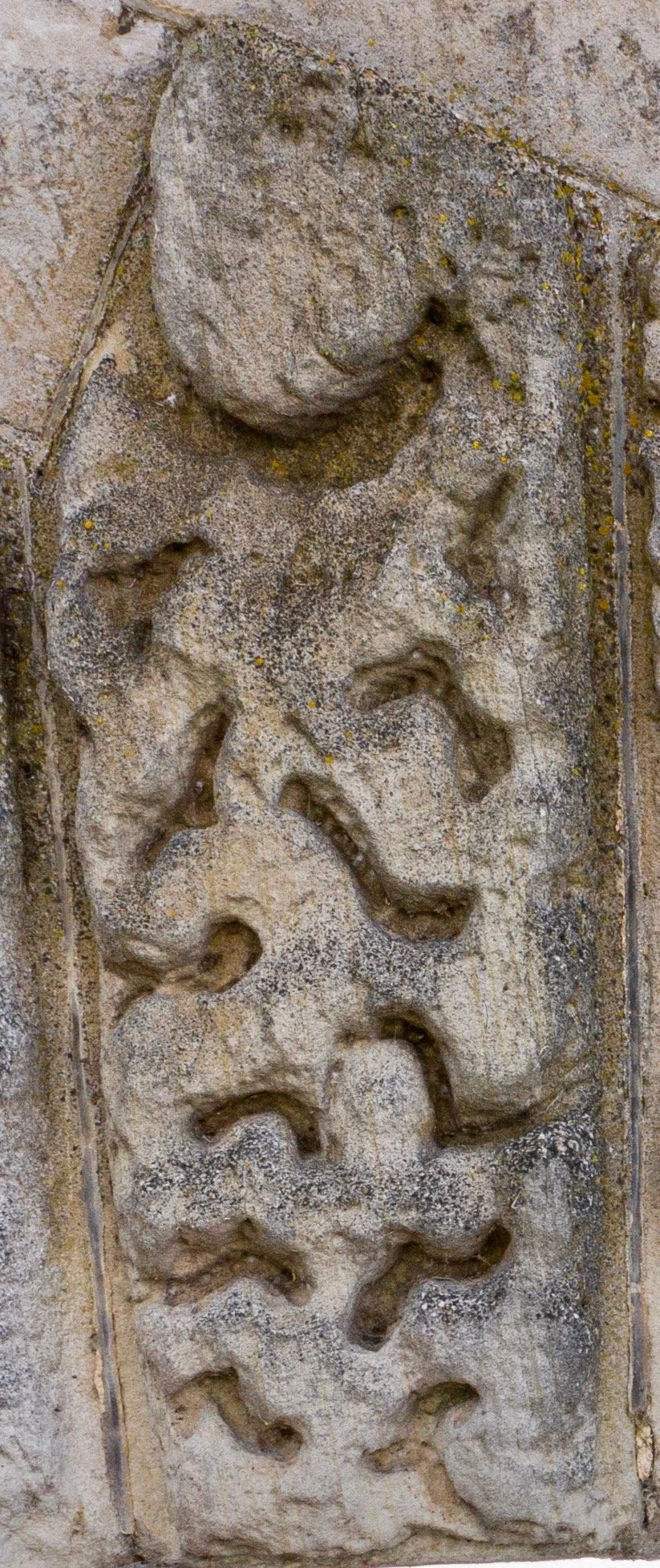
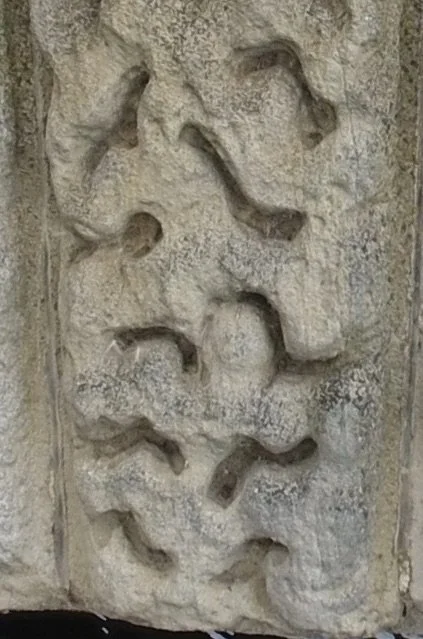
The faceless mask depicts ignominy.
In the weathered convolutions below it, are two birds in descent; their beaks and eyes are still discernible.
In the lower third of the stone is a strange figure, with a fine waist, the legs ungrounded, as if it is being carried away. The beak of the lowest bird could have it by the ear or could be taunting or tempting it, as would a seducer.
It is a fluid and beautiful sculpture, though little remains.
To be raped or exposed in a homosexual relationship was a public disgrace. But young men who arrived as convicts were sought out and protected by older men: catamites whose vulnerability was real. The butterfly is their symbol. They, too, are carved into the stones.