ASSIGNMENT AND INDENT LISTS
STATE LIBRARY OF NEW SOUTH WALES, TASMANIAN PAPERS
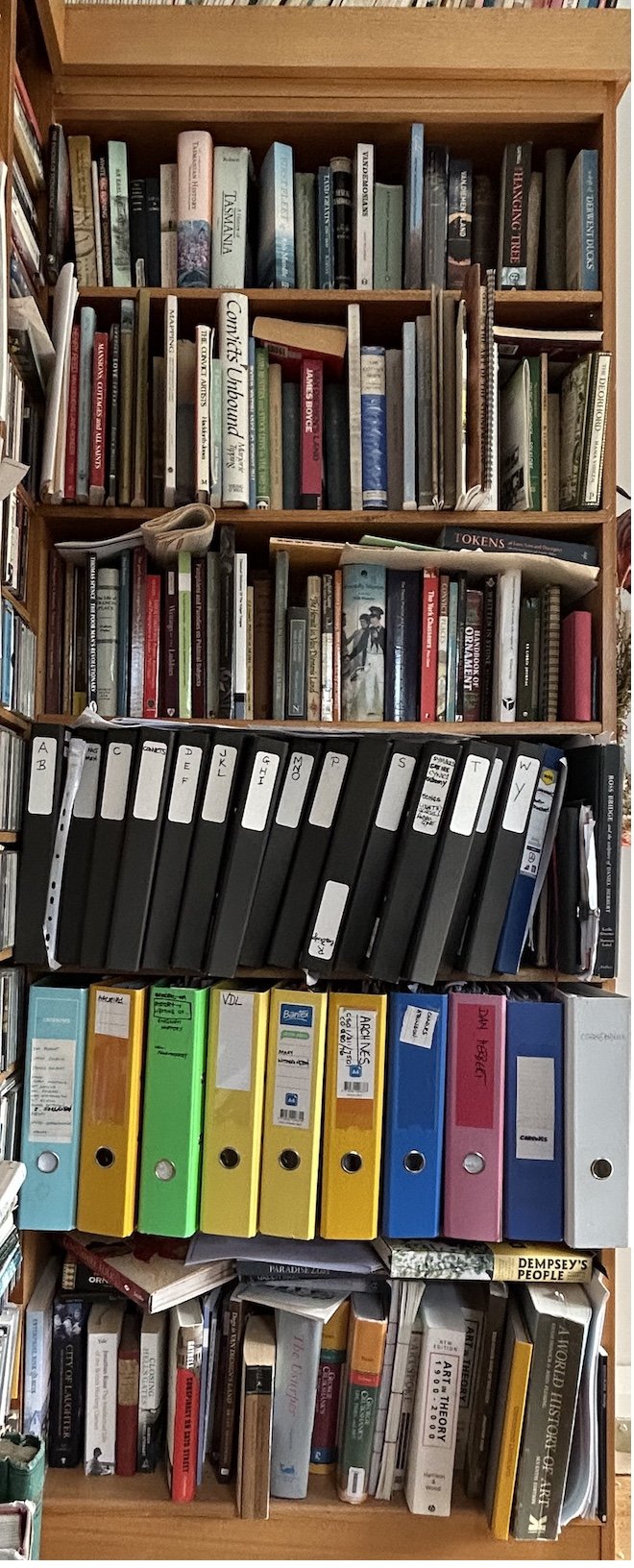
My shelves devoted to this research.
When I had completed the final draft of Insolence and Insubordination, The Life and Times of Daniel Herbert, it was pointed out to me that Daniel Herbert could not be found in the first chapter other than in a dismembered state, his bits and pieces lost in the history of the Peterloo massacre. I argued in my defence that there was a book beyond that chapter in which to discover him but I took the criticism on board with a nod, and being unable to sleep, spent that wretched night trawling through my files on the computer and on my shelf looking for Daniel Herbert’s description. Do you think I could find it? No.
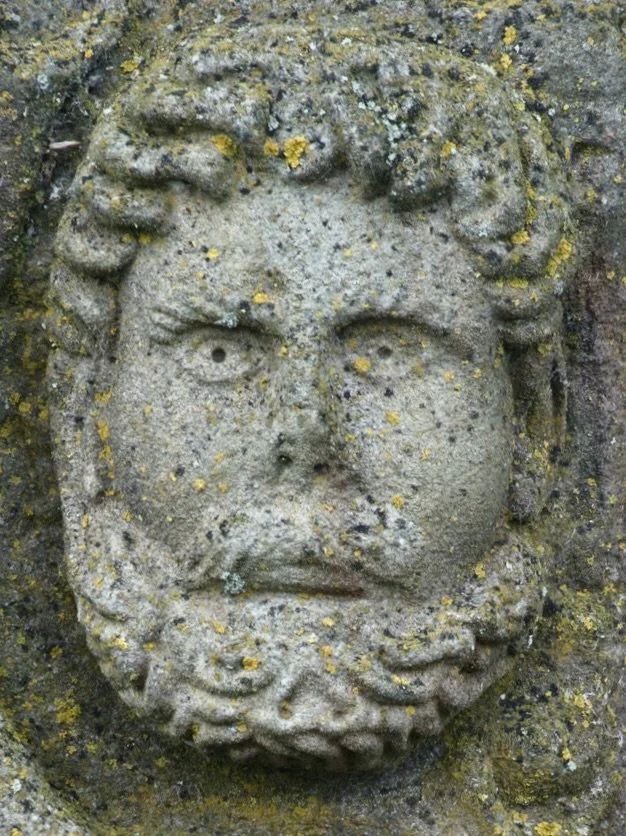
My vision of him derives from the sculpture which is assumed to be his self portrait. I am sure it is. And I knew I had read the description that would have been recorded before he disembarked the transport ship. So, I returned to the Tasmanian Archives and found the document in the Daniel Herbert Research File which I had not seen before. It is a thin manila folder containing copies of documents, many of which had been typed on a typewriter with a ribbon, collected in the 1980s. The description was hand written with a reference the archivist had to translate for me … misc microfilm 33/5. This referred to the State Library of NSW, Tasmanian Papers. Ah! - now I could go home and re-discover all the work I had done during the first years of this eight year long project, that is still ongoing. I wonder if it will ever end.
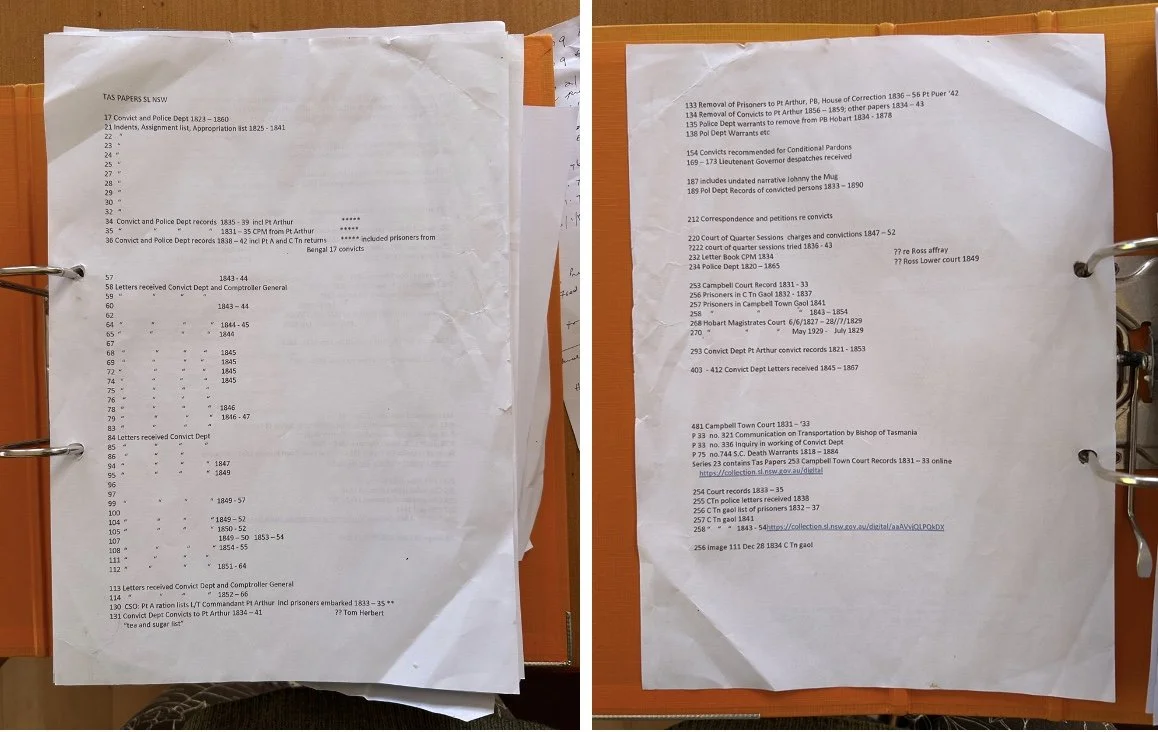
One of the many folders I have made during this research. This one is titled Archives and in the front is my index of the files in the State Library of NSW Tas Papers.
The Tasmanian Papers is a minefield of information. Item 23 is the repository of Assignment and Indent lists as well as other information about the transports and their human and other cargo.
(Repository or Depository? A repository is a virtual safe for storing information or abstract articles. A depository is a physical storage; an organization, bank, warehouse, or institute stores valuables—securities, assets, and money. Stored assets same can be transferred or lent to others. A depository is a place where something is kept for security purposes or safeguarding; a repository, on the other hand, has the capacity to store information. Depositories usually hold something tangible. In contrast, a repository could hold software that stores programs and files or a website that holds a bundle of information. wallst mojo.com)
At the State Library of NSW website, type in Research and Collections and in the search box write TAS PAPERS 23. Do not be disheartened at the number 413, referring to the number of items in this file … it is all fascinating, pocked with rabbit holes down which one may ferret out things never before heard of.
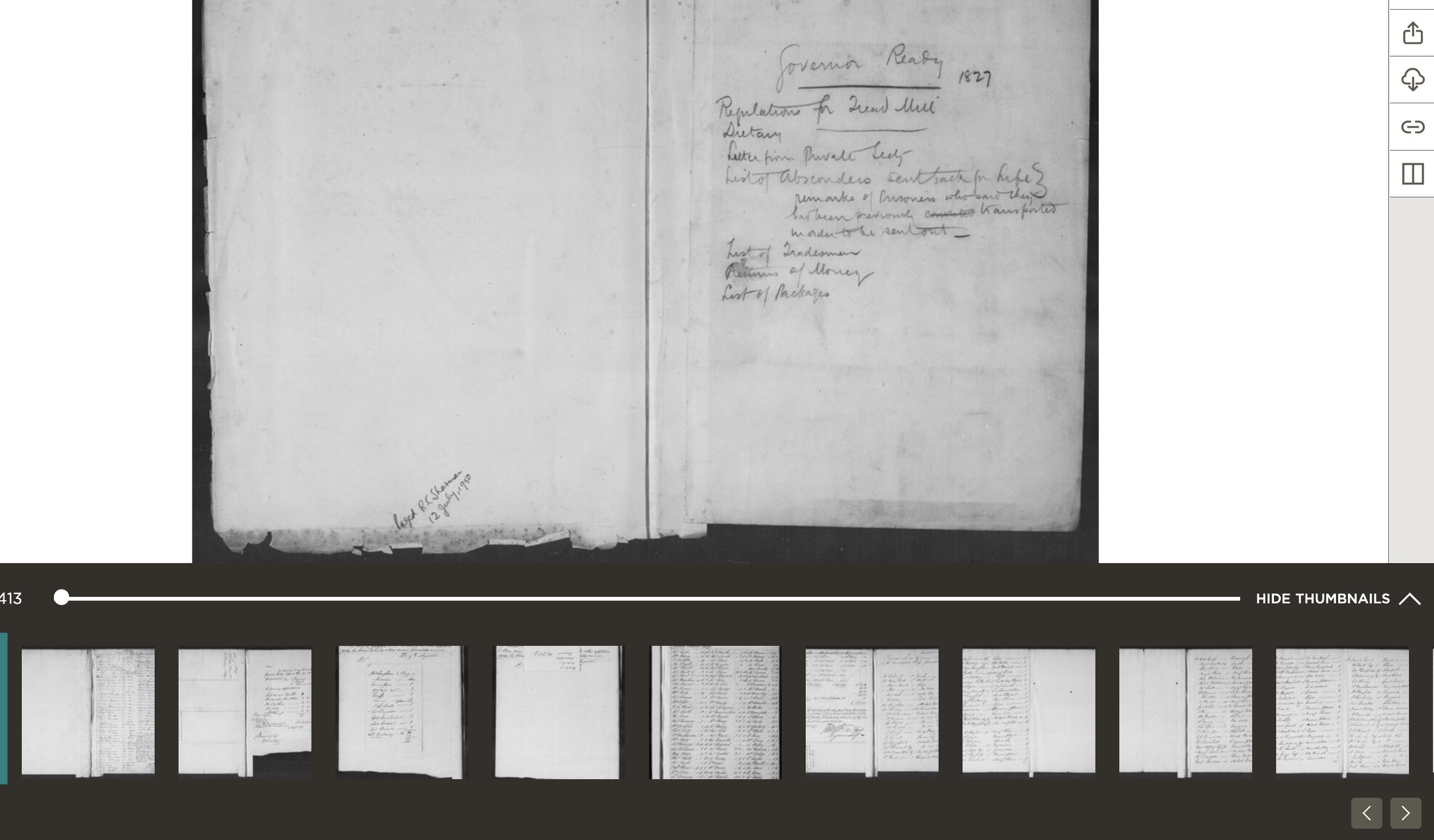
Scroll along until Item 16 appears - if it is Dan Herbert you are looking for, he is among the 200 male convicts transported with him, 198 arriving alive on December 7th 1827 in the Asia on her third voyage out.
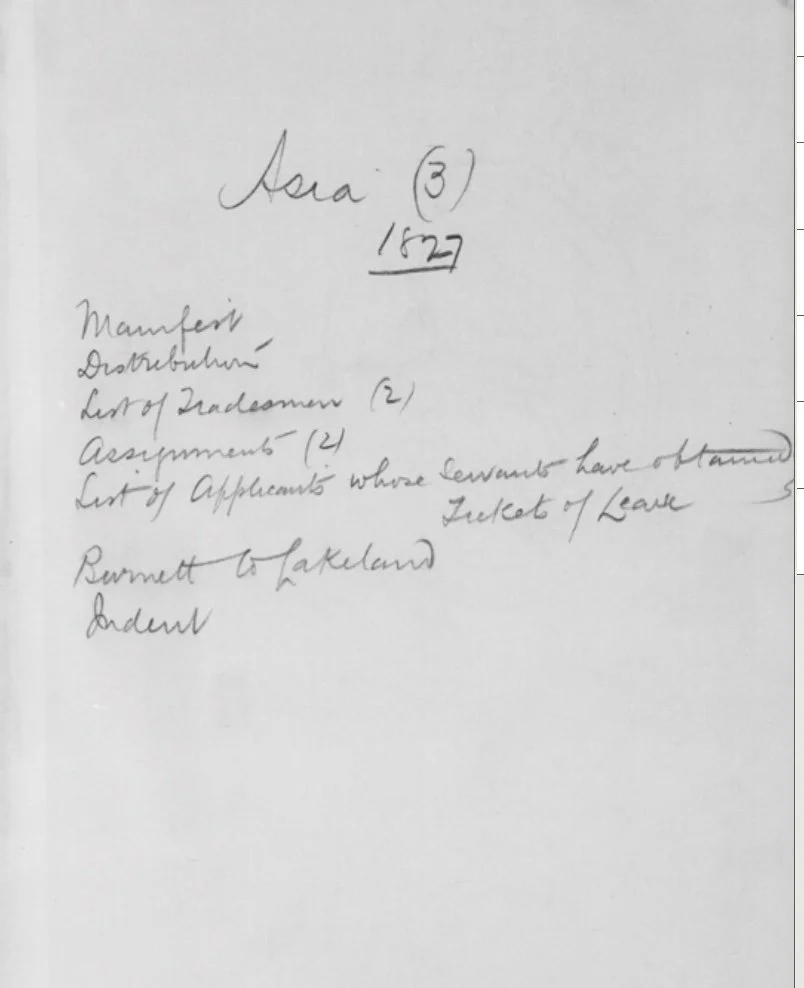
The Indents here called the Assignment List follows the initial page. The men are listed according the Assizes where they were convicted, these places being in alphabetical order. Thus, Herbert appears on the last page as he was sentenced at York. My great great grandfather Thomas Herbert who was convicted at the Berkshire assizes and exiled for life, is 5th on the first page. His cousin John Chapman is with him, however he died on board ship. He was suffering from severe constipation and the effect of the purgation killed him. The Surgeon Superintendent was George Fairfowl. His journal is available on Ancestry.com.
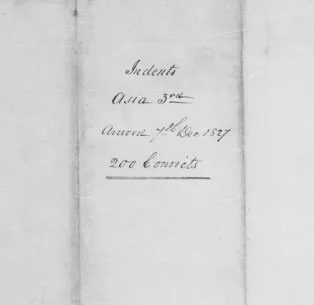
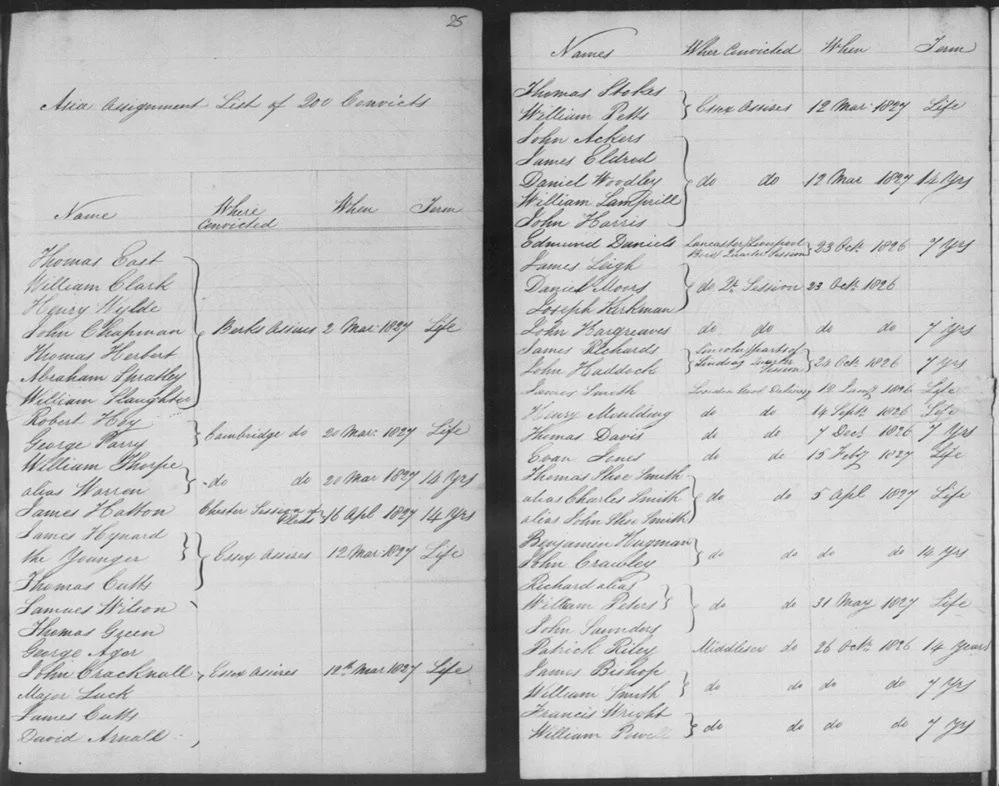
Asia Assignment List of 200 convicts
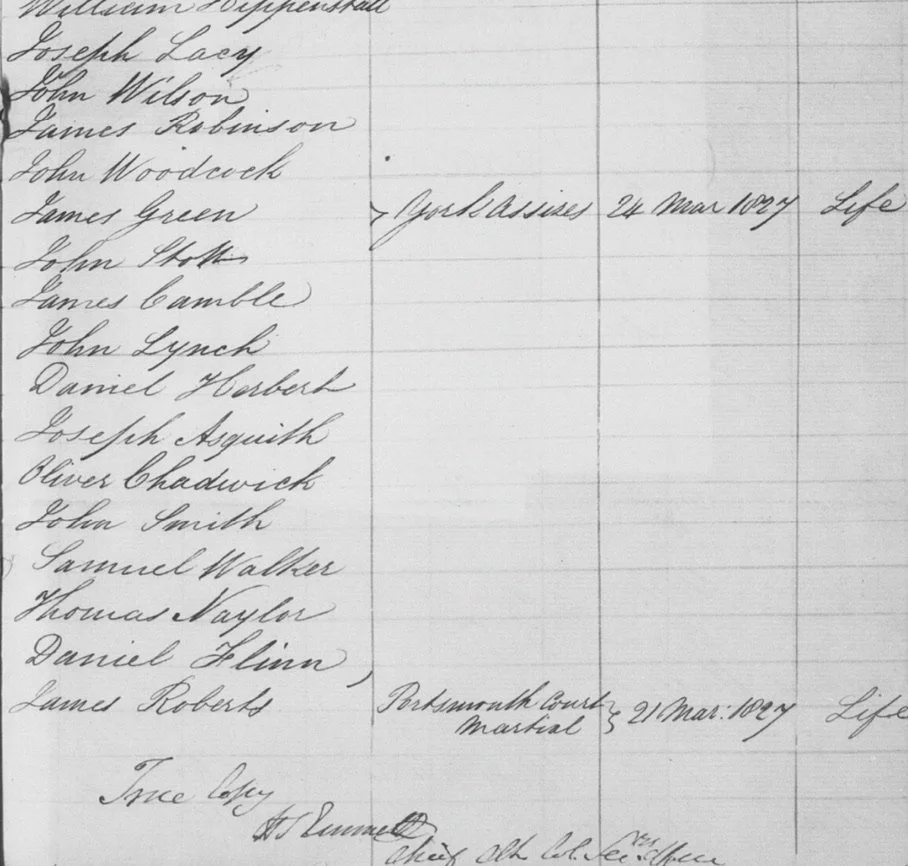
Daniel Herbert mentioned, un-numbered, in the list of convicts arriving per Asia 7th december 1827.
In 1824 Henry Emmett was appointed chief clerk in the Colonial Secretary's office and editor of the Hobart Town Gazette by Lieutenant-Governor Sorell. On the arrival of Colonel George Arthur, harmony between the paper's owner and the government ended; the proprietor launched a virulent attack on the lieutenant-governor and sacked Emmett in favour of a more outspoken editor. (Australian Dictionary of Biography)
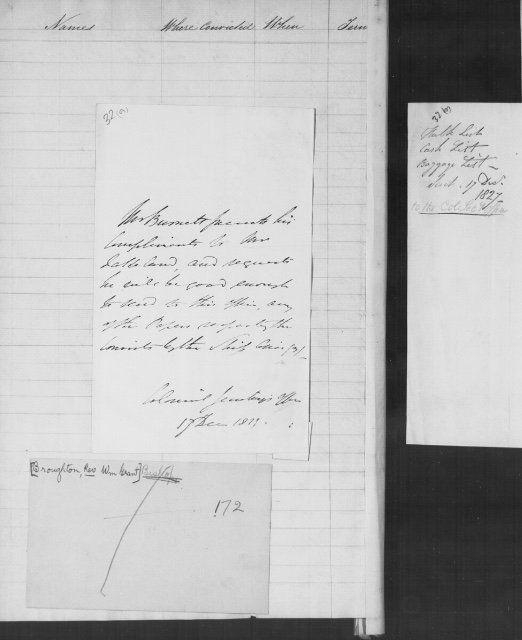
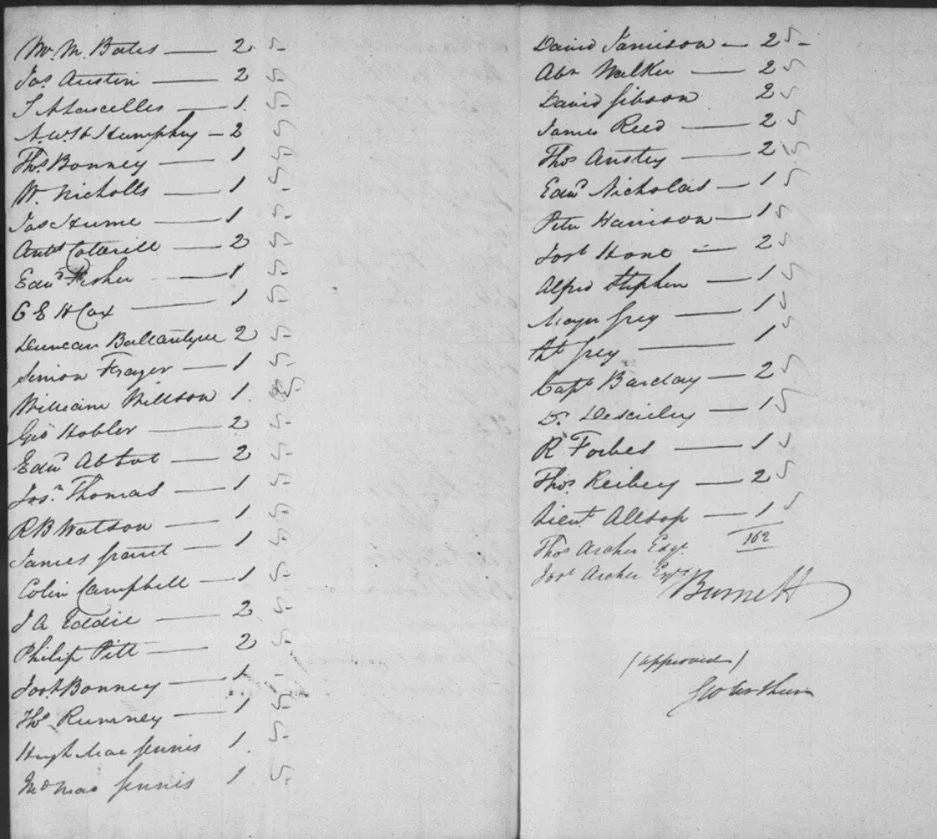
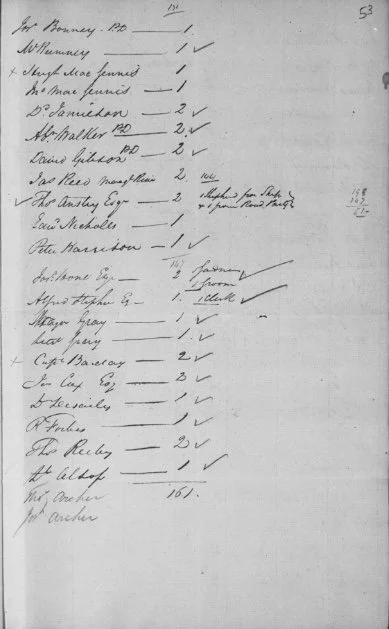
A note dated 17th December, 10 days after the Asia had arrived, from John Burnett, Colonial Secretary, to John Lakeland, Principal Superintendent of Convicts, requested any of the papers respecting the convicts by the ship Asia. The Hulk, Cash, and Baggage lists were duly sent. Next is the Distribution List, a list of settlers requesting servants which had been compiled on 13th December, signed by John Burnett and approved by George Arthur, the Lieutenant Governor.
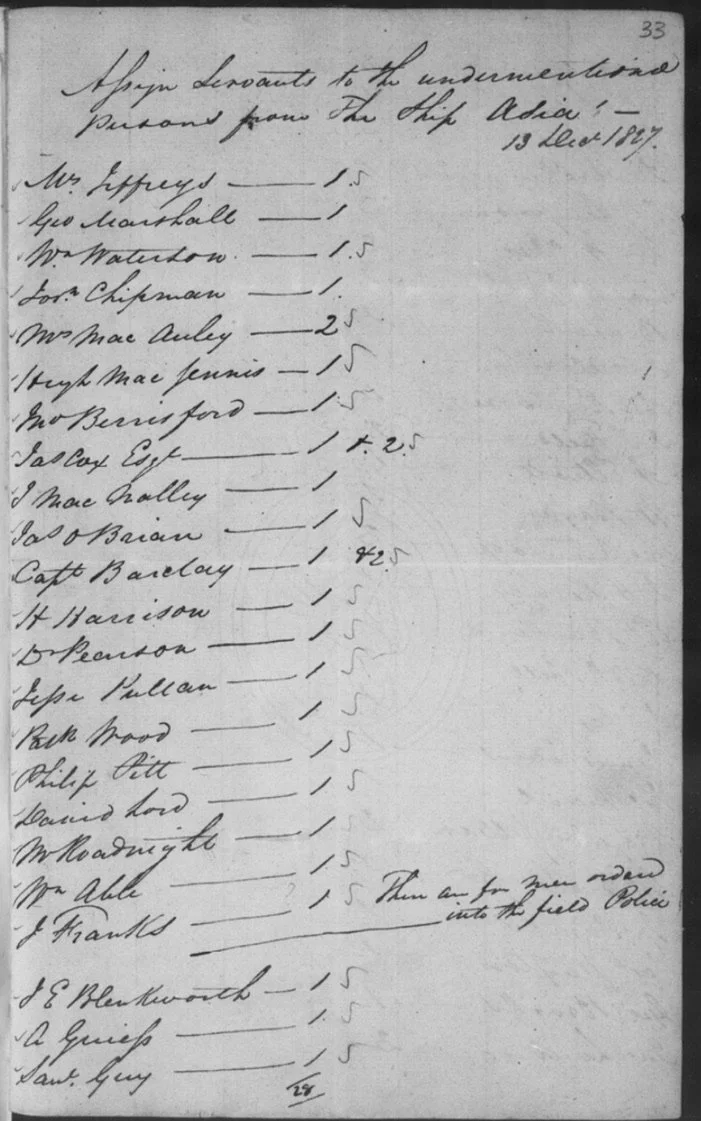
list of settlers to receive assigned servants
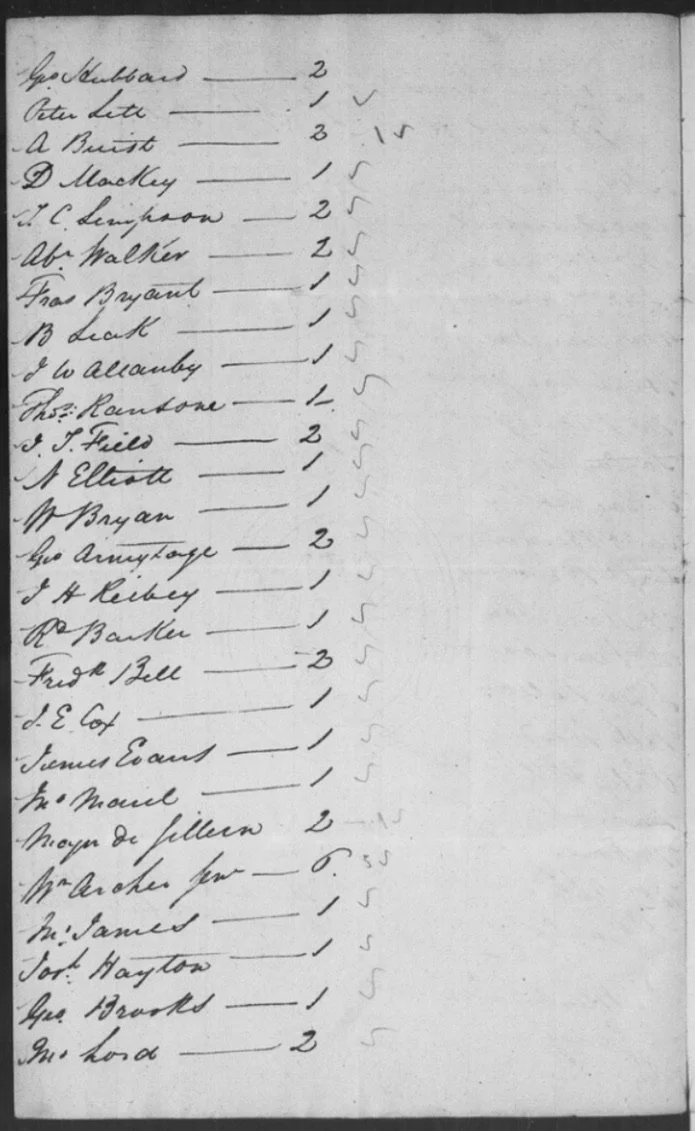
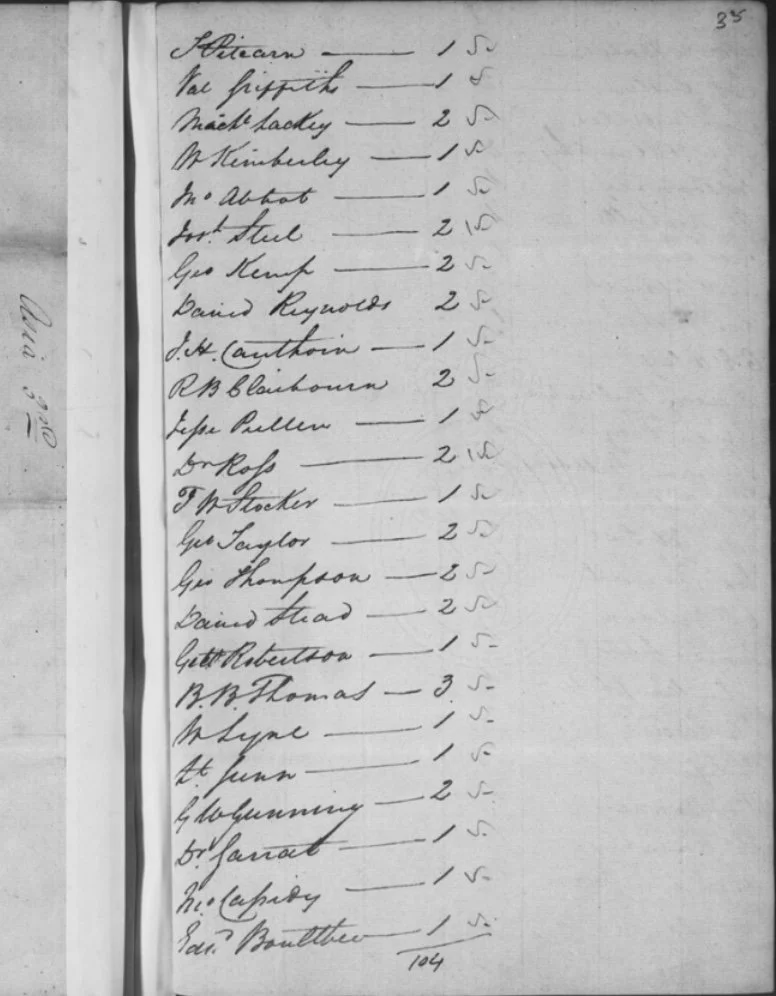
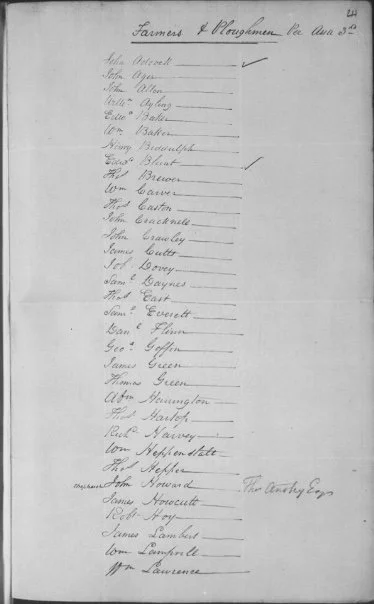
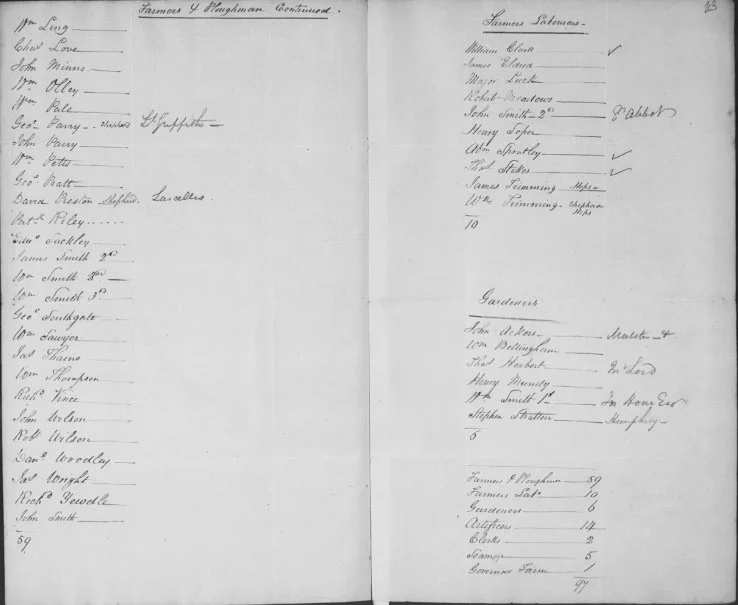
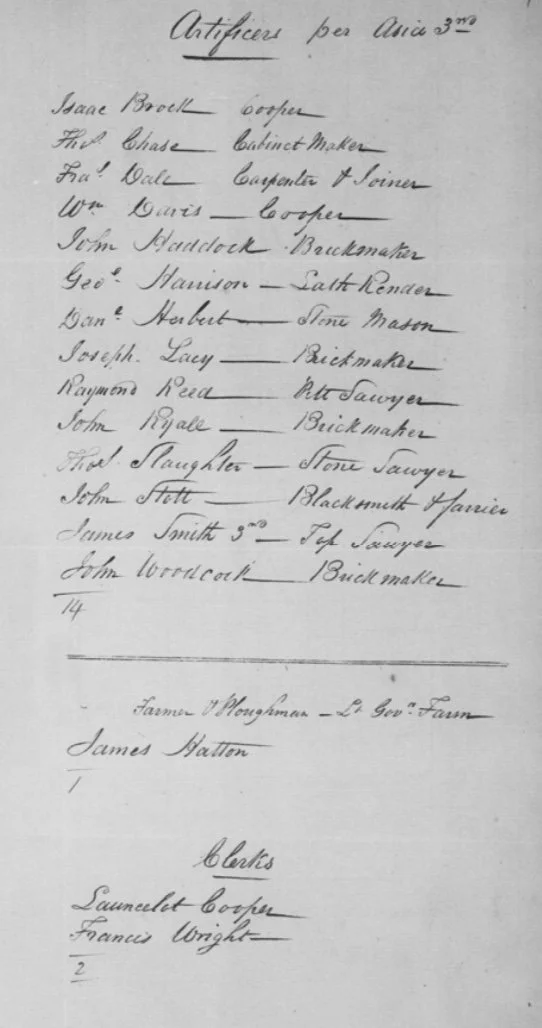
The occupations of some of the convicts are found to be 59 farmers and ploughmen, 10 farmers’ labourers, 6 gardeners, 14 artificers, 2 clerks, 5 seamen. One man is assigned to the governor’s farm. Later it is noted he is James Hatton and the clerks are Launcelot Cooper and Frances Wright. Thomas Herbert is a gardener and is assigned to John Lord, a merchant. John Howard is a shepherd and is to be assigned to Thomas Anstey residing on a large acreage near Oatlands, Anstey Park. Howard has only one conviction on his conduct record, prosecuted by Captain Wilson, for trespassing onto the next property to have an illicit connection with a female servant. Anstey was a good and exacting employer. According to the ADB, he had much trouble with sheep stealers, aboriginals and convicts servants.
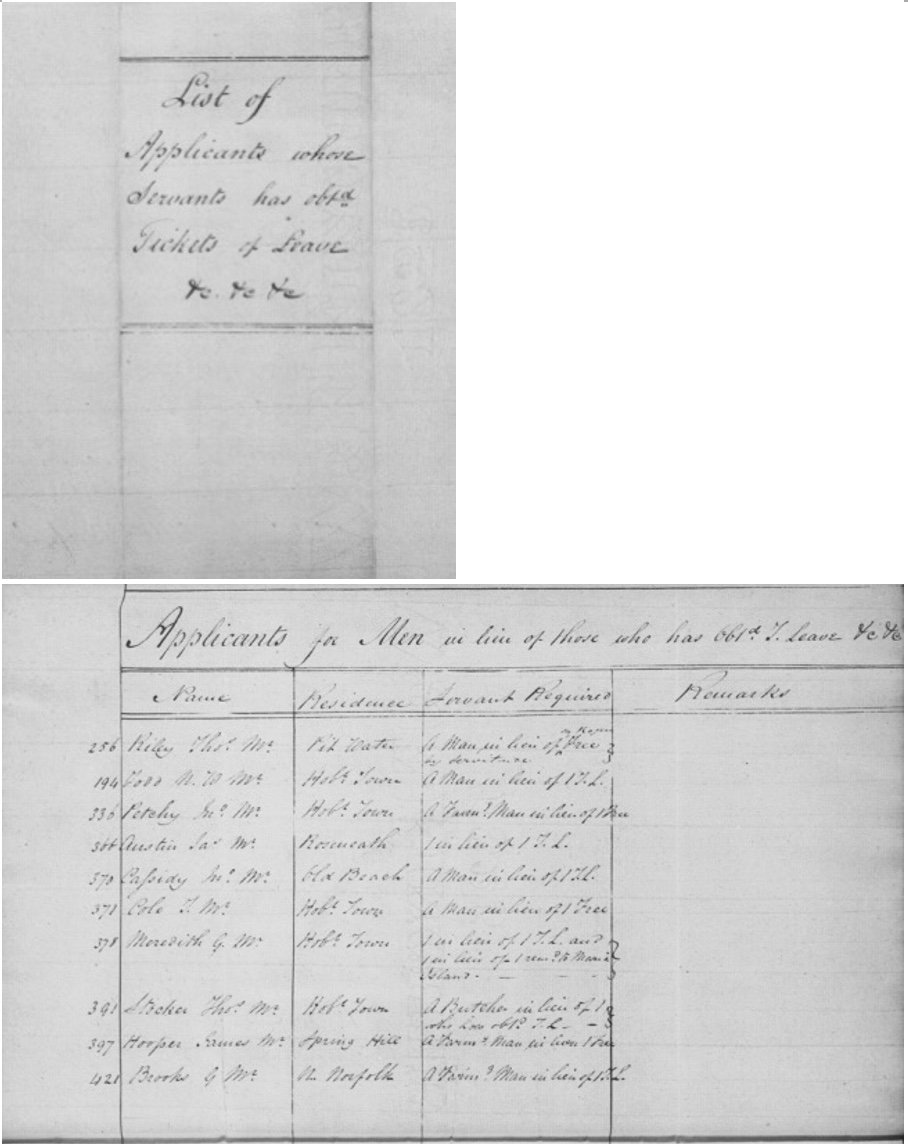
The next list is of settlers wanting to replace convict servants who have obtained their tickets of leave or freedom. George Meredith requests two men in lieu of one man who has his ticket of leave and one who has been sent to Maria Island, a place of secondary transportation.
A list of Artificers includes Daniel Herbert, the only stonemason.
Perusing the list of settlers, townsmen as well as farmers, one can see the need for tailors, shoemakers, malsters, carters and butchers. James Ross needs letterpress printers. In 1825 Ross had become the tutor of Lieutenant-Governor Sir George Arthur’s children and his own. In May 1825 he was appointed jointly with George Howe government printer and editor of the Hobart Town Gazette at a salary of £300. They published the first issue of the Gazette on 25 June. In January 1827 the partnership of Howe & Ross was dissolved; Ross was appointed to sole charge of the government printing office in February. Under the new arrangement the Hobart Town Gazette was an official weekly paper containing government announcements but no comment or discussion. In October Ross began to publish weekly also the Hobart Town Courier, an independent newspaper which consistently supported the government.
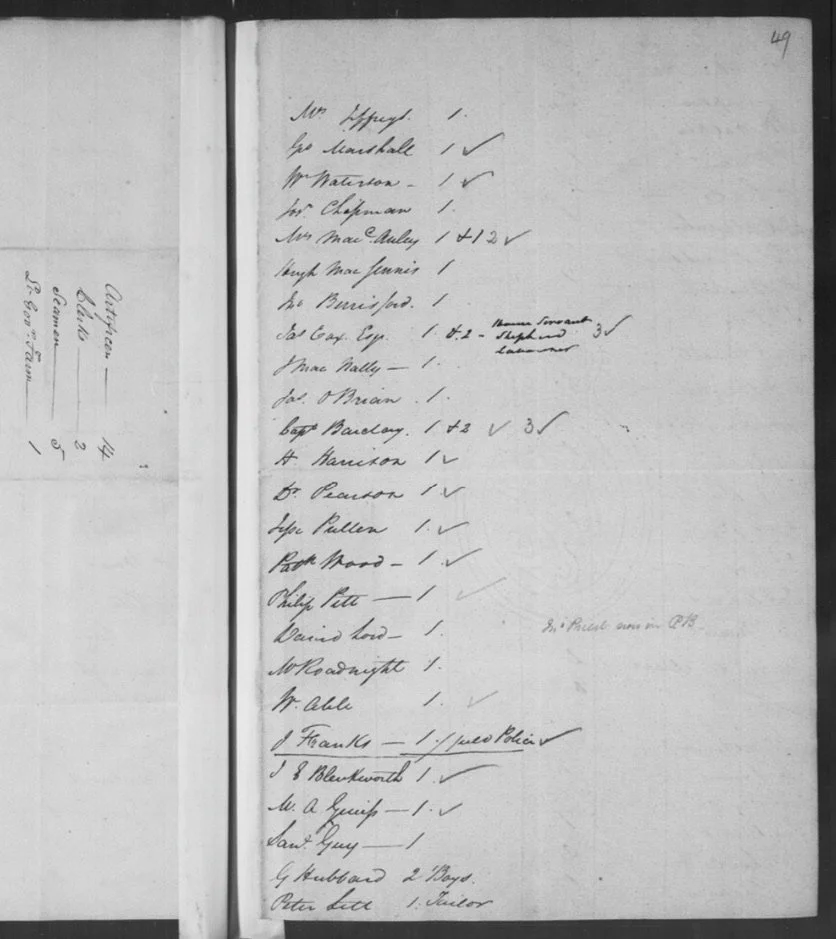
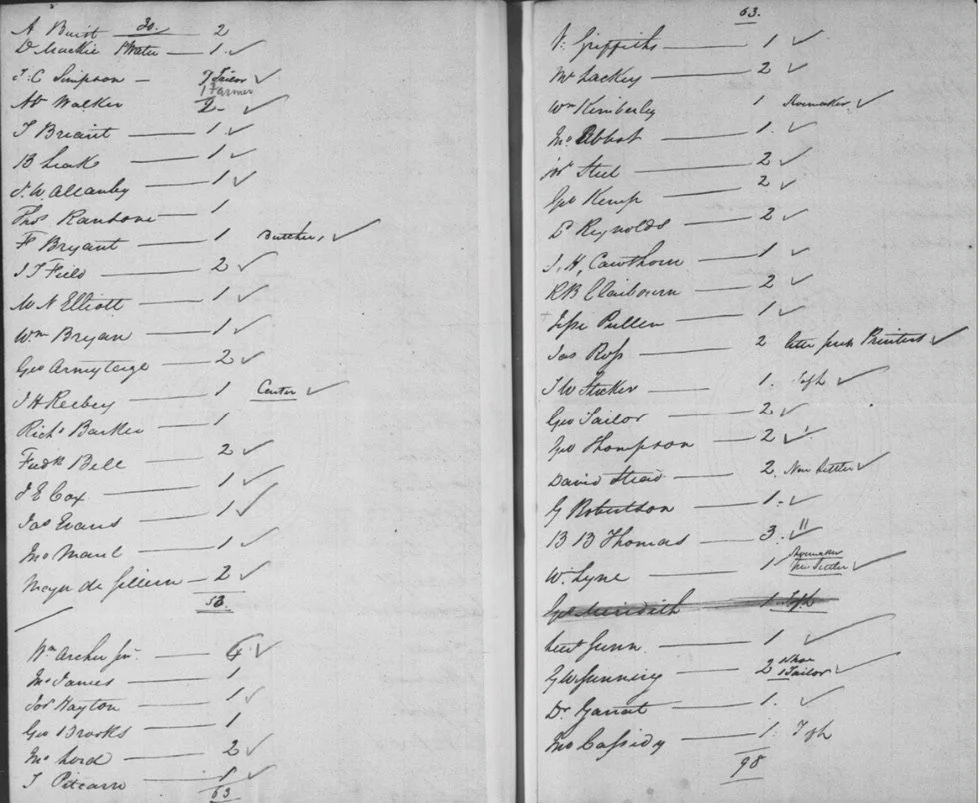
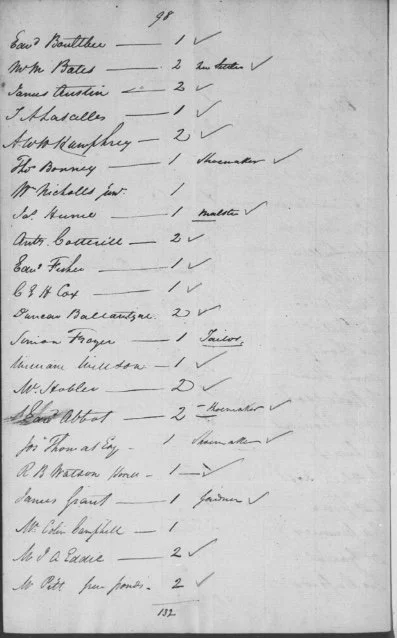
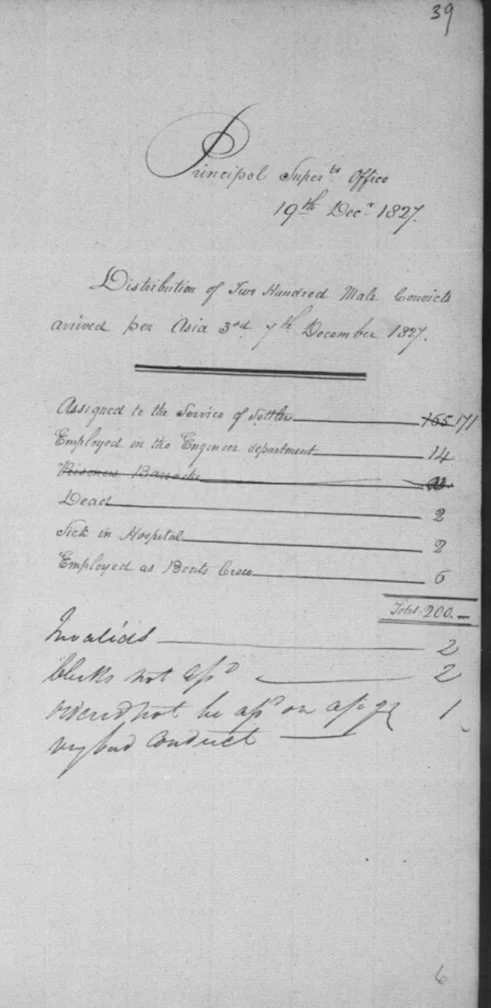
In summary, the Distribution of the two hundred male convicts arrived per Asia 3rd, 7th December 1827, is compiled in the Principal Superintendent’s Office on 19th December.
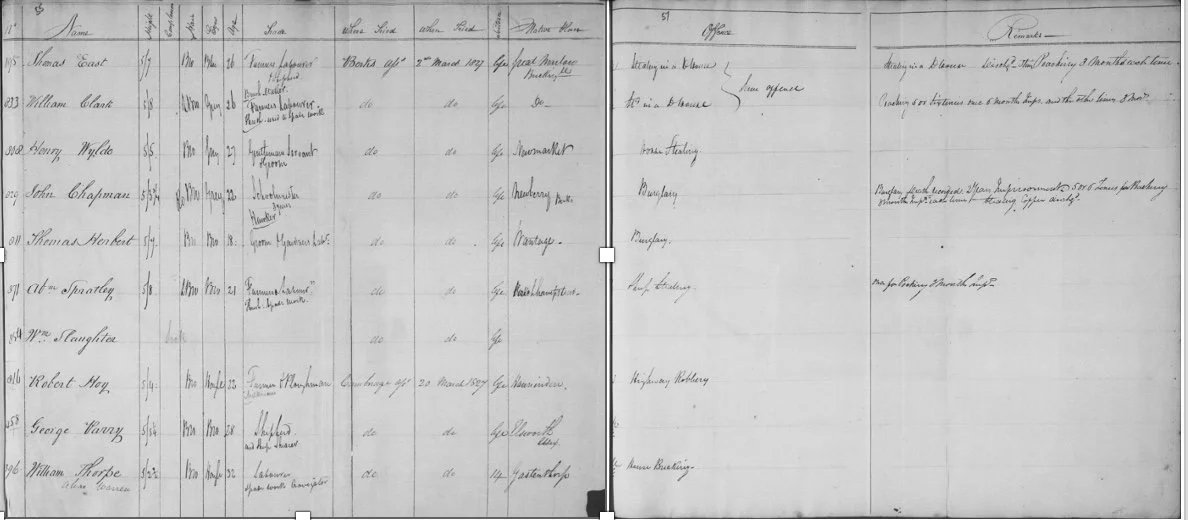
In the final pages, the convicts are described: name, height, complexion, hair, eyes, age and trade, where and when they were tried, their sentence, and their Native Place. on the next page their offences and any remarks are noted. My g-g grandfather, Thomas Herbert, was 5’7”, with brown hair and eyes and only 18 years old. He was a groom and gardener’s labourer. He was tried for burglary on the 2nd of March 1827 at the Berkshire assizes and sentenced to a life of exile. He was from Wantage in Oxfordshire. His cousin, John Chapman, 829, whom, it was written in the newspaper reports, had come to live with Thomas and his brother, had been sentenced to death but reprieved. He had been a poacher and a thief, imprisoned many times. I find a mistake in my work! It is John Chapman, 828, who died of severe purgation not Thomas Herbert’s cousin. Police numbers are so important. This is why I know the research, the editing and re-editing seems to be never-ending.
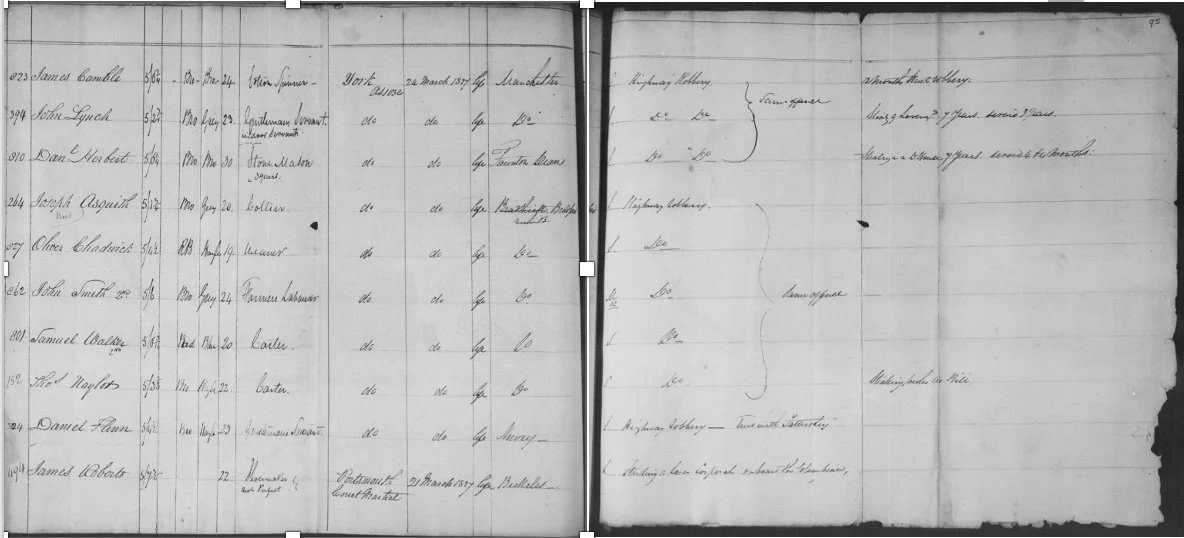
And on the very last page is Daniel Herbert’s description, the object of the search. He was 5’6” brown hair and eyes and aged 30 (though he was born in February 1802). He had been a stonemason for 3 years. He was tried at York on 24th March 1827 and sentenced to transportation for life. His Native Place was Taunton Deane (in Somersetshire.) His offence was highway robbery. He had been tried before for stealing in a dwelling place and sentenced to 7 years imprisonment, of which he served 4 years and 4 months (in the hulk, Retribution in the Thames off Woolwich 1822 - 26.) If he lied about his age, was he an inveterate liar? We know he tried to pass himself off as a signwriter so was probably hoping for a lighter job. Did he lie about his mother being a widow in Leeds?