PERHAPS SHE IS ELIZABETH FRY
In 1968, Norman Laird thought the portrait on the left side of the western arch on the north face might have been an aboriginal woman. The description offered in the REASSIGN tourist feature by the bridge suggests an aboriginal boy, George Van Diemen, adopted by white people in Hobart Town and given to WIlliam Kermode by Lieutenant Governor Sorell to take to England in 1822, for his “civilisation”. He was brought home from Lancashire in 1826 but died in 1827, about six years before the planning of the new bridge. If he became a legend in the district, it may be him. Ever since, however, its identification has not been questioned. I am unable to reproduce Laird’s black and white photo as I do not have the family’s permission. It is in his book, Ross Bridge, the Sculpture of Daniel Herbert.
I shall quote from the book, page 180:
With the exception of the much eroded and multifractured mask of what is thought to be a representation of a female member of the […] Tasmanian aborigines - the icon is a total loss. The original nose of the the mask was carved with a very broad base, and though badly eroded, the lips indicate trace outlines of a thickness not generally regarded of European origin. The stone was both carved and erected against the natural lay of the bedding plane which may partly account for the severity of the erosion. No doubt the true nature of this icon will remain controversial.
But let me put forward another idea.

7th voussoir, L western arch, north face Image Brad Harris 2025
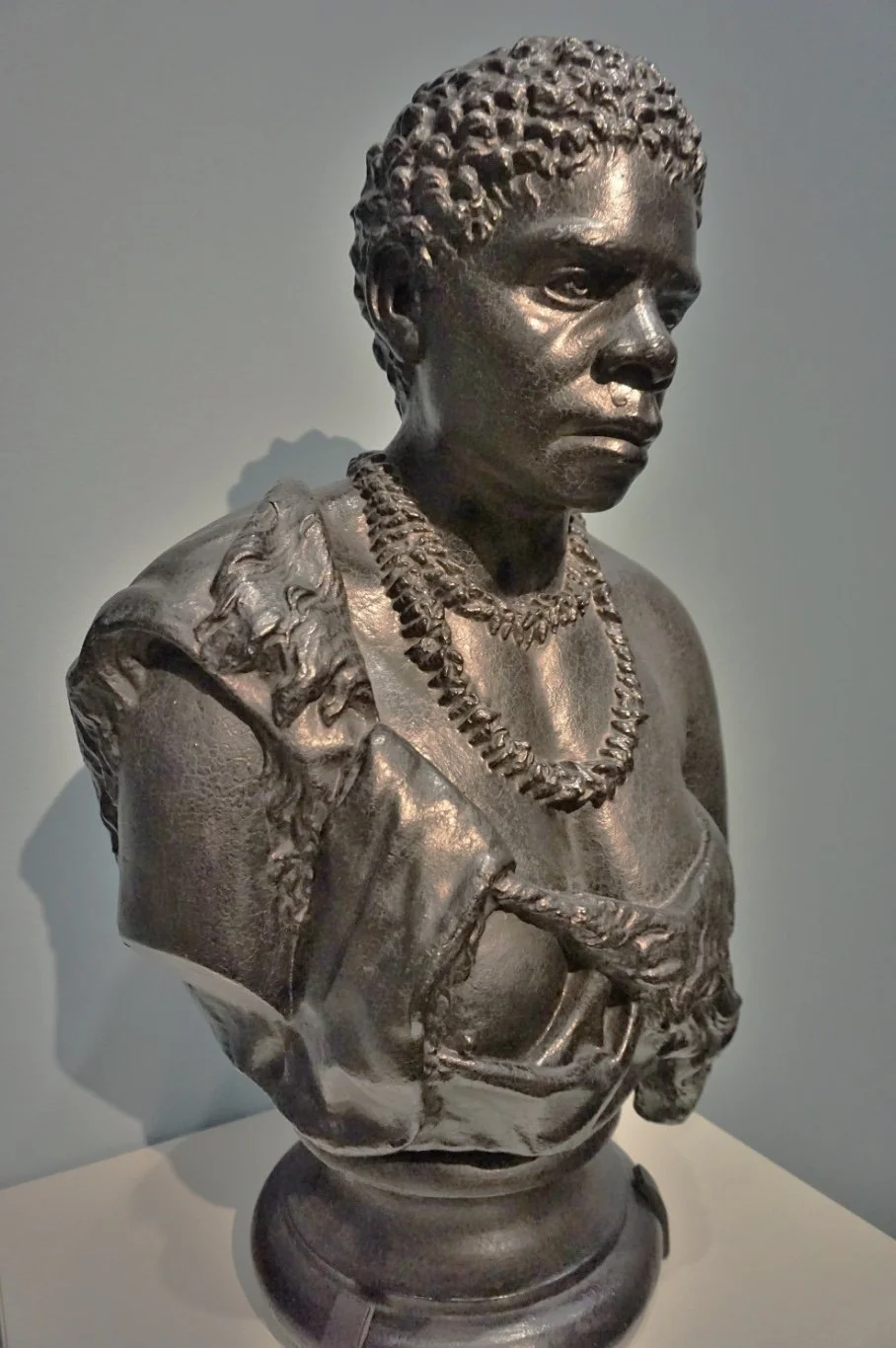
Benjamin Law, 1835, .Truganini, wife of Woureddy. National Portrait Gallery Image: Gordon Makryllos
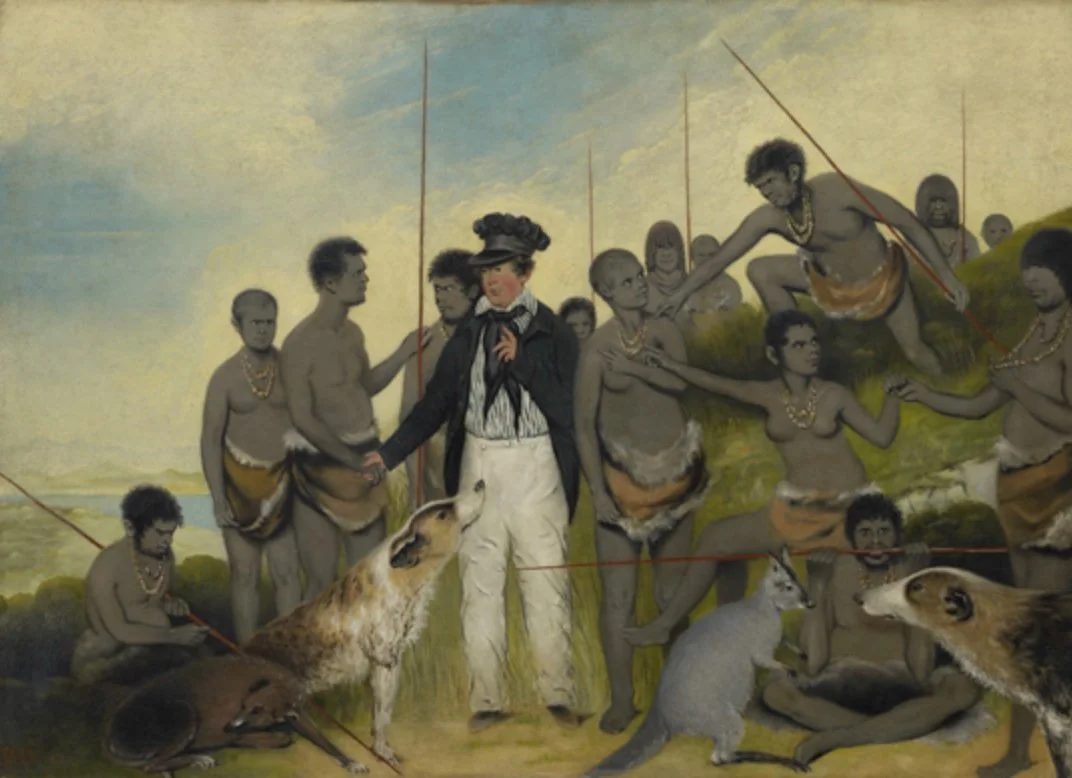
Benjamin Duterreau 1837 The Conciliation. Tasmanian Museum and Art Gallery
These two depictions of the First People of Tasmania made at the time of the bridge carvings, show the very short hair of the women and no hats.
Eleven years after the bridge was completed, the 47 survivors of the 200 forcefully exiled people returned to mainland Tasmania from Flinders Island. In about 1900, Annie Benbow painted from memory, the women and children who had tried to make a life for themselves at Oyster Cove. She was born in November 1841 and lived her whole life at Oyster Cove, dying in 1917.
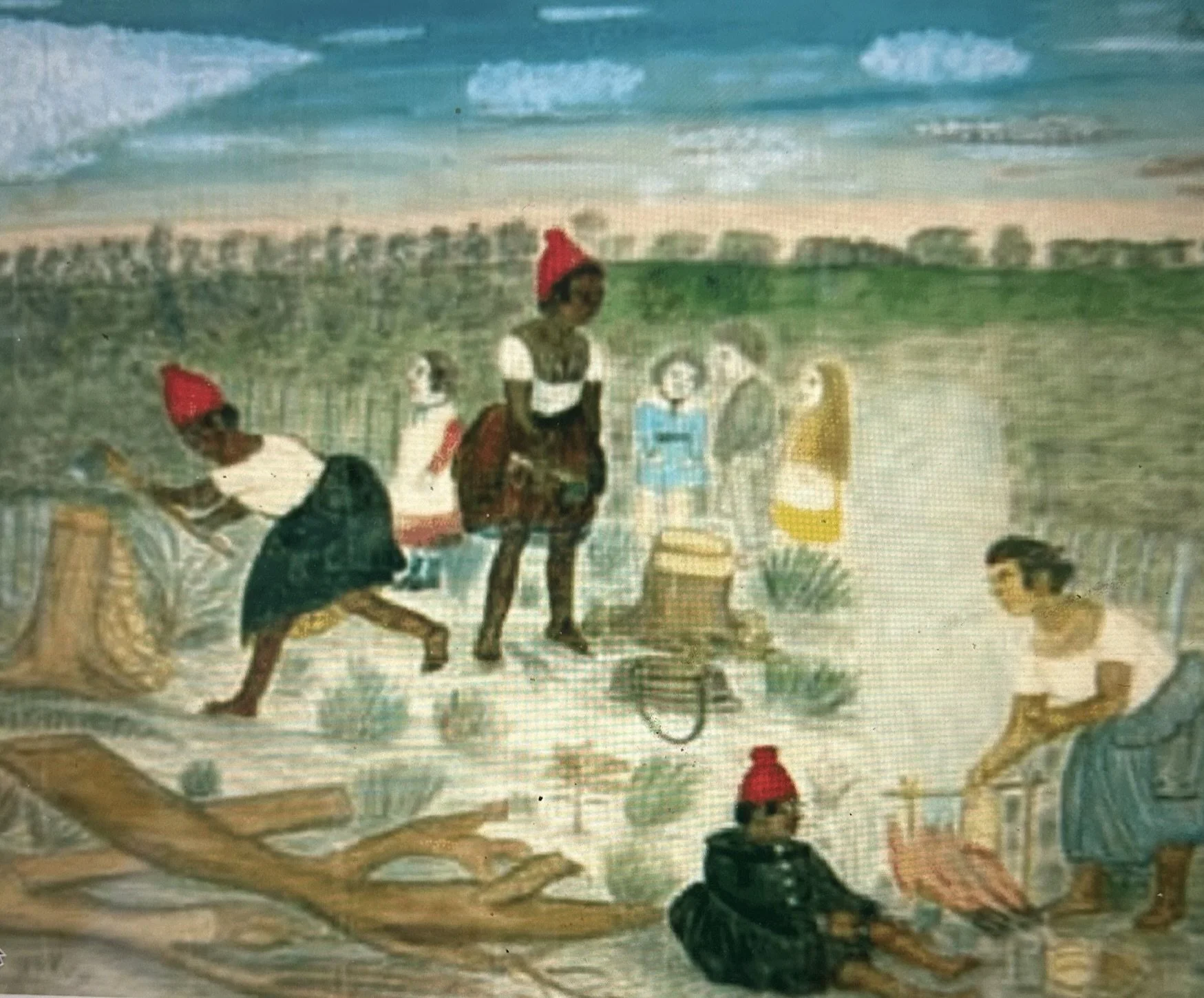
Annie Benbow’s recollection of the Aboriginal women and children at Oyster Cove after 1847, painted about 1900.
It is interesting to note the hair and headwear of the women and compare it with the sculpture on the bridge. However, there is no image and little likelihood of such a way of dress in 1835-36.
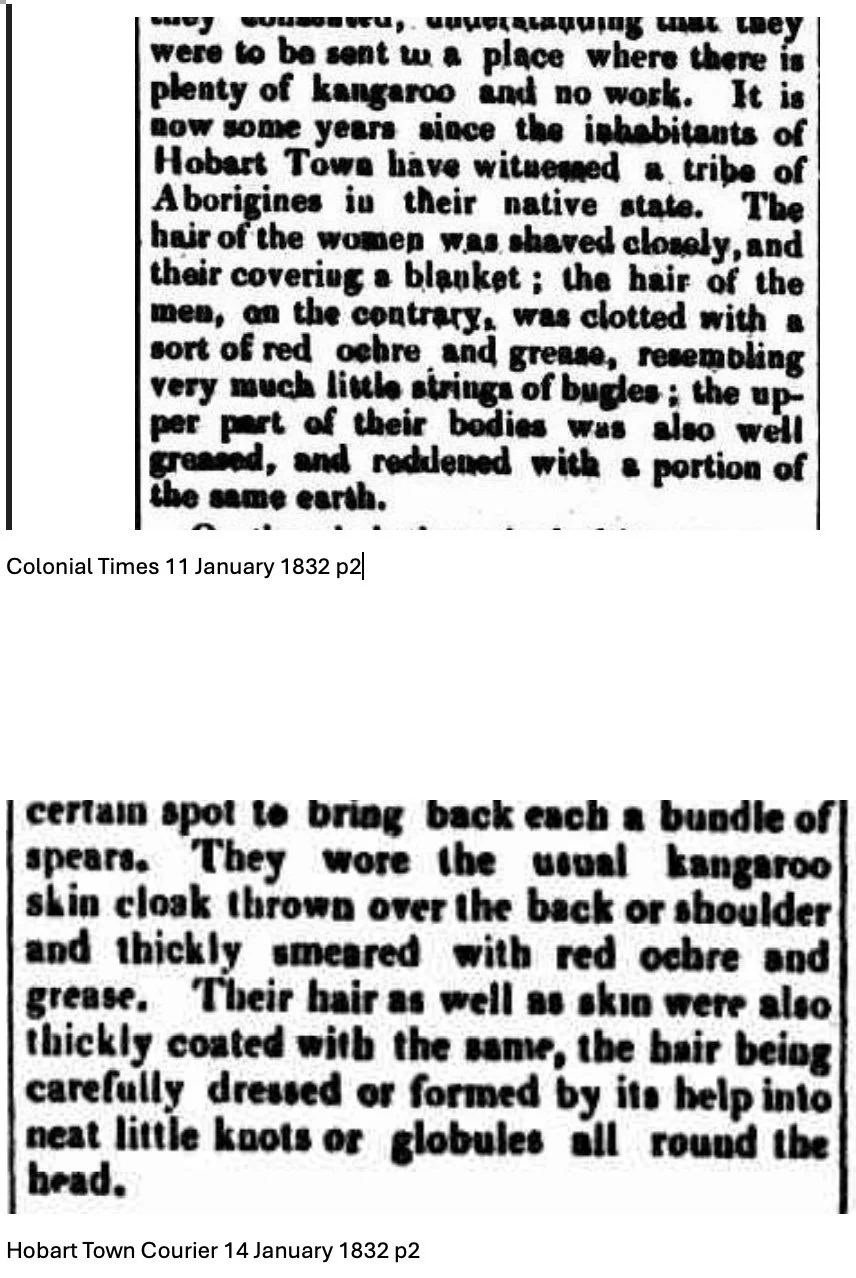
The reports in the Colonial Times, 11 January 1832, p2, and the Hobart Town Courier, 14 January 1832 p2, state that the hair of the aboriginal women was shaved closely and their covering was a blanket. The men’s hair was thickly smeared with red ochre and grease and carefully dressed into neat little knots all around the head. This was the occasion when George Augustus Robinson had brought forty men, women and children of the Oyster Bay and Big River Tribes into Hobart after he had ‘conciliated’ them, disingenuously explaining they would be sent to the Great Island where there was plenty of kangaroo and no work.
Last week in Ross, I presented a talk about the women carved on the bridge’s arch stones to members of the Association of Dry Stonewall Stonemasons of Australia. It was International Women’s Day, hence the theme. I was contemplating the work of the Quaker, Elizabeth Fry, and prompted to find a portrait. I was struck by her Quaker bonnet and her fringe.
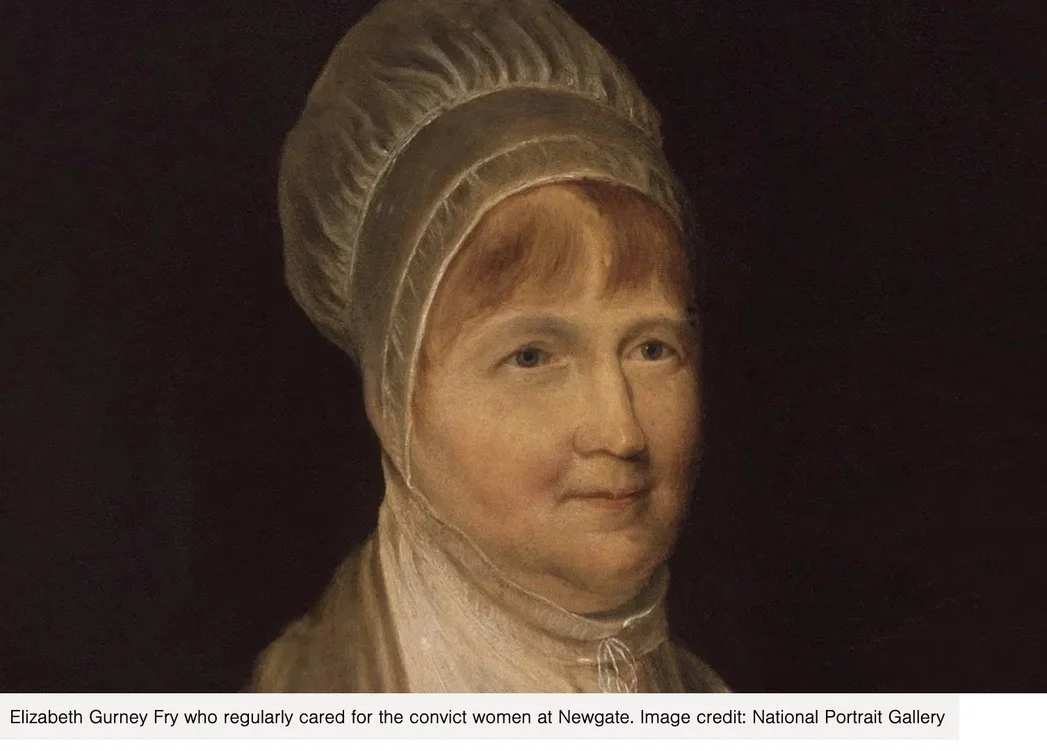
Twelve thousand women convicts who were transported to New South Wales and Van Diemen’s Land from Newgate Prison in London between 1816 and 1845 would have been aware of Elizabeth Fry; she was still visiting the transport ships in 1843, two years before her death at the age of 65. In 1817, she helped found the Association for the Reformation of the Female Prisoners in Newgate. Her early work with her brother, Joseph Gurney, achieved some reforms of the prisons, but it was not until 1835 that the Prison Act was passed that ensured inspectors instituted the new standards. She encouraged rehabilitation and the reprieve of the death sentence, replacing hanging with transportation. She was concerned with the humiliation suffered by the women when transferred in open carriages from Newgate to the convict ships at Woolwich and persuaded the governor of the prison to move them in closed hackney carriages before dawn, saving them from a final degradation before their exile. In Newgate, the prisoners’ children attended schools she organised; the women were taught to read; needlework and knitting was offered so they might earn a living during their time of ticket of leave and freedom in the colonies. On departure, each woman received a package of patches for quilts , needle and thread, linen, string and cutlery and a bible. The movement for the abolition of transportation was partly Elizabeth Fry’s work. It was officially abolished in 1868.
Transported men would have been assigned to households and farms with female convicts. Before the penitentiary and Female Factory accommodated the prisoners, they were housed among the free people in Hobart Town and would have mingled in the streets and pubs. They had to work after three o’clock in the afternoons and on Saturdays to earn their rent. They courted each other and married. And even after the government accommodation was provided, they managed to socialise. The story of Elizabeth Fry would have been relayed throughout the settlement.
James Backhouse (1794 –1869) and George Washington Walker (1800–1859) were Quaker missionaries who arrived in Hobart Town in February, 1832. I do not know if they had pamphlets with illustrations of Elizabeth Fry. Backhouse knew her; she had been instrumental in promoting the mission. They walked throughout the colony, so it is unlikely that carried bags of pamphlets, but there were Quakers in the colony who probably had articles containing pictures of her. It is not likely that the convict stone carvers who were men, of course, knew her appearance.
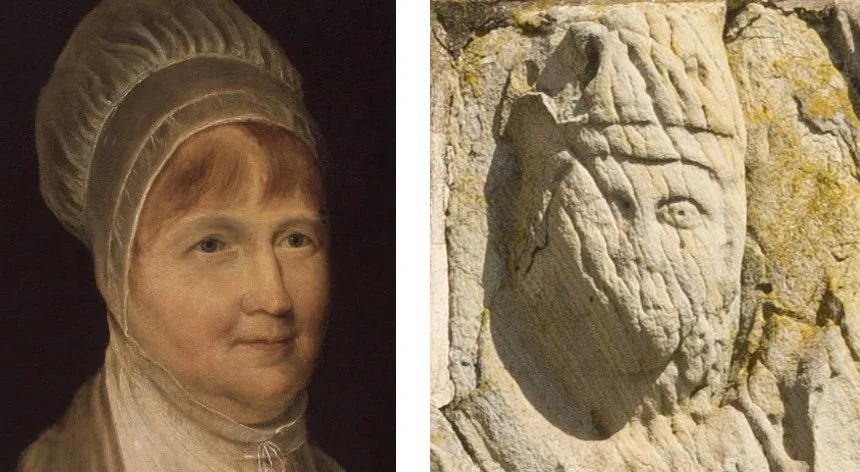
Elizabeth Fry and the unidentified portrait on the Ross Bridge 1835-36
The two portraits of women on the eastern arch of the north face are of convicts Norah Cobbett and Christian Cameron. Their eyes have the almond-shaped outline. On the eastern arch of the south face is another very worn woman whose eyes are deeper set and lidded as is the child carved beside her, more like the portrait about whom I write..
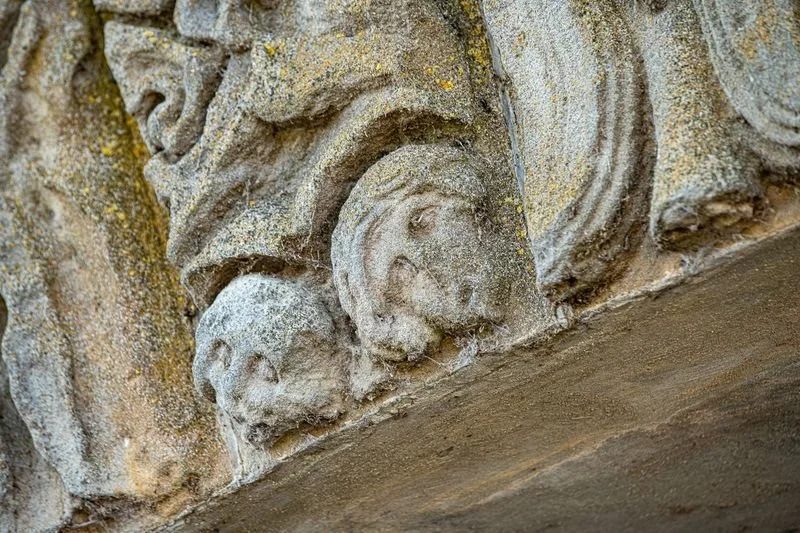
mother and child eastern arch south face
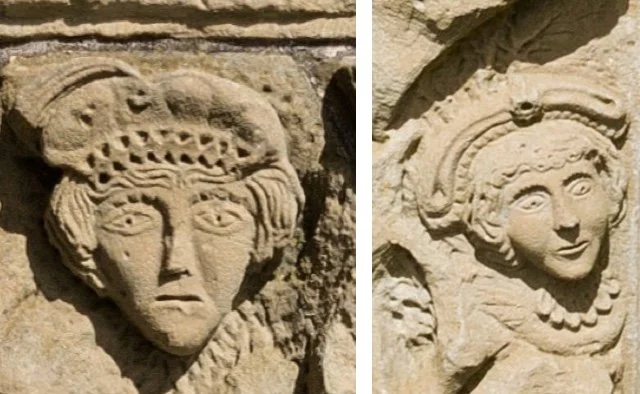
Norah Cobbett and Christian Cameron
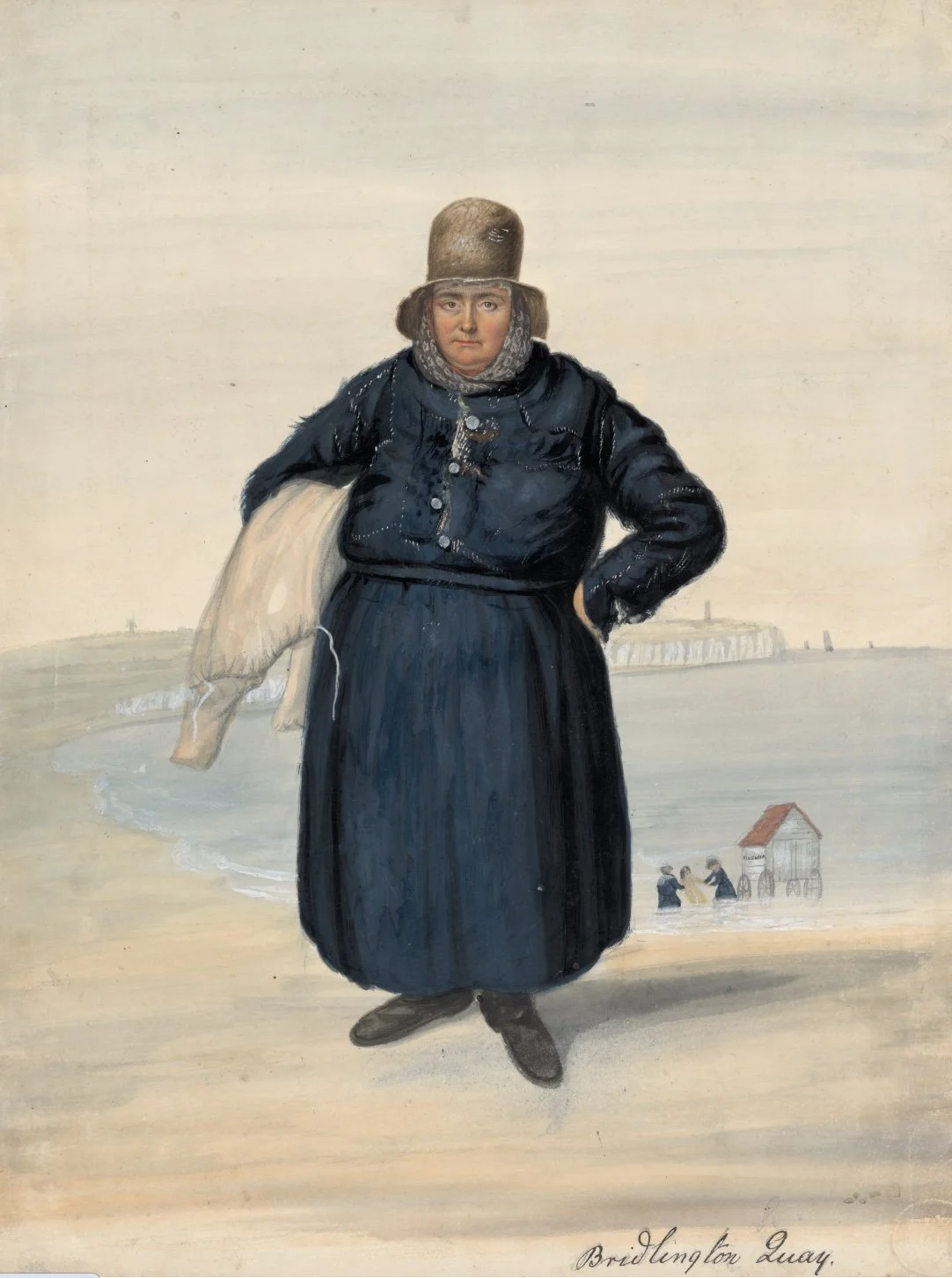
One wonders how commonly were a hat and scarf worn for warmth as did the woman at Bridlington, England, whose likeness was painted in 1825 by John Dempsey, now in the Tasmanian Museum and Art Gallery collection. Any poor woman of Van Diemen’s Land might have gone forth looking like this. I had concluded the portraits and caricatures on the north facade were of colonial characters, even local people in the district of Ross. So was she a pastoralist’s wife who gave them work, or an innkeeper? These thoughts counter my idea about Mrs Fry.
As Laird said in 1968, the identity of the person in the portrait of the north-western arch which has been so ravaged by the weather will always be controversial. Without wondering, however, new possibilities that demand research will never arise.