WALKING THE POTTERIES IN SEARCH OF ELIZA HOWARD
First thing this morning I found the bus station. The six Potteries towns are built within a hilly district and slogging up and down the hills in search of a smidgin of inspiration was wearying. I wanted to find the site of the poorhouse or workhouse where, in 1837, my great great great grandmother, Eliza Howard, was admitted with her four children, Henry born 1823, Selina, Mary and John, on the death of her husband, Samuel.

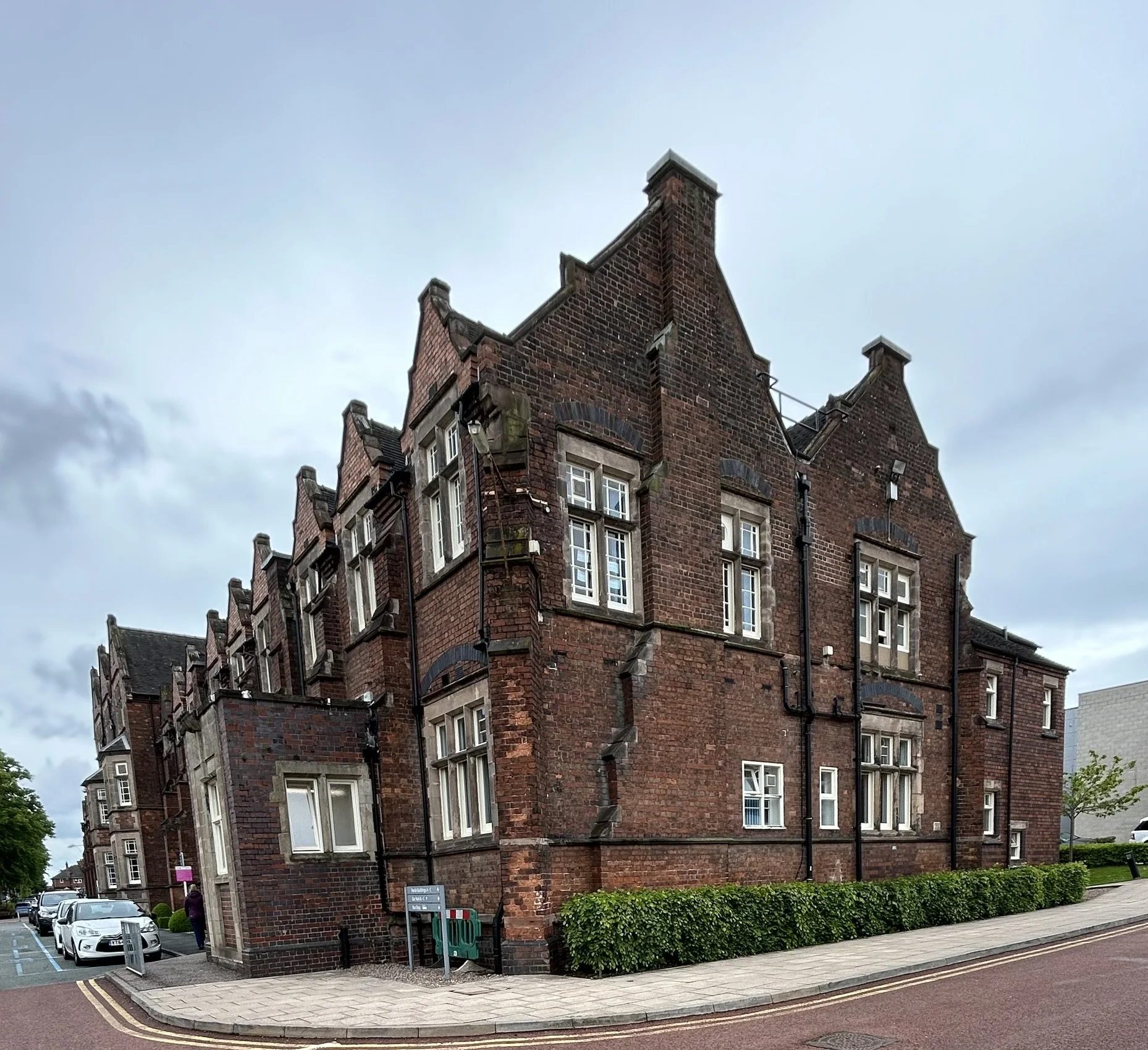
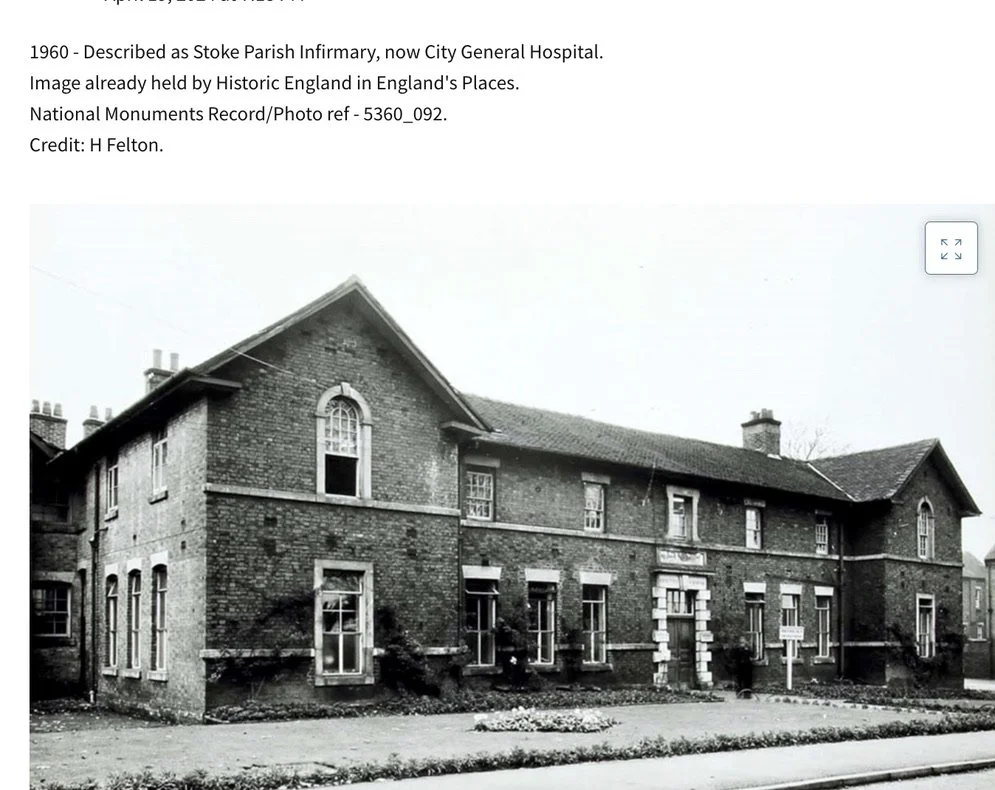
Even now it is grim, the odd perspective of the photograph giving it a crooked Dickensian misery. The Spittals Workhouse was opened in 1832. Until 1869, burials for paupers took place in the churchyard of the parish church in Stoke – over one mile away. Because the churchyard was becoming full it became necessary to create a new burial ground for workhouse paupers which was opened on land opposite to the entrance of the workhouse at London Road (then a single carriageway).
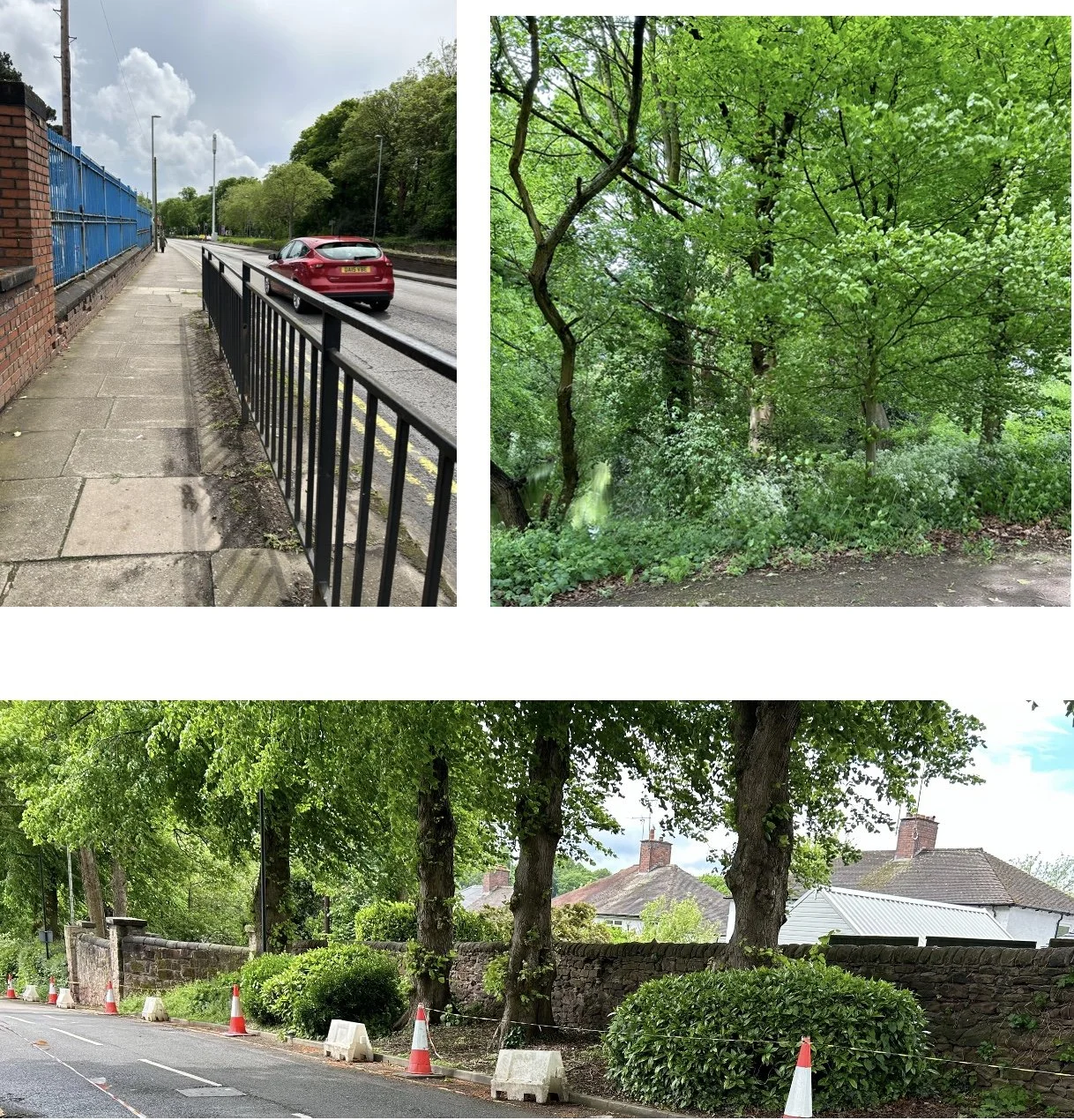
This is the London Road that was built over the burial ground which extended into the parkland beyond. I suspect the stone wall marked the boundary of the workhouse.
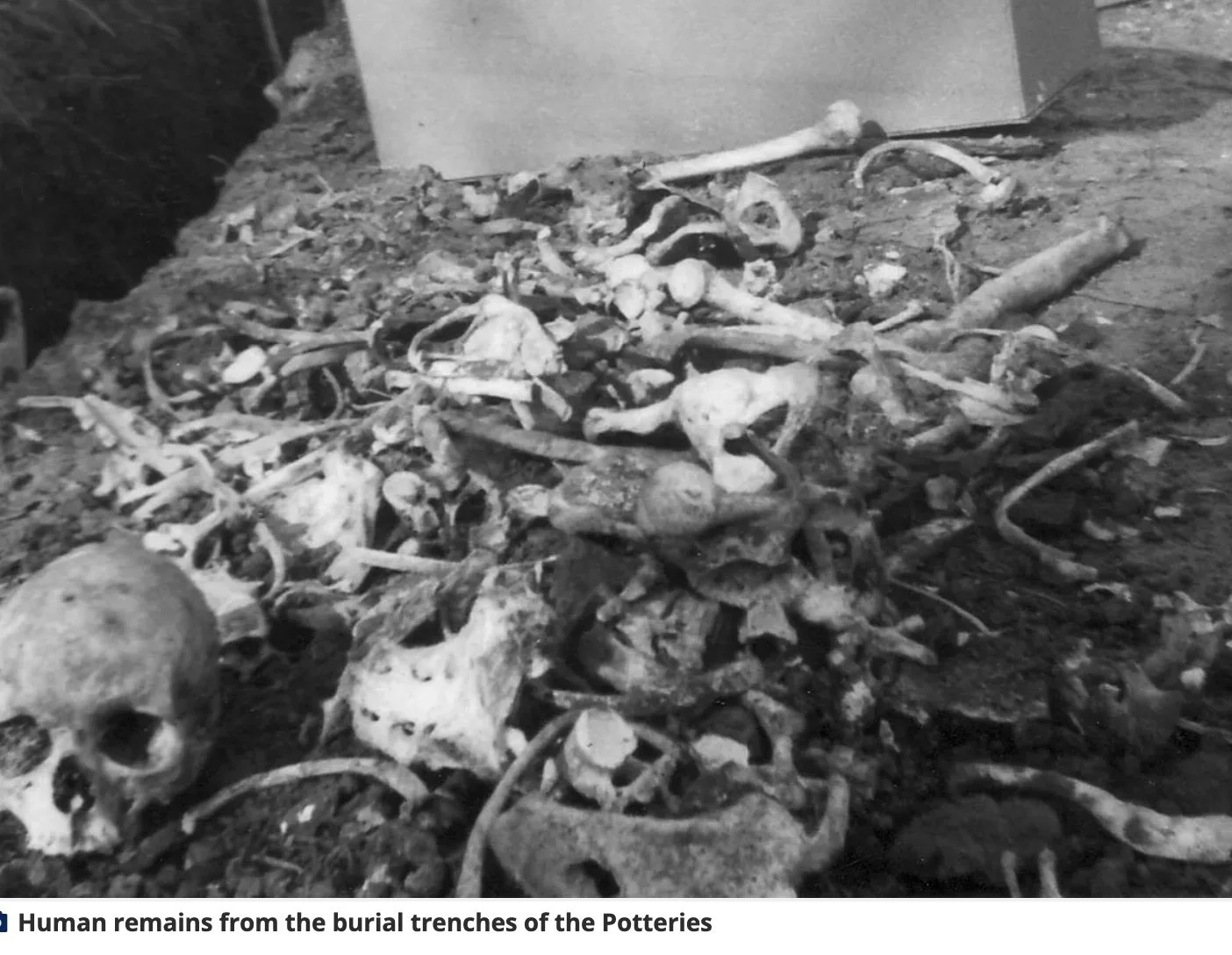
If Eliza and her children survived the everyday, or the work, or the epidemics of measles, whooping cough, chicken pox, smallpox, scarlet fever, they would have been buried at the church yard rather than suffering the further indignity of a mass grave like this one.
from The Potteries .org
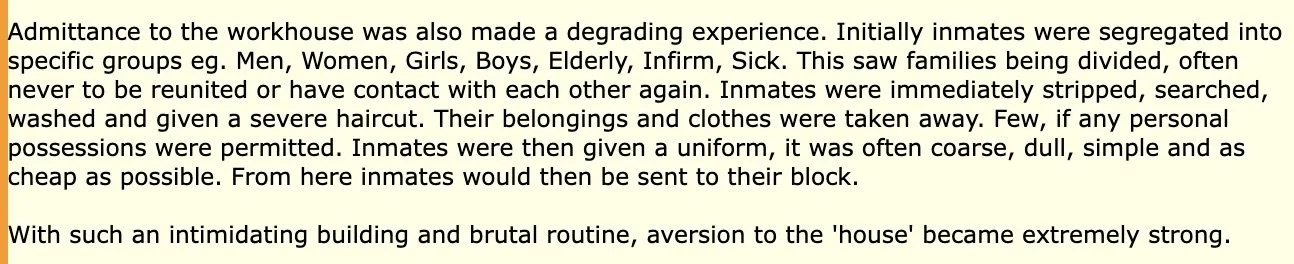
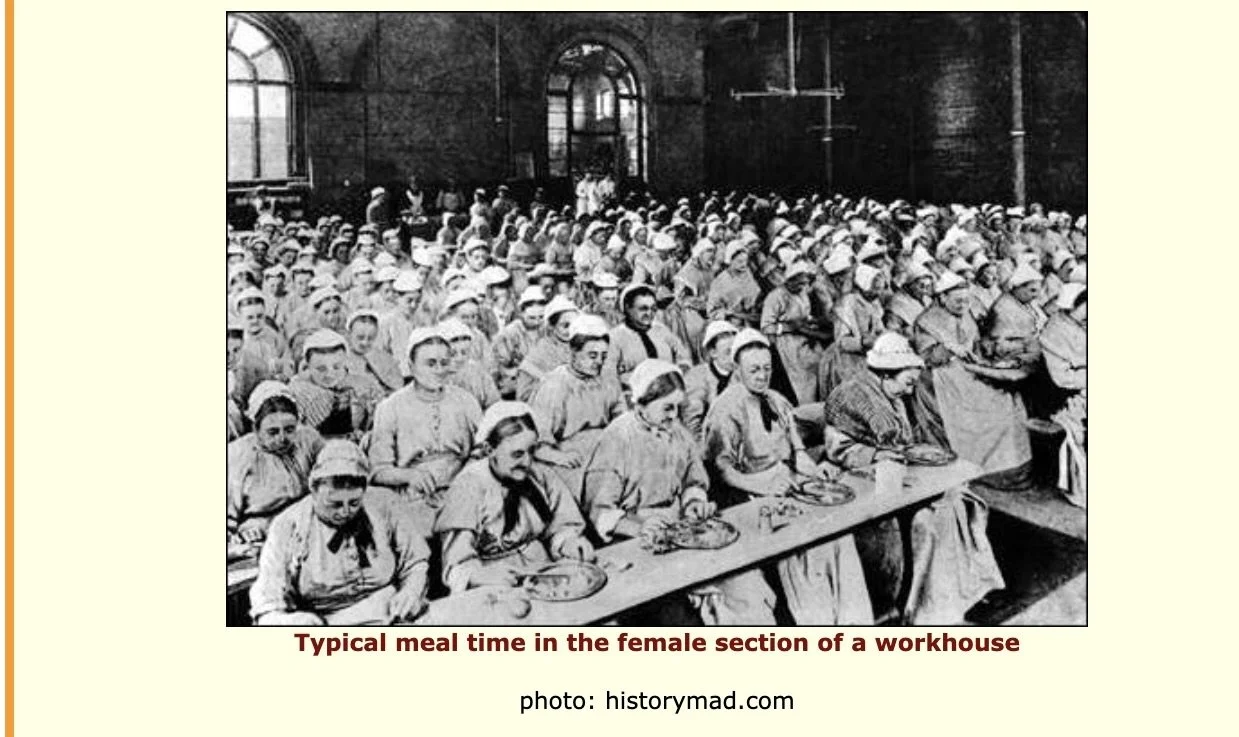
Eliza would have been separated from her children and Henry and John from Selina and Mary.
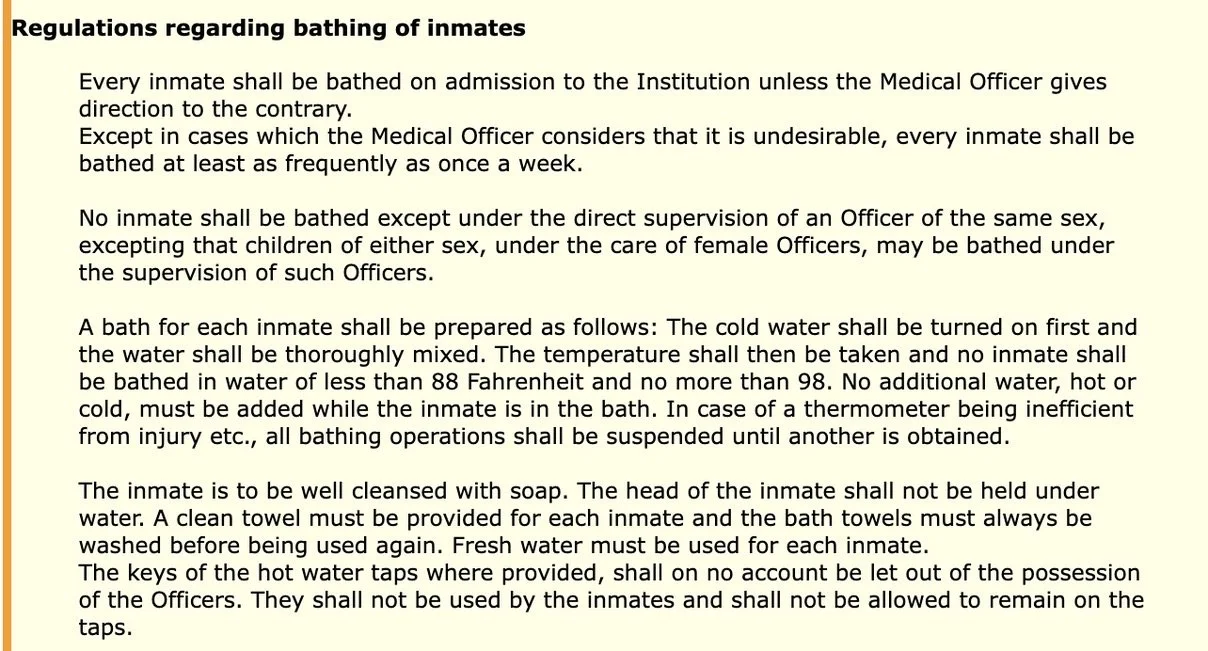
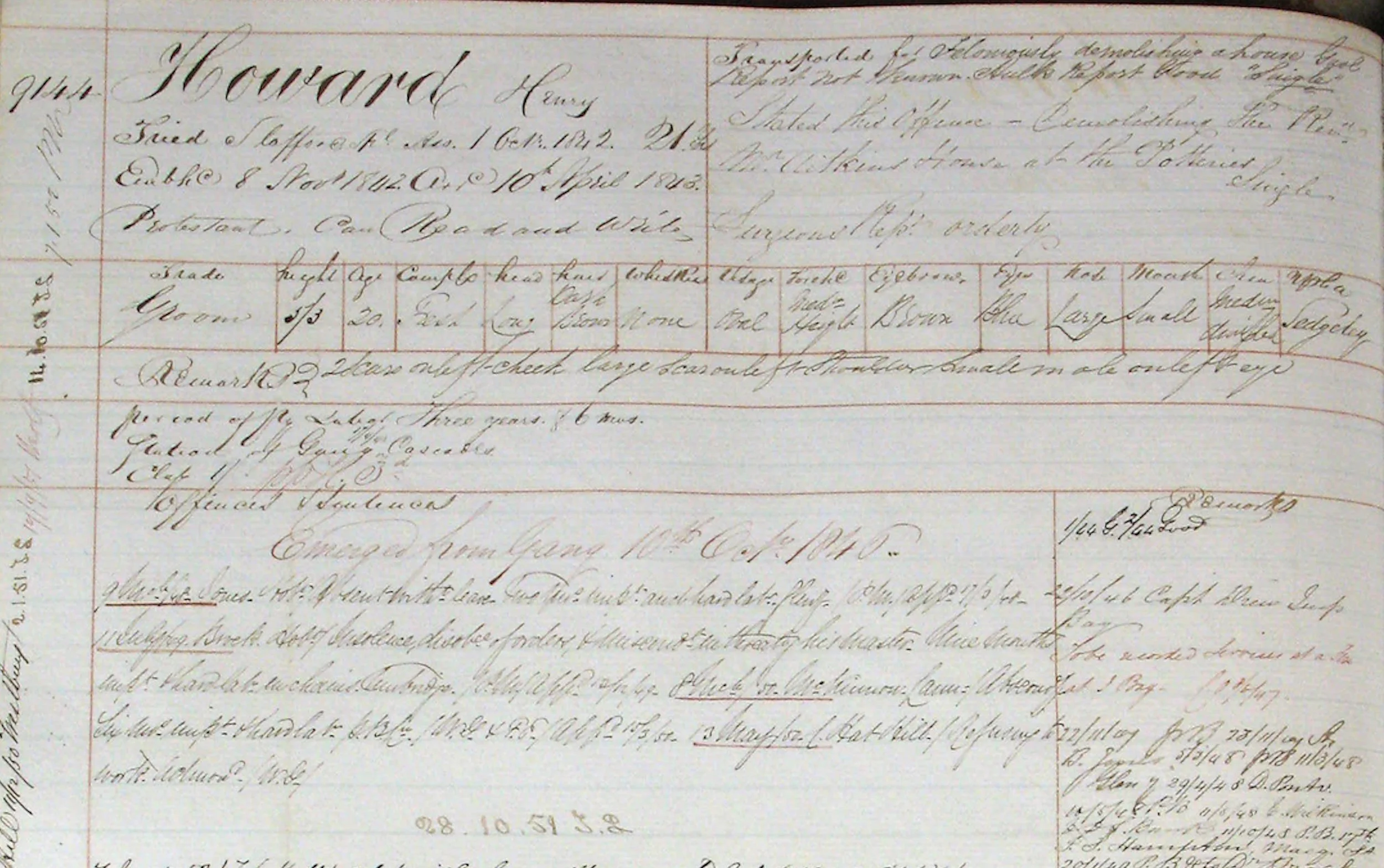
As if this were not enough, work had to be performed within the workhouse premises. I cannot imagine what the children did. Henry must have found work as a groom outside the walls. His conduct record states his native place was Sedgley near where I am now, travelling by train through Wolverhampton to Bath. It usually means the place of birth. He was born out of wedlock, Eliza and his surname being Hughes. She married Samuel Howard in 1826 and Henry took his name.
My cousin, Sally Howard says that in the workhouse Eliza had two more children, Thomas and William. The elder one might have been Samuel’s. I wonder if she prostituted herself to make some money. The alternatives are rape or a consensual relationship which seems hard to imagine considering the separation of the sexes. Sally says that she and Henry absconded from the workhouse; I wonder if it was to find him a job, to appeal to a member of the family, perhaps, although she may have had another reason.
The reputation of the workhouse was so bad that no one wanted to go there. Eliza would have applied to the parish for assistance after Samuel died. The Commissioners of the Poor were not always sympathetic; their purpose was not only to house the poor but ensure the parish funds were not wasted. Often an applicant was sent back to their native place to ease expenses on an adopted town’s coffers. However, Eliza was not returned to Sedgley.
Where were she and John, Selina and Mary on October 1st 1842 when Henry was tried at the Stafford Special Assizes for demolishing Vicar Aitken’s House and sent so far away?
This burial ground was subsequently enlarged in 1900 but no records have survived to indicate the number of burials there over a period of 50 years locally, except those held by the General Registrar and these are not available for public examination. However, annual returns at the Local Government Board show that over a period of just seven years the number of those who died was 5,766.In 1967/8 there were extensive road works between the workhouse and the burial ground when the single carriage way was made into a dual-carriage way.
This involved the acquisition of part of the pauper burial ground on the other side of the road.Two trenches were dug for GPO. cables and for sewers. Both trench excavations exposed the remains of paupers the entire length of the trench in line within the limits of the burial ground stacked several deep. There was no evidence of shrouds or coffins. The numbers and method of stacking bodies would suggest that a grave would be dug as and when there were a number of bodies to bury in one grave, who knows how many at a time? Realistically, paupers would be made to dig the graves of those paupers who had died, wondering if they were to be next.
However, such a style of burial and in such numbers could only be associated with a considerable number of deaths within a short period - epidemics.The rest of the burials remain in both of the remaining section of the original burial ground and under the west lane of the duel-carriageway, probably numbering in excess of 10,000.
Upon initial inquiries with Stoke-on-Trent local authority they knew nothing of this burial ground. By
Dr Richard Talbot
05:00, 8 APR 2018
UPDATED07:03, 8 APR 2018
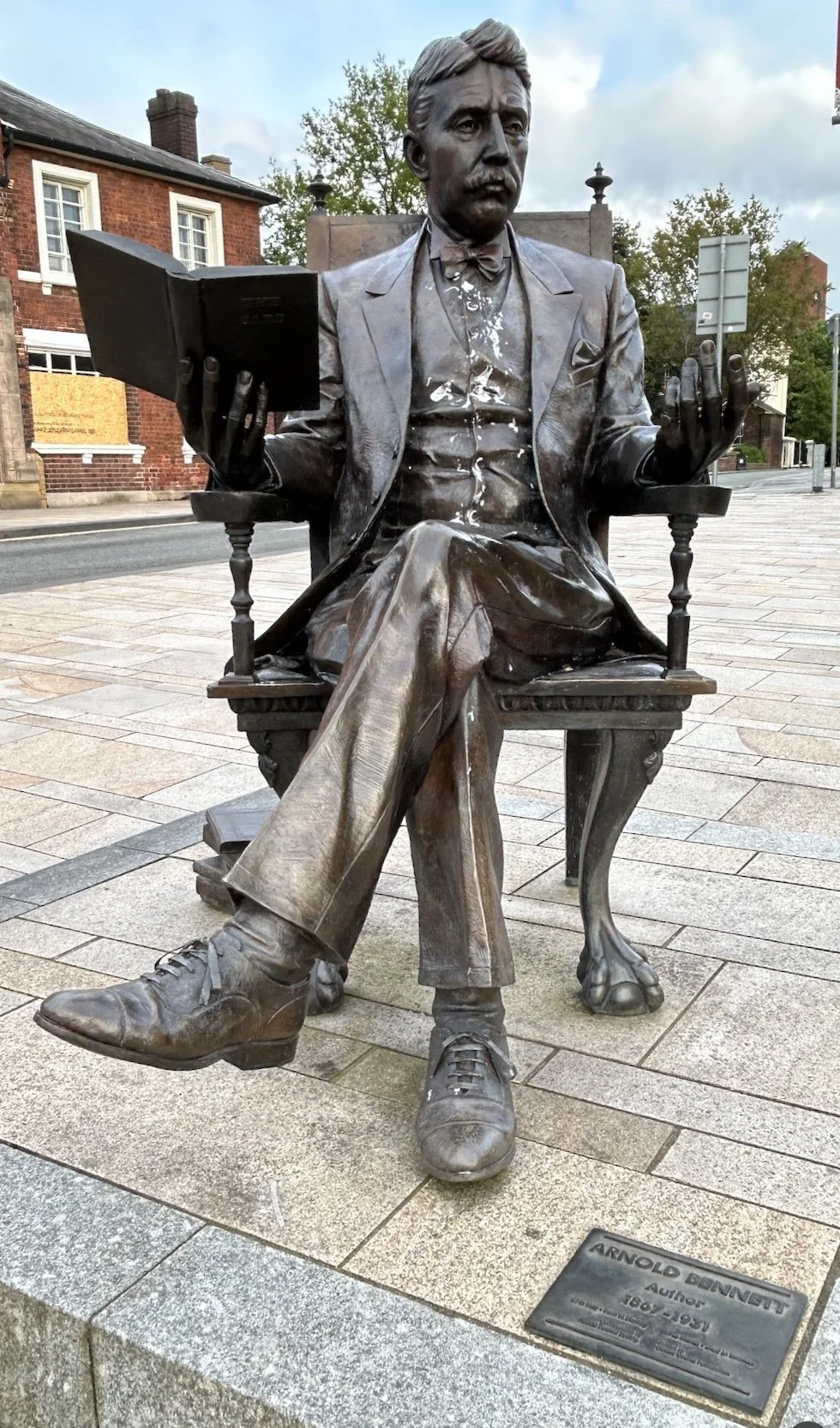
Arnold Bennett, chronicler of The Potteries.
Arnold Bennett wrote of the Five Towns: Stoke-upon Trent, Hanley, Fenton, Longton and Burslem. In 1905, the expanding town of Tunstall was included when the area was granted city status. The Grim Smile of the Five Towns are stories of life in Victorian times.
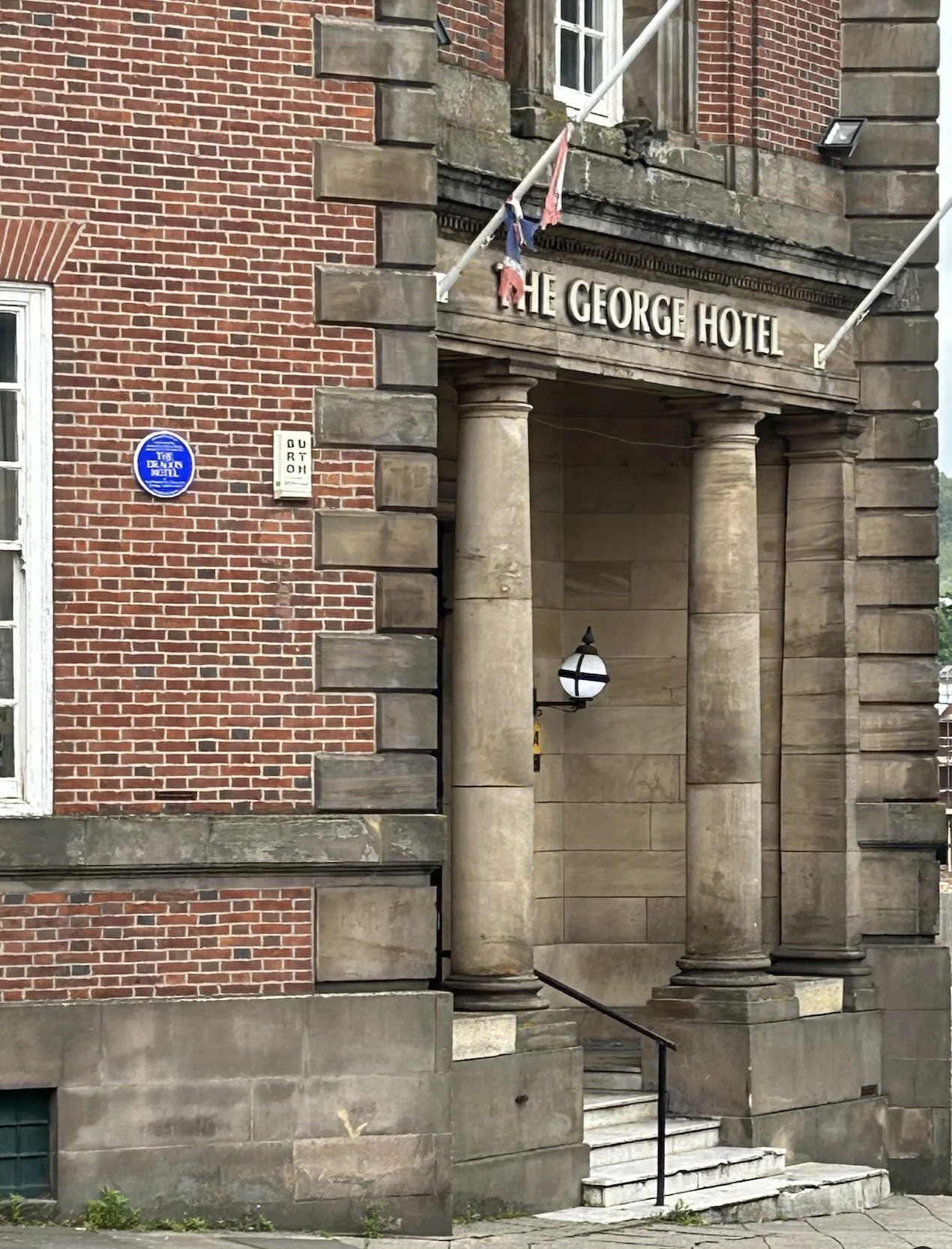
The George Hotel, Burslem
Throughout Burslem, blue plaques uncover Bennett’s thin disguises, for example, the George Hotel was named The Dragon in his books.