WALKING THE POTTERIES WITH A LOCAL HISTORIAN
After a depressing morning imagining my widowed great great great grandmother living in the Spittals Workhouse in Stoke-upon-Trent from 1837, with, but immediately separated from her children who were separated from each other, boys from girls, I walked along Richmond Street wondering whether I would knock on the door of No. 58, the address of the Potteries Heritage Society. As I suspected it was a pretty terrace house not an office or shop front. Andy Perkin, the treasurer, opened the door and welcomed me, having spoken with me on the phone the previous day. Overcoming my ambivalence was well rewarded. Over a cup of tea, he explained how the canals of the Potteries wove together the coal that was underfoot everywhere, the imported white clay, flint and bone so prized by the masters of the potteries, and the port of Liverpool from which their wares were exported. And he took me on a tour to show me these things.
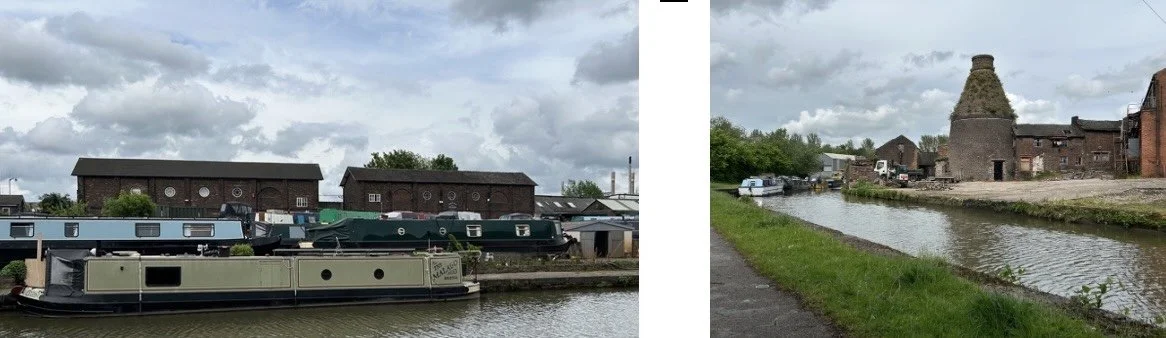
The Trent and Mersey Canal at Longport at the site of Henshall’s businesses and home A bottle oven at Longport no longer used.
We stood where the millwright-engineer James Brindley stood at the site of the Foulea Brook where the road between Newcastle-under-Lyne and Burslem passed over a ford, crossed by planks. Then it was called Longbridge. Brindley had been asked by Josiah Wedgwood to design a canal to improve the economy of his imports and exports. Brindley asked John Henshall and his son, Hugh, surveyors, for assistance and they planned the Trent and Mersey Canal, its ninety three and a half miles, five tunnels and seventy locks, riding on the shoulders of one John Gilbert. An Act of Parliament was passed in 1766 and Josiah Wedgwood turned the first sod. It was completed in eleven years during which time Brindley died and Hugh Henshall succeeded him. Longbridge became Longport of which Hugh Henshall became the manager and owner of the land, warehouses and narrowboat building workshop.
I
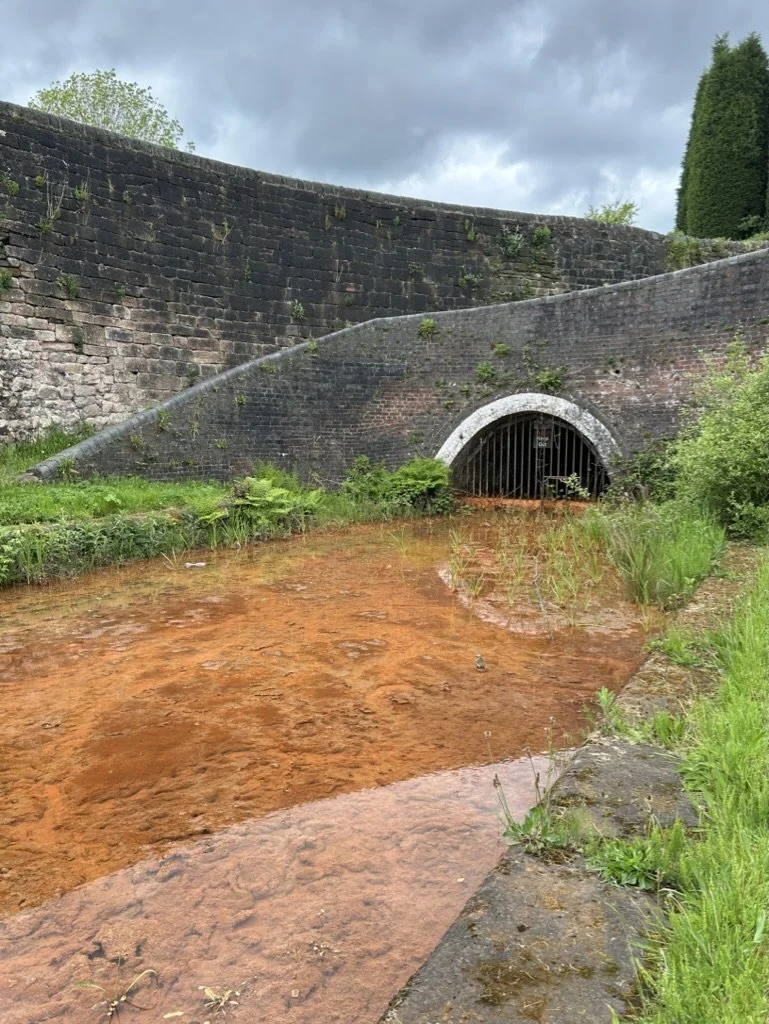
The Harecastle Tunnel is one of those five tunnels, 1.6 miles long and very narrow and low. Narrow boats were built to transport coal to the potteries from the other side of Kidsgrove Hill over which the owner of the narrow boat and his horse walked while two men propelled the boat with its load. They lay on their backs on planks placed across the boat, head to head and ‘walked’ the boat forward, pushing with their legs as if walking on the walls. Nearby, we walked passed two derelict pubs, The Packhorse and the Duke of Bridgewater. The wealthy employers of the world built such pubs to provide the needs of their men; they would pay them in truck wages - i.e. tokens of credit worth less than their labour was worth to be spent only at the masters’ pubs.
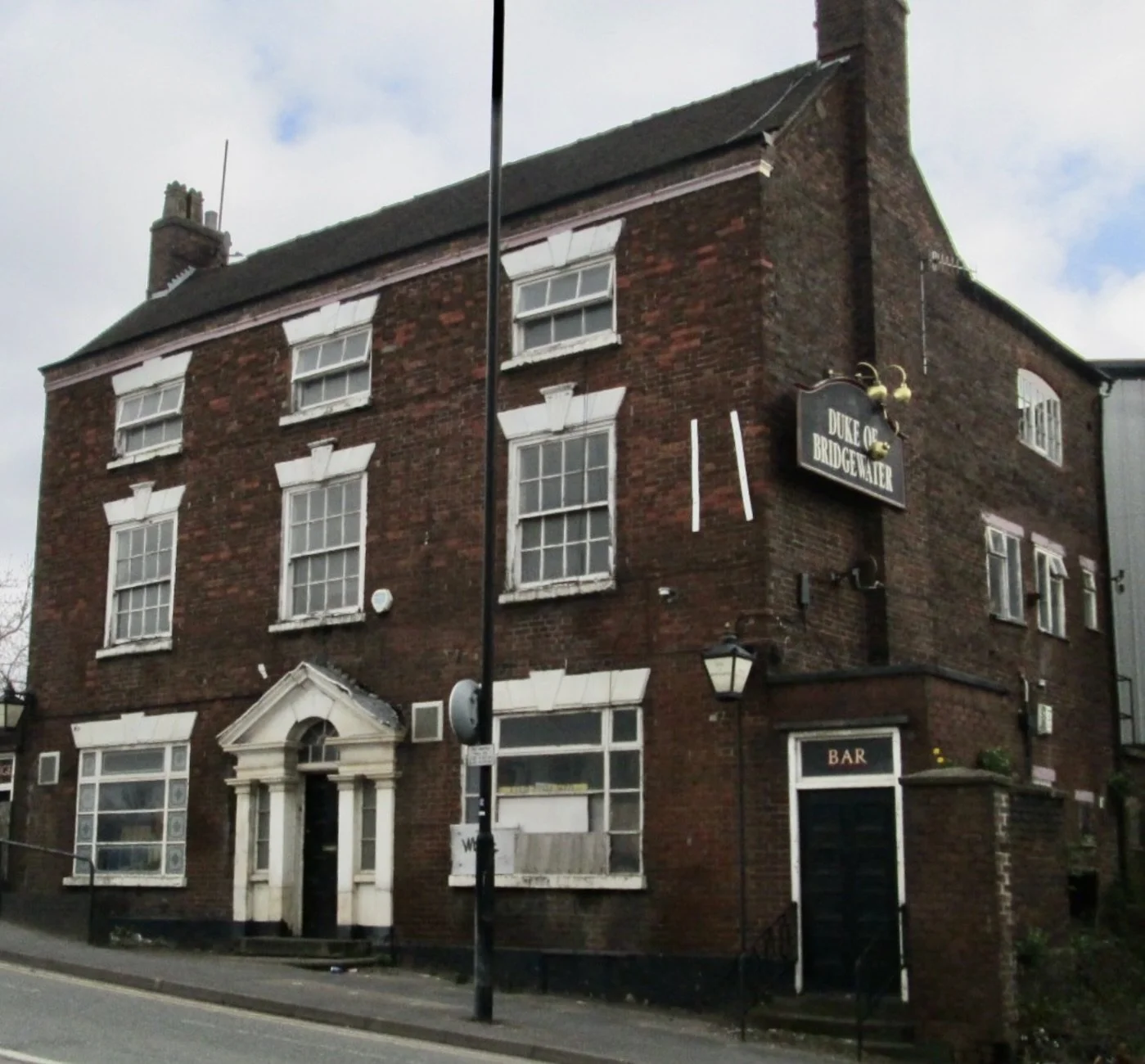
The Duke of Bridgewater
The Duke of Bridgewater was a pioneer of canal construction who commissioned the Bridgewater canal—often said to be the first true canal in Britain, and the modern world. The canal was built to service his coal mines in Lancashire by his agent John Gilbert with advice from James Brindley.
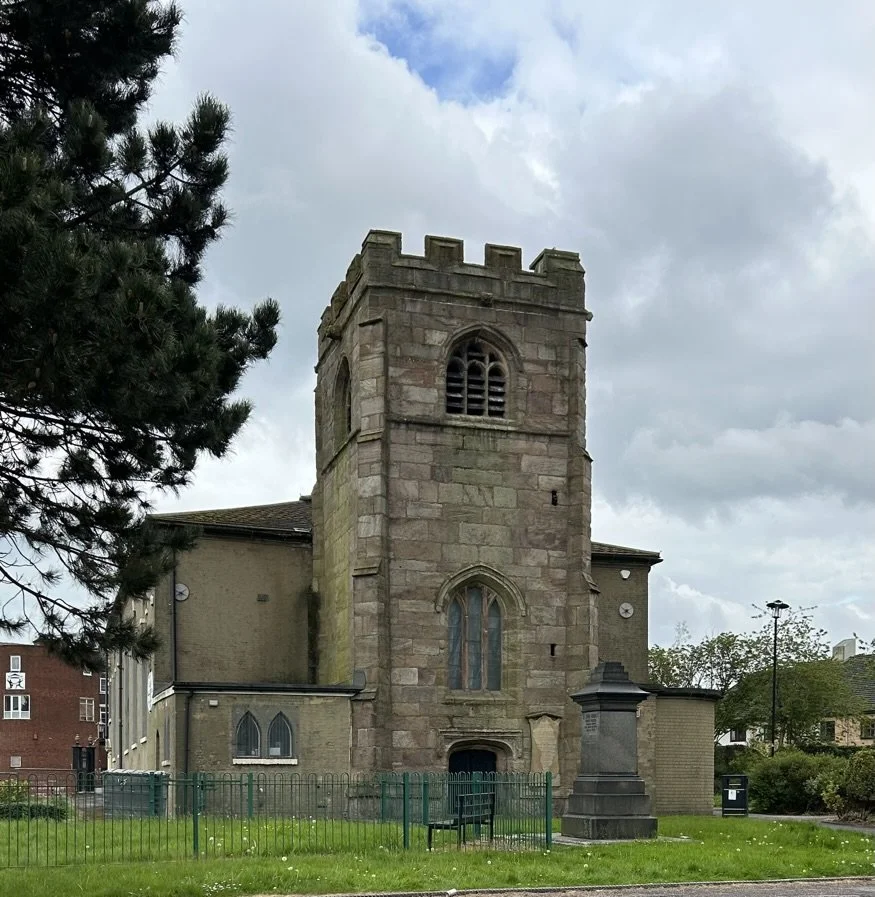
St. John’s Church of the Wedgwood family in Burslem with its Norman Tower.
On our way to the plaque telling of the riots of August 1842, we walked through the St. Johns graveyard. The gravestones are lying flat now and the inscriptions are hard to read but most of them belong to a long dead Wedgwood.
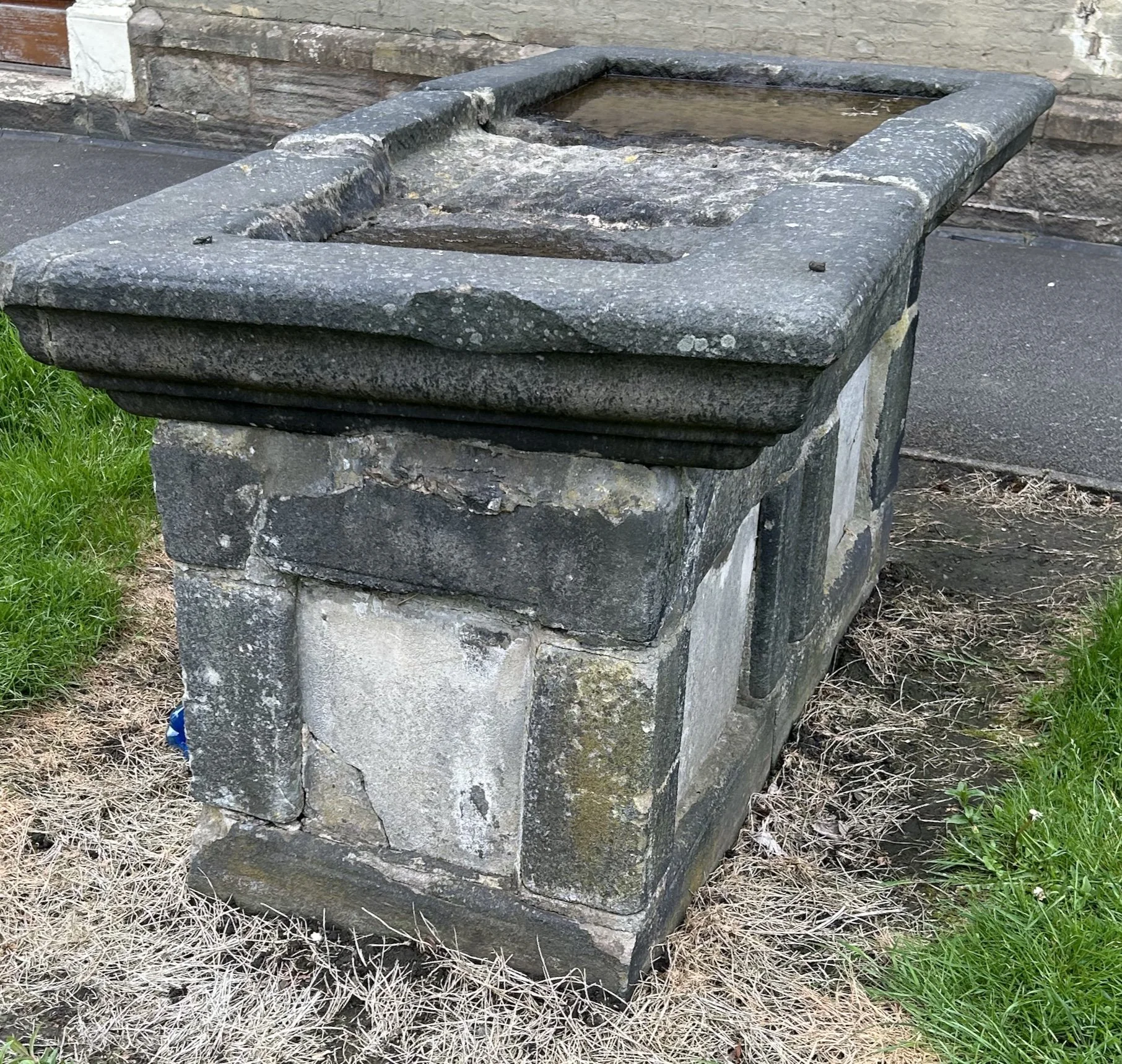
As well as a Roman stone sarcophagus, there is this strangely oriented table tomb. It is thought to cover the body of Molly Leigh. The legend is that someone thought she returned from the afterlife as a crow; therefore she was deemed a witch and her grave was rotated ninety degrees to align north-south.
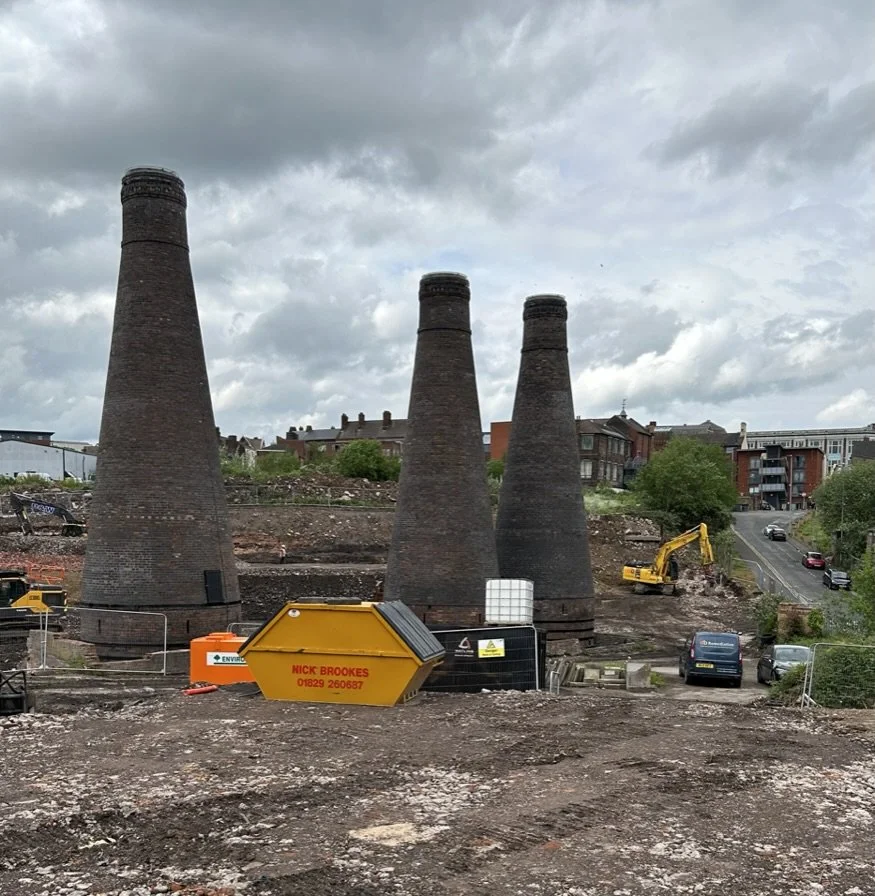
Over the way, Andy explained about the three bottle ovens preserved within a housing development. Their conical shape is different from the bell-shaped bottle oven we saw at Longport. Form following function, these kilns were used for making kiln shelves. The works were operated by the manufacturer of kiln furniture, Acme Marls Ltd between 1937 and 2000.
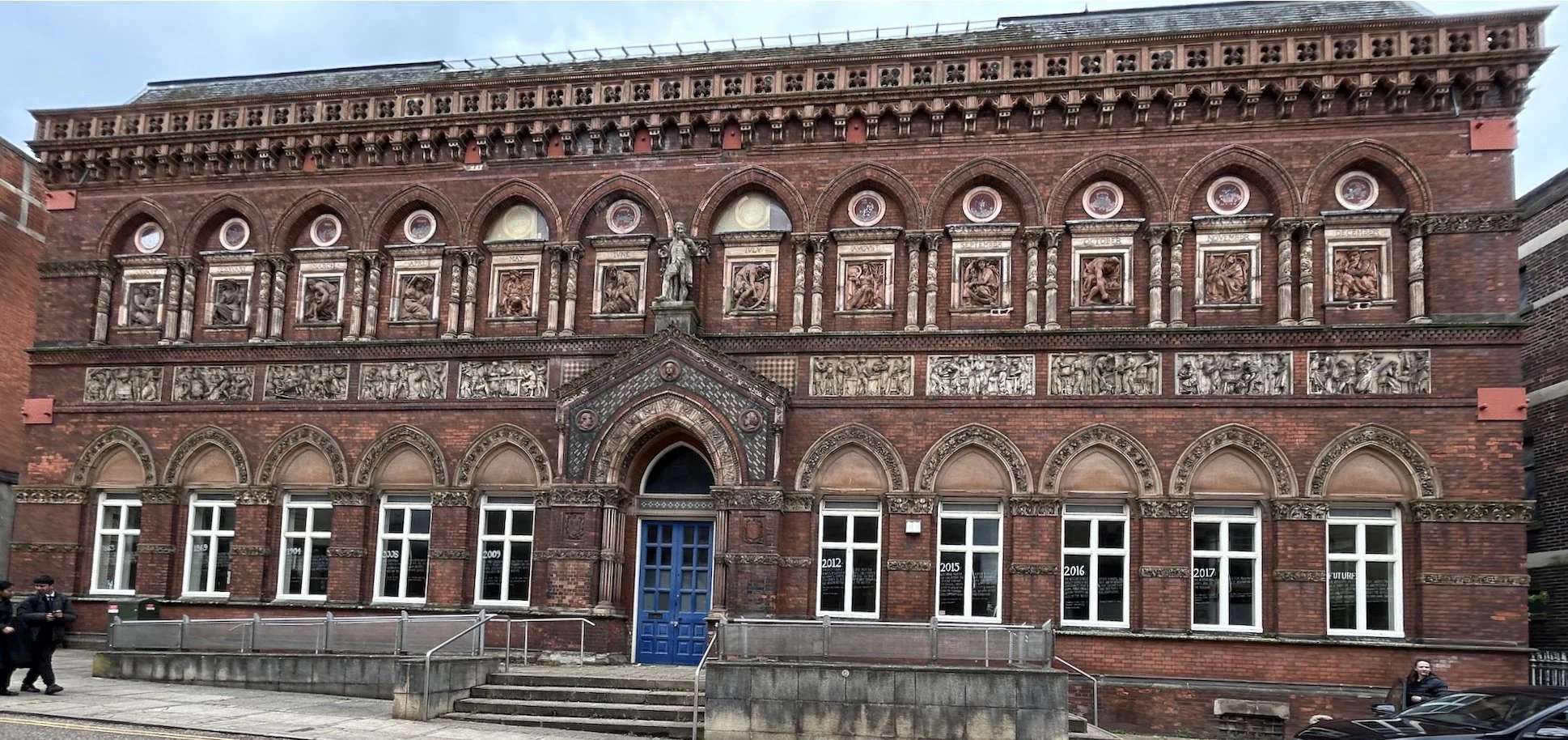
Up the hill in Queens Street is the Wedgwood Institute, built in the 1860s and named after Josiah Wedgwood who died in 1795. It was a school of art and science for working people and is a building remarkable for its style and architectural decoration.
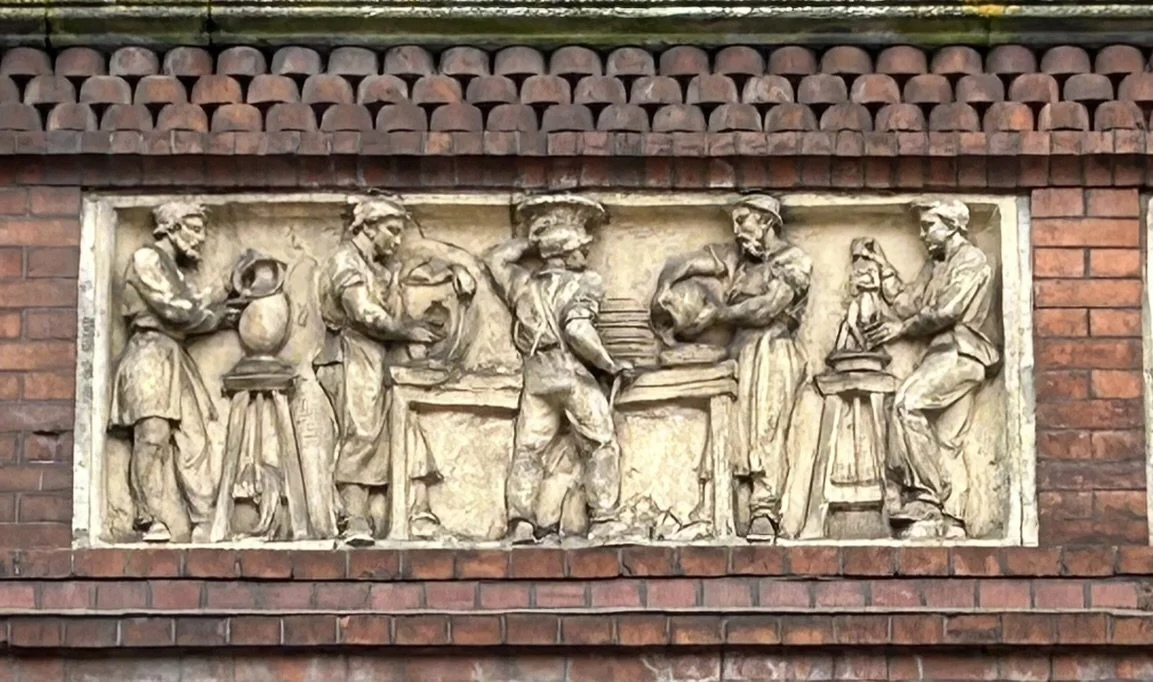
Ten terracotta panels form a frieze illustrating the processes of pottery making
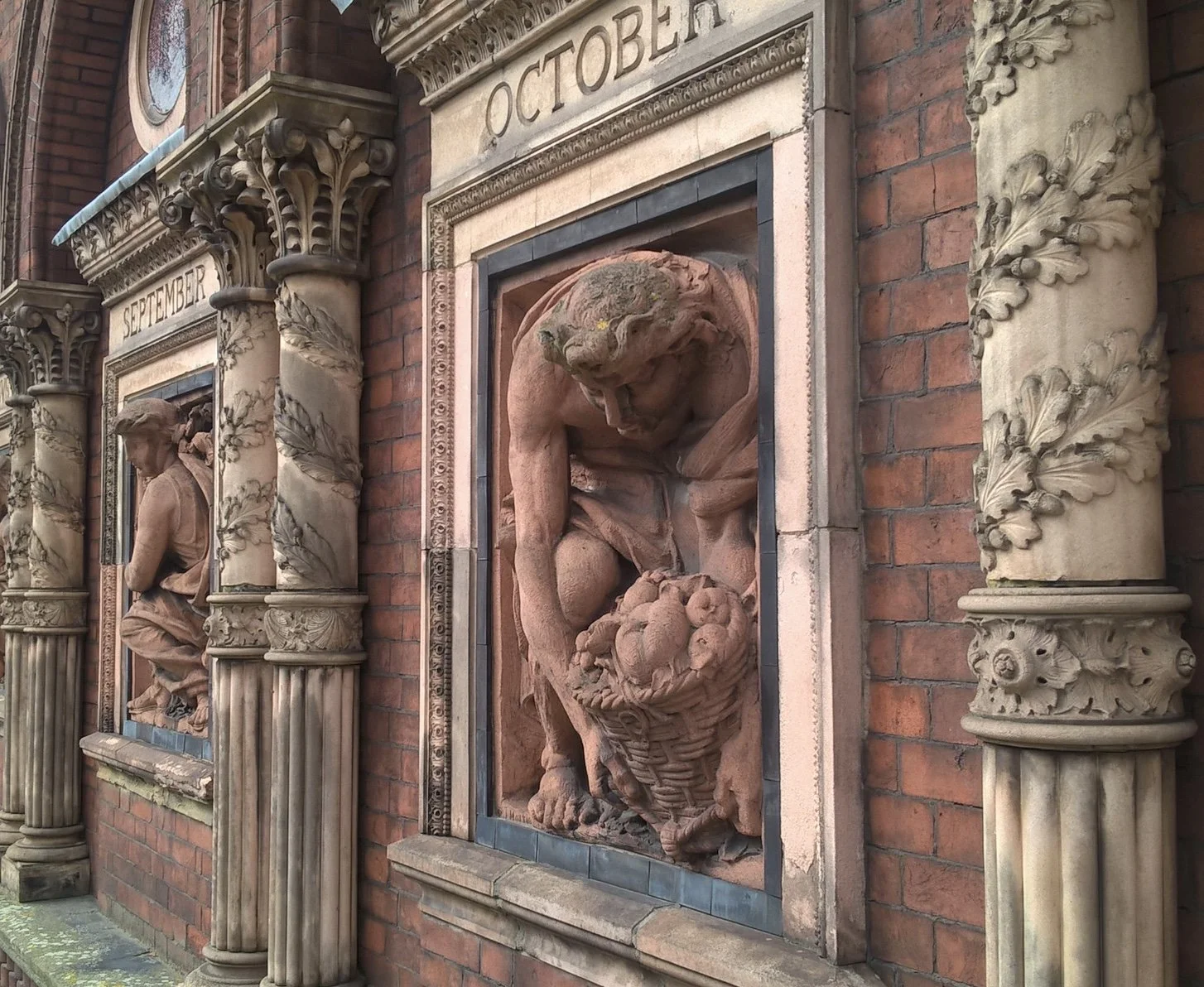
Twelve terracotta discs are of the months and below them are high relief carvings representing the signs of the zodiac. The panels were designed by Robert Edgar and John Lockwood Kipling, father of Rudyard Kipling. The foundation stone was laid on 26 October 1863 by William Gladstone and the building opened in 1869.
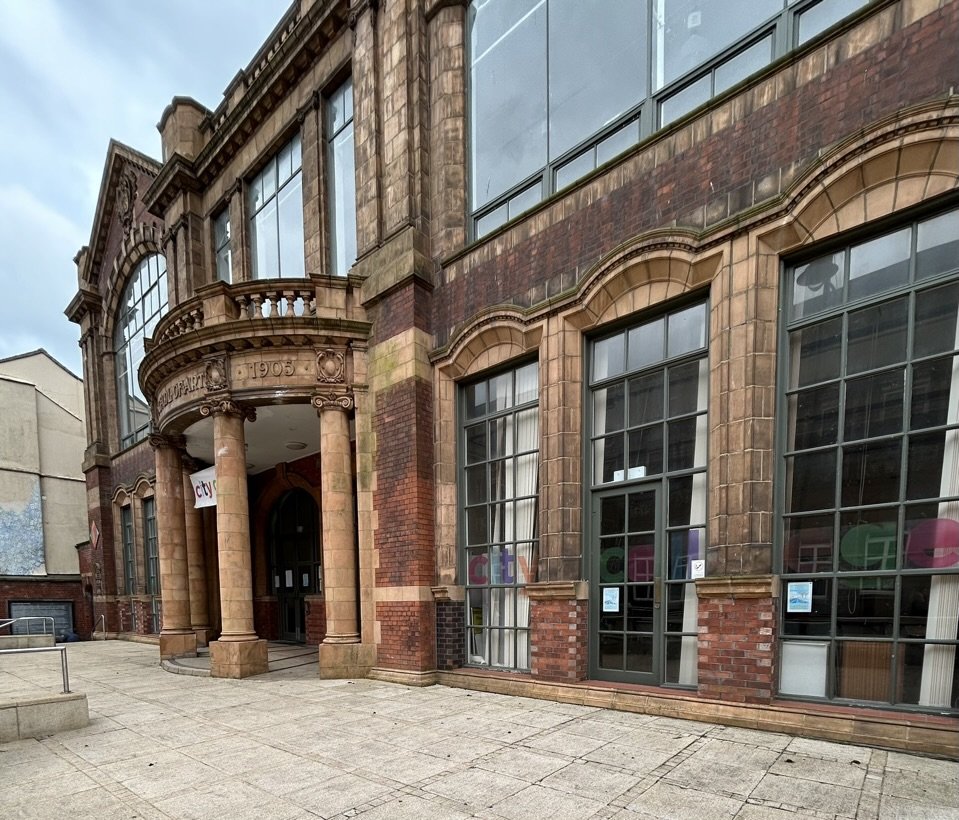
Burslem School of Art
Over the road, The Burslem School of Art was built in 1905 to provide more space for students. It is remarkable for its anachronistic expansive windows which face north, allowing even light to flood the upper rooms for the artists.
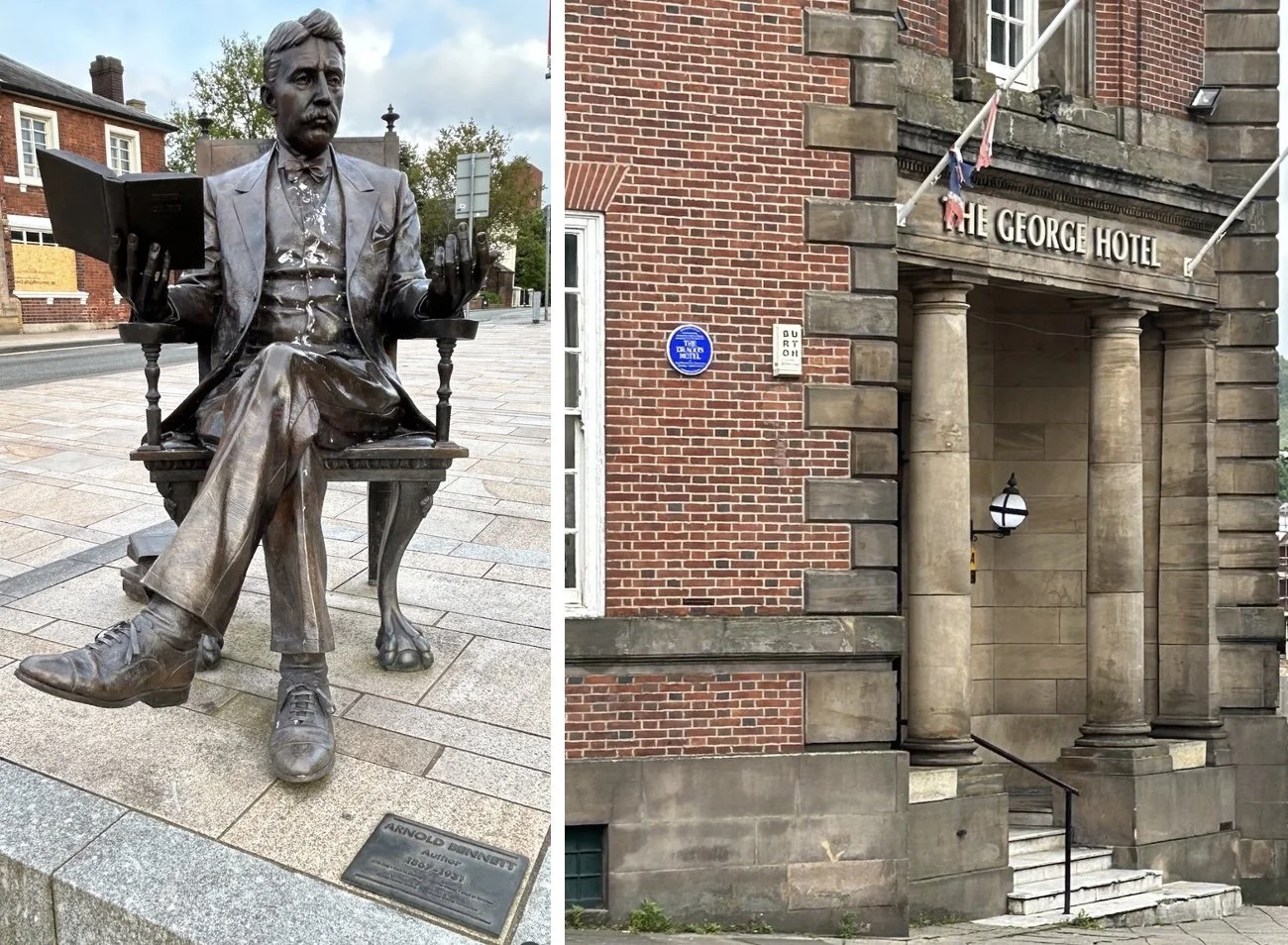
Arnold Bennett was a chronicler of the five towns. The romanticism of his tales is tainted with a grim telling of the lives of the characters who lived in the Potteries. Looking around from Wedgwood Square near the institute, a place once rented by Josiah Wedgwood where the Ivy House teapot factory stood (which was managed by Andy’s great aunt Nell a long time ago), I saw blue plaques which decode Bennett’s thinly disguised names for the buildings which mark his stories. The George Hotel became the Dragon Hotel but I shall have to re-read The Grim Smile of the Five Towns to find out in which story.
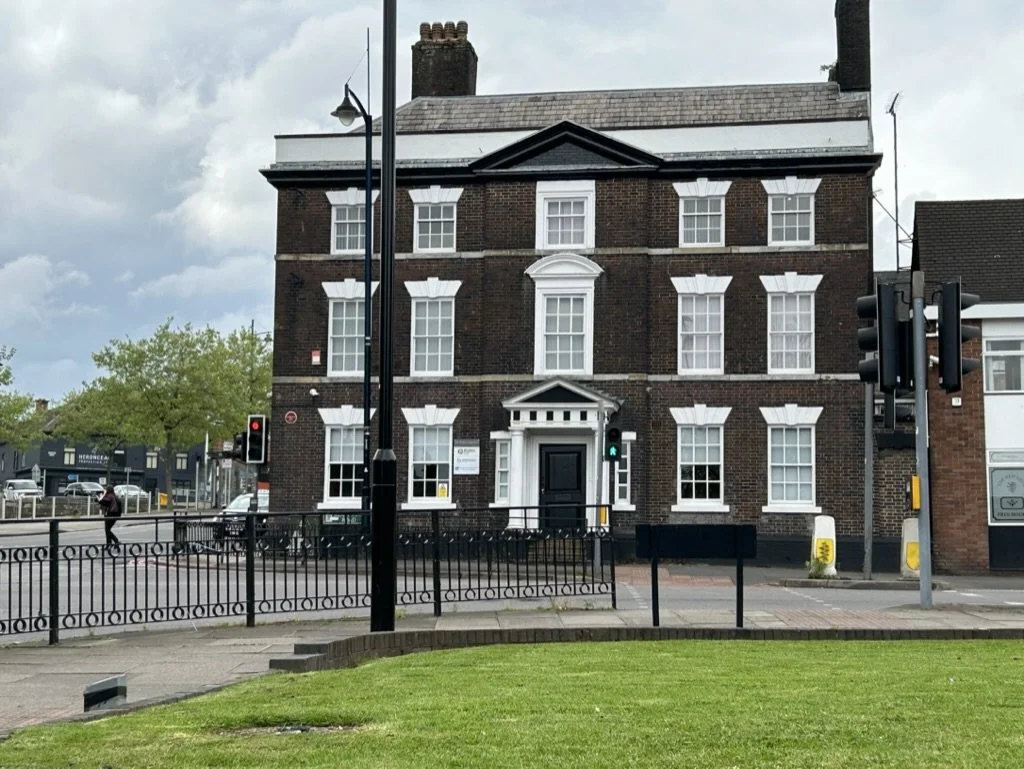
The Big House which was the home of Josiah Wedgwood’s cousins, John and Thomas Wedgwood.
They were entrepreneurial potters too, their extensive manufactory being behind their house which was built in 1750. Thomas died in 1776 and John in 1780 when Josiah was fifty and of immense fame owing to his success in experimenting, inventing, designing, teaching, accounting and developing a new, fashion driven global market.
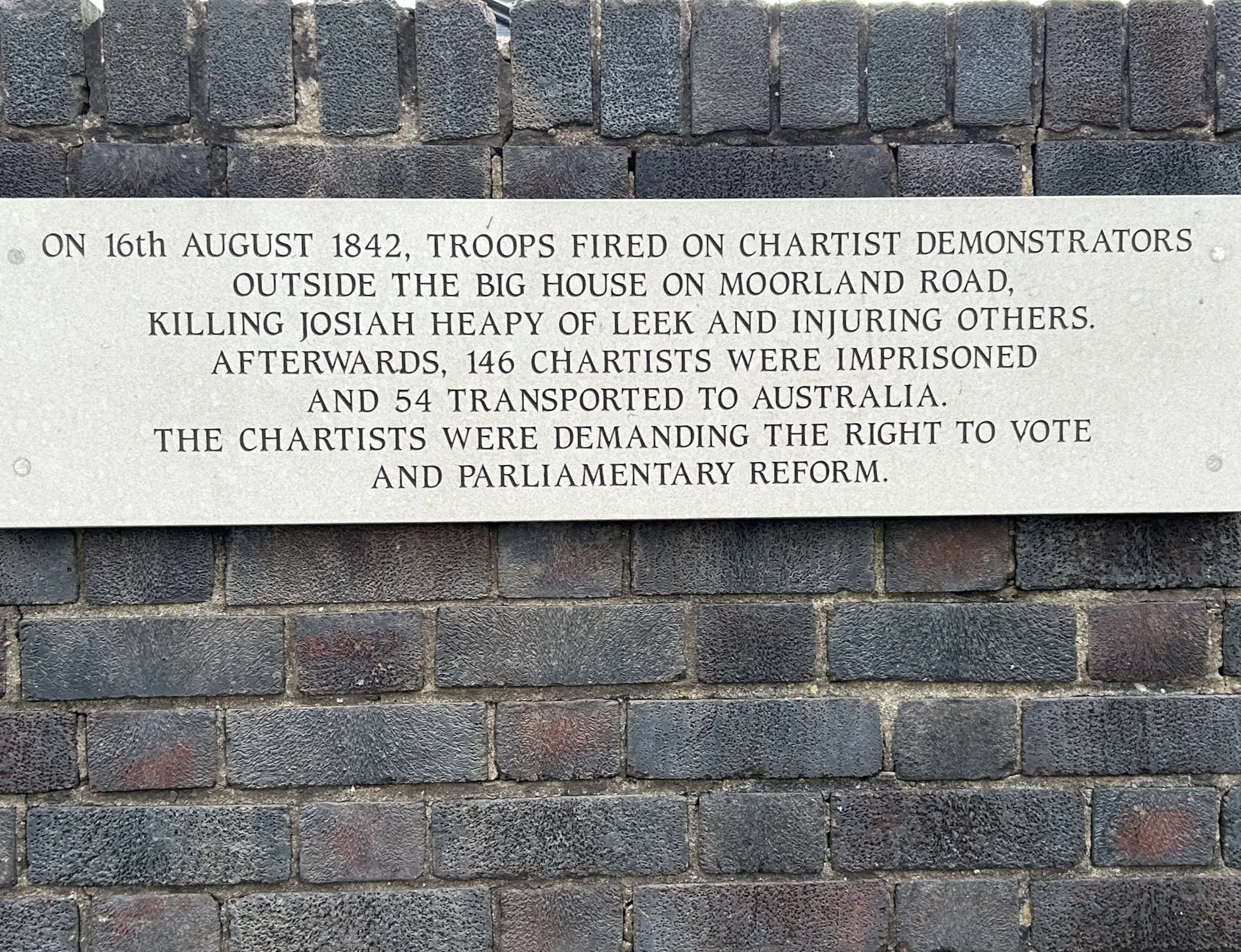
This plaque below the Big House brings my stories of Stoke on Trent full circle. It commemorates the action of a few Dragoons, called up by the magistrates that quelled the Potteries riot in which Henry Howard was caught up and for which he was transported for twenty-one years. But he did not return.
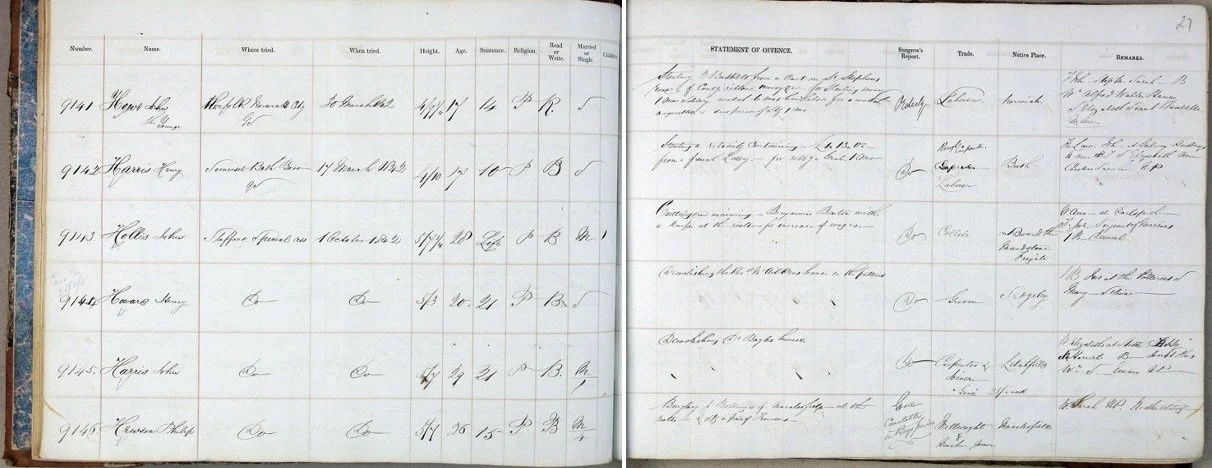
Henry Howard’s Indent
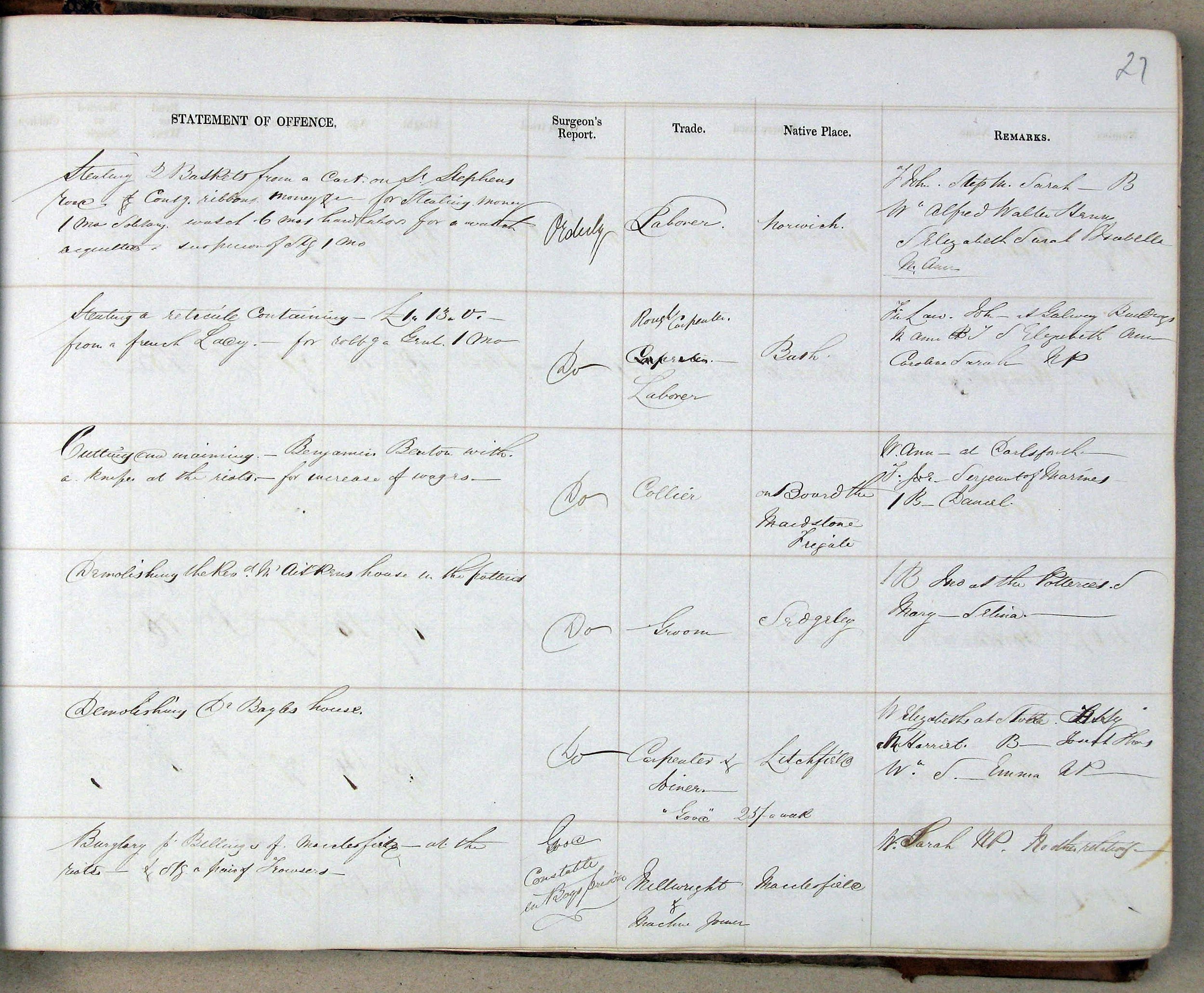
The right page, in the last column, Remarks, mentions one brother, John, and Selina and Mary. Perhaps Eliza, their mother had died before 1842.